
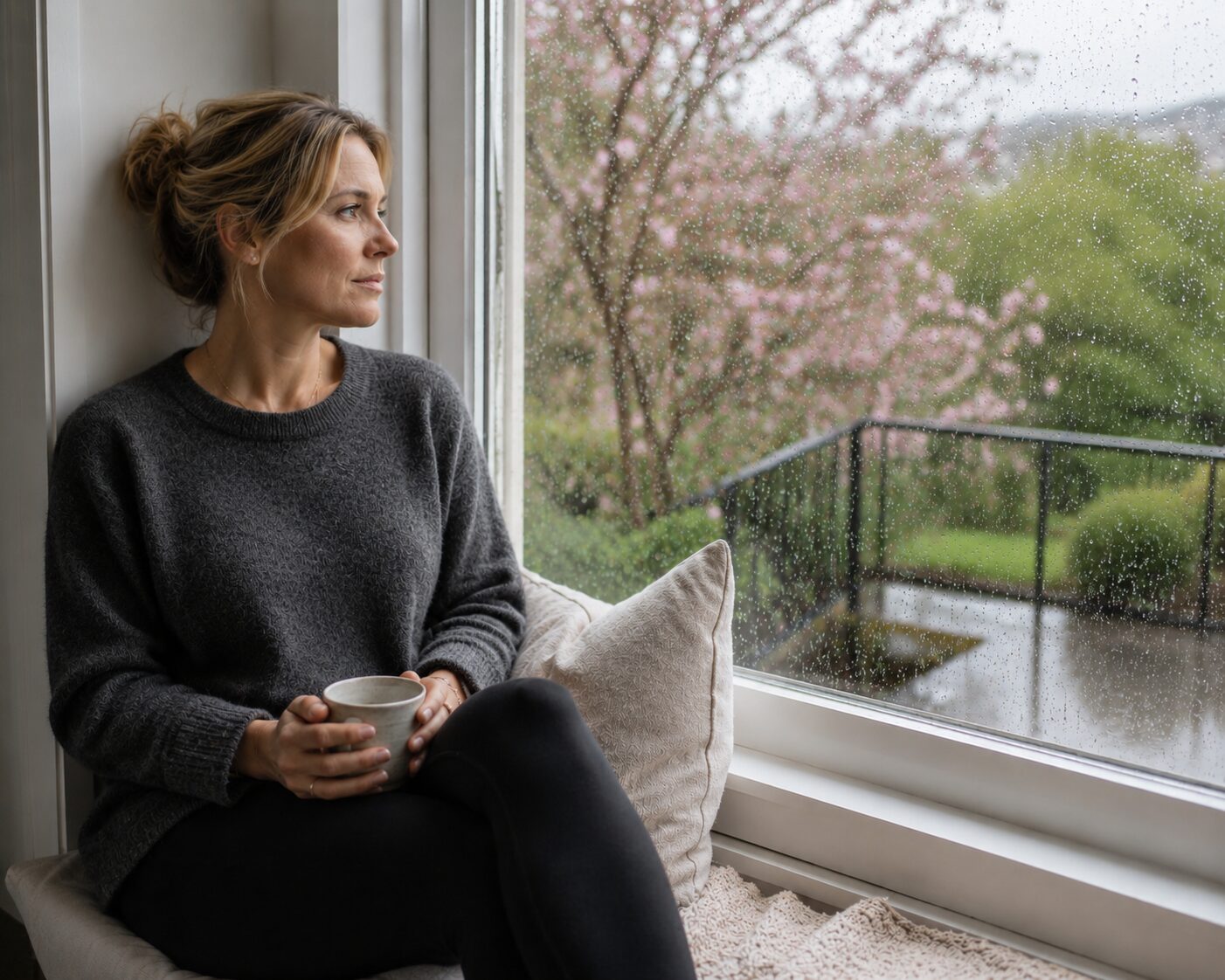
In a world that measures worth by how much we do, doing nothing can feel almost scandalous.
Not resting between tasks. Not recovering so you can perform again. Actually doing nothing — with no goal, no outcome, no productivity disguised as leisure. Just being present in a moment that isn’t going anywhere.
This is niksen — a Dutch word for doing nothing. And it has quietly become one of the most grounding practices in my life.
What Niksen Actually Is
Niksen is not meditation. It’s not mindfulness with a structured breathing technique. It’s not a wellness practice you need to learn or get right.
It’s simpler and stranger than any of those things: it’s sitting quietly and letting your mind go wherever it wants. Staring out the window. Watching clouds move. Lying on the sofa without a podcast, without a phone, without a purpose.
It sounds easy. It isn’t — not at first. Because most of us have been so thoroughly trained to fill every gap that an empty moment immediately triggers a kind of low-grade panic. Shouldn’t I be doing something? Shouldn’t I be moving forward?
That discomfort is worth sitting with. Because on the other side of it is something genuinely restorative — a quality of rest that productive busyness simply cannot provide.
Why Doing Nothing Feels So Hard
We live in a culture that celebrates hustle and measures people by their output. What an unstructured day actually feels like — the strange discomfort of time that isn’t organised around tasks or goals — is something most of us rarely allow ourselves to find out.
We fill the gaps. We scroll. We listen to something. We find a small task to complete. Anything to avoid the particular vulnerability of just sitting with ourselves, doing nothing in particular.
But that filling has a cost. It keeps the nervous system in a constant low hum of stimulation. It means we never fully arrive anywhere. We’re always consuming, processing, preparing for the next thing — and that background busyness is more tiring than most of us realise.
Rediscovering Stillness
I used to think rest had to be earned.
I thought I needed to finish every task, cross every item off the list, reach some invisible threshold of productivity before I was allowed to sit down. Rest isn’t a reward — it’s a human need, as fundamental as food or sleep. But we’ve built a culture that treats it as a luxury, something you justify rather than simply take.
Niksen invites us to sit quietly, stare out the window, or let our minds drift — not toward productivity, not toward problem-solving, but toward nothing in particular. It’s the sweet permission to exist without expectation.
And that permission, it turns out, is one of the hardest things to give yourself.
The Power of Doing Nothing
Doing nothing doesn’t mean wasting time. It means creating space.
Space for new ideas that couldn’t find their way through the noise. Space for clarity that comes not from thinking harder but from thinking less. Space for the kind of calm that cannot be forced — only allowed.
When I practice niksen, I notice more: the way the light shifts in the room, the sounds that were always there but went unheard, the soft breath of my dogs sleeping nearby, the quiet hum of the world going about its business without my input. These gentle observations remind me that being is enough. I don’t have to prove it with action.
Research supports what feels intuitively true: periods of mental rest allow the brain’s default mode network to activate — the part of the brain involved in creativity, self-reflection, and meaning-making. The ideas that arrive in the shower, on a walk, in the half-awake moments before sleep — these come from the unstructured mind. Niksen creates the conditions for exactly that.

Letting Go of the Need to Fill
The discomfort of doing nothing usually peaks early and fades.
In the first few minutes, the mind races: there are emails, there are tasks, there are things to plan. But if you stay with it — if you resist the pull to reach for your phone or find something useful to do — something shifts. The urgency softens. The silence stops feeling like a problem and starts feeling like a place.
That shift doesn’t happen quickly. It took me a while to trust it. But gradually I started to see that in these quiet moments, there’s a different kind of richness — one that doesn’t depend on checklists or outcomes.
Niksen isn’t about avoiding life. It’s about honouring the spaces between. Letting the world breathe around you — and within you.
How to Actually Practice Niksen
The instructions are almost embarrassingly simple. But simple is not the same as easy.
Find a comfortable spot. A chair by a window. A patch of garden. A sofa with a view of the room. Somewhere you can be physically at ease without needing to do anything.
Put the phone away. Not on silent nearby — actually away. In another room if possible. The mere presence of a phone within reach activates a low level of alertness that makes genuine stillness much harder.
Set a small amount of time. Five minutes is enough to begin. Ten is better. The goal is not duration — it’s quality. A genuine five minutes of doing nothing is worth more than an hour of distracted half-rest.
Let your mind go where it goes. Don’t try to direct it. Don’t try to think about something useful or meaningful. Let it drift — to a memory, to a sensation, to nothing at all. This is not failure. This is the practice.
Notice without judging. You’ll probably feel uncomfortable at first. You’ll have the urge to check something, do something, fix something. Notice those urges without acting on them. They usually pass.
A Quiet Invitation
Today, let yourself do nothing — even just for five minutes.
Find a spot where you can watch the sky or simply let your eyes rest somewhere soft. Don’t produce. Don’t perfect. Don’t optimise the experience.
Just be. Because the quiet art of doing nothing is more than a pause — it’s a gentle return to yourself. And you are worth returning to.
If you’d like a small collection of practices to support exactly that kind of returning, A Gentle Reset is a free e-book of gentle rituals for the spaces between — the quiet moments that ask nothing of you except your presence.
For more softness at the end of the day, Evening Rituals That Feel Like Exhales is a reflection on winding down and letting go. And if you’re drawn to bringing this softer, less-driven approach into all areas of your life — not just the quiet moments — Gentle Productivity Isn’t Just About Work explores what that actually looks like in practice.
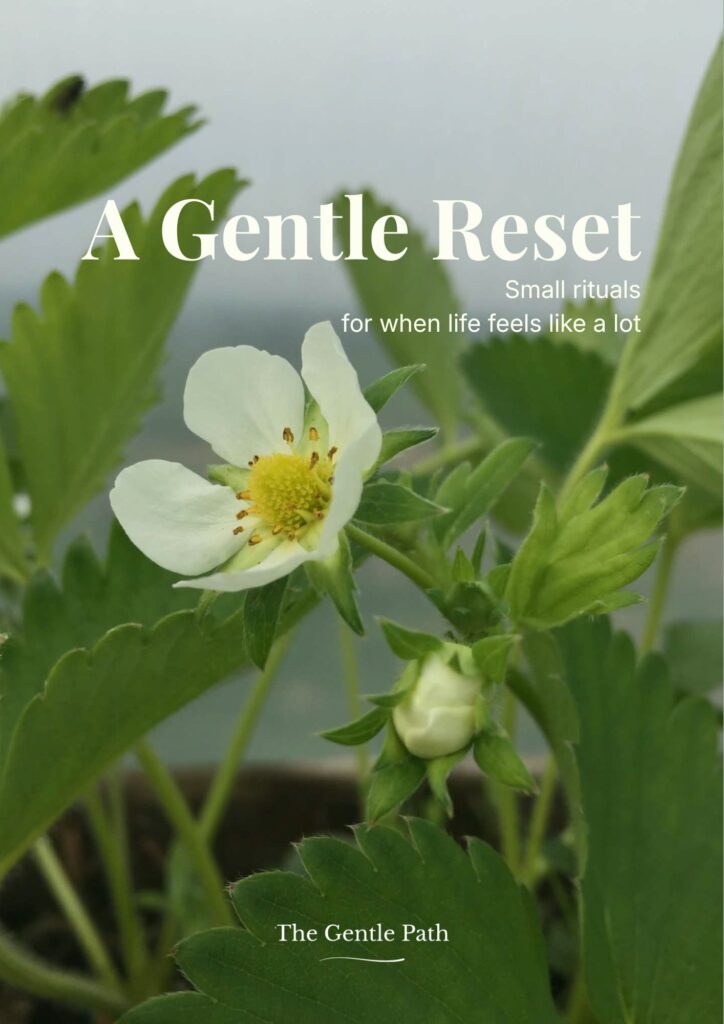
A little something for free — small, gentle rituals for the days that feel like too much.