
(and Why That’s Okay)
If you’ve ever opened an old journal and snapped it shut again almost immediately, heart going a bit too fast, stomach tight — you’re not alone, and there’s nothing wrong with you for feeling that way.
I genuinely hate rereading my own journal. I want to be upfront about that, because most of what gets written about journaling assumes the opposite — that going back through your own pages is where the real benefit lives, the reflection, the growth, the satisfying “look how far I’ve come” moment. For me, it’s mostly just discomfort.
My Actual Pattern
I hear it constantly — you should journal, everyone says, therapists and wellness blogs and well-meaning friends alike. So I start. I go at it properly for a few days, writing things down the way I’m told will help. Then something comes up, life gets in the way, and I drop it. Weeks later I pick the notebook back up, and instead of starting fresh, I flick back to the last few pages to see where I left off.
That’s where the trouble starts. I only really write when something’s actively upsetting me, or sitting heavily on my mind. I write in the heat of it, not after it’s settled. So when I go back a few days or weeks later, once whatever it was has actually lessened, I read it and feel almost embarrassed by how intense I sound. Overblown. A bit foolish, even, for having felt things quite that strongly about something that’s mostly resolved itself by the time I’m rereading it.
For a long time, I assumed that meant I was doing journaling wrong somehow. That a “proper” journaler would feel calm and reflective looking back, not cringing and closing the notebook.

What I’ve Actually Learned
I don’t think that discomfort is a flaw anymore. I think it’s mostly just proof that the feeling has actually passed, which is sort of the entire point of writing it down in the first place. There’s something genuinely exposing about meeting an earlier version of yourself on the page, mid-feeling, before any of it had settled. You see the fear, the overthinking, the rawness, all in your own handwriting, and suddenly you’re back inside a moment you’d otherwise have moved past entirely.
That version of me wasn’t wrong to feel what she felt. She just hadn’t gotten to the calmer side of it yet, the side I’m usually standing on by the time I reread anything. I don’t need to reconnect with her exactly, or relive what she was going through. I think it’s enough to just acknowledge that she got through it, and that every bit of distance I’ve got now exists because of however she handled it at the time, foolish-sounding journal entry included.
Why the Discomfort Sometimes Backfires
The tricky part is that this discomfort can quietly sabotage the whole habit. Once you know your calmer future self might wince at how dramatic today’s entry sounds, you start editing yourself even as you write it. Holding back the rawest version of what you actually feel because you don’t want to look silly later. And once rereading starts to genuinely hurt, the easiest response is to just stop opening the notebook altogether. The thing that was supposed to help you process feelings turns into one more place you’ve trained yourself to avoid.
I don’t think healing comes from that kind of self-judgment. It comes from something closer to compassion — extending the same patience to your own past entries that you’d extend instantly to a friend showing you the exact same pages.
Writing as Release, Not Something to Revisit
I’ve started to think journaling doesn’t actually have to be about rereading at all. We tend to assume the point is analysis — write it down so you can study it later, learn from it, track your own growth across the pages. But there’s another way to use a notebook entirely: as release rather than reflection.
You can write something down purely to get it out of your head and onto a page, with no obligation to ever look at it again. Whisper the truth of how you’re feeling onto paper, close the notebook, and trust that the act of writing it was the whole point, not a first step toward something else. Not every word you write needs to be read again. Some are just meant to be written, and then left alone.
If you’re drawn to small, gentle practices like this — ones that ask nothing more of you than showing up — A Gentle Reset is a free e-book of quiet rituals for exactly that kind of unhurried, low-stakes presence.
What Actually Helps Me
A few small adjustments have made this easier for me, practically. Sometimes I’ll write something down and then physically tear the page out and get rid of it — recycled, occasionally burned if it really needs that level of finality — and there’s something genuinely cleansing in the act itself, regardless of whether I ever read the words again. Other times I’ll write a quick letter to the version of myself who actually needed to hear whatever I’m about to write, seal it, and never reopen it. It becomes an act of compassion rather than something waiting to be analysed.
I’ve also started keeping a notebook I’ve labelled clearly as not for rereading, which sounds almost silly written down, but it’s made a real difference. Knowing in advance that nobody, not even future me, is ever going back through those particular pages means I write far more honestly in them than I do in anything I expect to revisit.
And sometimes, instead of writing about what already happened, I’ll write about what I’m hoping for instead — how I want tomorrow to feel, what kind of energy I’d like to bring into it. That version never makes me cringe later, because there’s nothing raw in it to wince at.
Other Ways In, If Writing Doesn’t Suit the Moment
If the page itself feels too heavy some days, there are gentler alternatives that do something similar. A quick voice memo lets you process the same feeling out loud without leaving a written trail you might later flinch at. A simple mood rating, or a short gratitude list, or a habit checked off — these track something real without demanding full sentences about how you actually felt. Painting, doodling, or collaging a feeling instead of describing it works too. It’s still a form of journaling, in a sense. It just speaks in a different language than words.
The Part I Keep Coming Back To
Your journal exists to serve you, not the other way round. If a single sentence does more for you than three full pages, that’s allowed. If voice memos work better than handwriting, that’s allowed too.
You don’t have to reread anything to have actually healed from it. The words already did their job the moment you wrote them — they gave a difficult feeling somewhere to land, and that’s often enough on its own. If looking back still feels like too much, closing the book isn’t avoidance. It’s just choosing peace over proof, which is a perfectly reasonable thing to choose.
Some pages are allowed to stay closed.
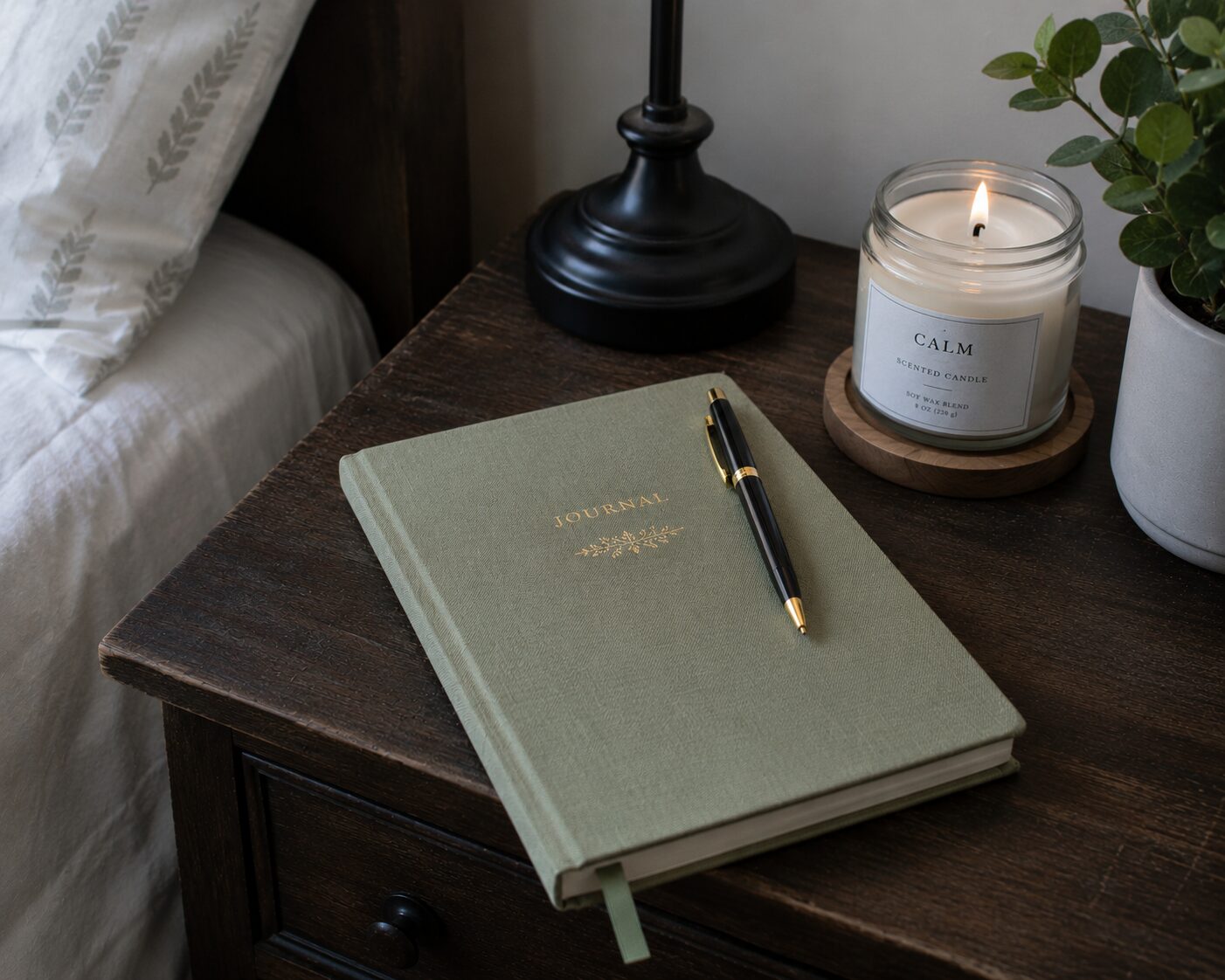
If you’re ready to start a practice like this, choosing a notebook that feels like an invitation rather than an obligation can help — I love this handmade journal from Etsy, simple and calming, well suited to a write-and-close kind of practice.
As an affiliate, I may earn a small commission at no extra cost to you. Thank you for supporting The Gentle Path.
A little something for free — small, gentle rituals for the days that feel like too much.