
Burnout Recovery: A Gentle Path Back to Yourself
Burnout isn’t just tiredness.
It’s the slow unraveling of your inner world — the part of you that kept going long after your energy ran out.
If you’re here, you’re likely carrying more than fatigue. You may feel foggy, overwhelmed, emotionally fragile, or strangely disconnected from yourself.
Recovery takes time. And softness. And the permission to move at a pace that finally feels human again.
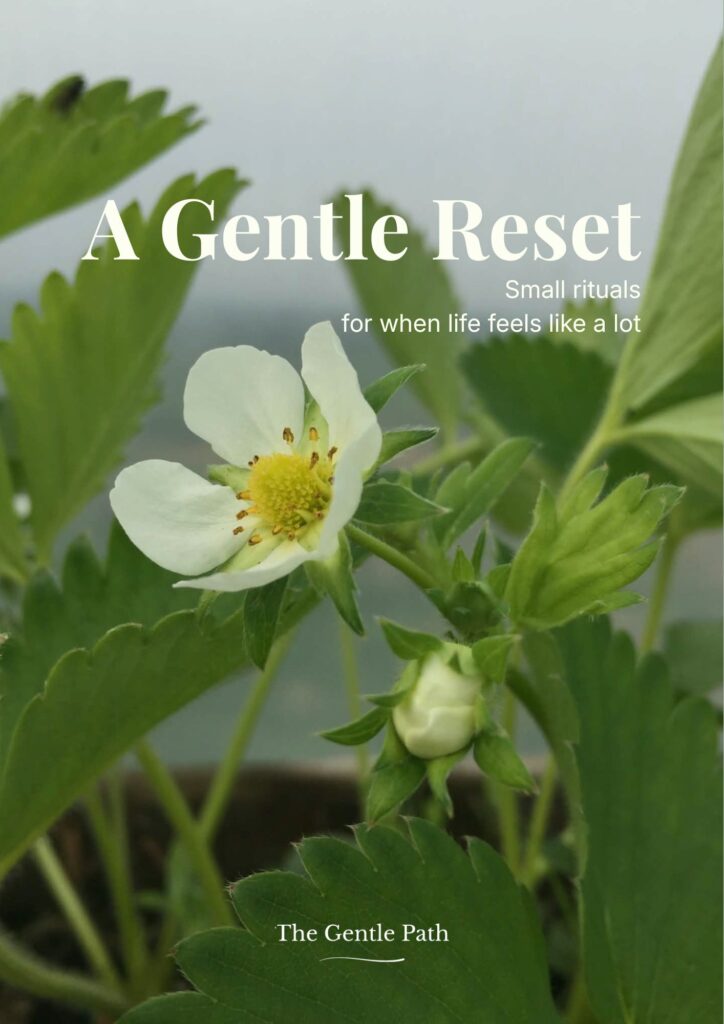
A Small Companion for the Road
If any of this feels familiar, A Gentle Reset is a free e-book of small rituals for the days that feel like too much — written for exactly the kind of tired this page is about.
This Page Is Personal
I know what burnout feels like from the inside. Not as a concept, not as something I’ve researched — as something I lived through, slowly and without fully realising what was happening until I was already deep inside it.
For years I worked in a demanding environment, performing as an extrovert in a role that rewarded exactly that — visible, energetic, always available, always on. I’m not an extrovert. I never was. But I’d learned to function as one so convincingly that even I stopped noticing the gap between who I was performing and who I actually was underneath it.
The exhaustion built so gradually that I mistook it for normal. This is just how work feels. This is just how life feels. I kept going, kept delivering, kept showing up as the version of me that the job expected — until one day I couldn’t anymore. Not dramatically. Not with a single breaking point I can point to and say, that was it. Just a slow, quiet running out of everything I’d been running on.
Coming out the other side took longer than I expected, and it looked nothing like the recovery I’d imagined. It wasn’t a return to who I’d been before. It was the beginning of something different — a slower life, a more honest one, a life built around what I actually need rather than what I’d always assumed I should be able to handle. I’ve written about what burnout actually taught me, if you want to read the fuller version of that story.
That experience is one of the reasons burnout recovery has a place on this blog. Not because The Gentle Path grew directly out of it — there are years of life between that period and this one — but because I understand, from the inside, what it actually costs to run on empty for too long. And I see it everywhere around me still — people working incredibly hard just to stay afloat, pushing through because stopping feels impossible, keeping up because the alternative feels worse. I write about burnout because I want those people to feel seen and heard. And because I hope, genuinely, that some of what’s here might help someone recognise what’s happening early enough to change course — that a crash isn’t always inevitable, and that a slower life is something you can move toward before you’re forced into it.
Understanding Burnout and the Start of Recovery
Burnout isn’t always loud or dramatic. Most of the time, it’s a slow dissolving of your inner steadiness — the part of you that used to cope, carry, organise, care, and keep going. It’s what happens when you’ve been functioning on emotional debt for too long.
Burnout can feel like your thoughts moving through fog, emotions sitting too close to the surface, tiny tasks feeling strangely heavy, your nervous system stuck somewhere between numb and on edge, losing interest in things you usually enjoy, wanting silence more than anything else.
It’s not weakness. It’s not laziness. It’s the honest reaction of a body and mind that have been holding far too much for far too long.
Burnout is your system saying: I can’t live like this anymore.
And while that can feel frightening, it’s also a beginning — the moment life invites you to soften, slow down, and come home to yourself again.
The Early Signs You Might Be Burning Out
Burnout rarely arrives in one dramatic moment. It builds quietly — slowly shifting how you feel, how you cope, and how much of yourself you have left to give. Most people don’t notice the early signs because life is busy, expectations are high, and you’ve learned to push through. But your body and mind always send signals. Gentle ones at first.
Subtle emotional signs: You feel unusually irritable or sensitive. Small tasks suddenly feel overwhelming. You feel disconnected from things you used to enjoy. You’re quicker to tear up or shut down.
Physical signs your body is tired: Constant fatigue that doesn’t improve with sleep. Headaches, muscle tension, or random aches. Shallow breathing. Feeling wired but tired — exhausted but restless.
Mental signs your mind is overstretched: Difficulty concentrating. Forgetfulness. Trouble making simple decisions. Feeling mentally foggy or slow.
Behavioural signs you might overlook: Avoiding social plans because you don’t have the energy. Procrastinating things you normally handle easily. Increased screen use as a distraction. Feeling guilty for wanting rest.
None of these signs mean you’re failing. They simply mean you’ve been carrying too much, for too long, without enough support or softness. Recognising them early is the first step toward healing. And if you’re wondering whether what you’re feeling has already gone past early warning signs, you’re allowed to be tired — that piece speaks to the deeper exhaustion that comes when you’ve been pushing through for too long.
The 4 Stages of Gentle Recovery
1. The Fog Stage
This is where everything feels heavy, unclear, or overwhelming. You’re tired in ways you can’t explain. Your mind feels slow, your emotions close to the surface, and everyday tasks suddenly feel bigger than they are. Nothing is wrong, but nothing feels right either. This is your body asking you to pause, notice, and soften your pace.
2. The Softening Stage
Here, your system begins to loosen its grip. You start removing small pressures, lowering unrealistic expectations, and choosing rest without the same guilt. You make tiny adjustments — gentler mornings, slower evenings, quieter weekends. This stage is subtle, and it often goes unnoticed, but it’s where healing quietly begins.
3. The Rebalancing Stage
Energy returns slowly, irregularly, and in small waves. You begin reconnecting with things you enjoy, but in much smaller doses. Your boundaries strengthen. You say no more often. You protect your time. It’s a stage of learning what supports you — and what drains you — with a clarity you didn’t have before.
4. The Reconnection Stage
This is where you feel yourself again — not the old version of you, but a softer, more grounded one. You reconnect with people, routines, and experiences that nourish you. You move with intention, not urgency. Joy feels possible again. You feel steadier, clearer, and capable of holding yourself with compassion.
You don’t have to hurry. Recovery will meet you where you are.
A Few Honest Answers
Is burnout the same as depression? Not quite, though they can overlap and feed into each other. Burnout is usually tied closely to prolonged stress and over-functioning in a specific area of life — most often work, but not always. Depression can exist independently of any particular stressor. If you’re unsure which you’re experiencing, a conversation with a professional is worth having.
How long does burnout recovery take? There’s no fixed timeline, and anyone who tells you otherwise is guessing. Some people move through the four stages above in months; for others, it takes years, especially if the conditions that caused the burnout haven’t fully changed. Recovery isn’t linear either — you may move backward into the Fog Stage occasionally even once you’ve reached Reconnection.
Can burnout cause physical symptoms? Yes. Headaches, muscle tension, disrupted sleep, a racing heart, digestive issues — burnout lives in the body as much as the mind. If physical symptoms are severe or persistent, please see a doctor to rule out other causes alongside addressing the burnout itself.
This Page Will Keep Growing
Burnout recovery isn’t something I can cover in one article, and I don’t think it should be. This page is where I’ll keep gathering everything I write about burnout — new reflections, deeper dives, and eventually, a small series of books walking through what comes before burnout, during it, and after.
If you don’t find what you need today, come back. There will be more.
Articles to Support Your Burnout Recovery
Burnout recovery looks different for everyone, and you might find that certain themes speak to you more than others. Here are six reflections from The Gentle Path that can support you wherever you are in your healing process.

Recognizing the Signs
The subtle emotional and physical shifts that appear before full burnout hits — and how to understand them with clarity and kindness

The Quiet Shame of Burnout
Burnout often arrives wrapped in shame. This piece speaks directly to that feeling, and offers something gentler instead.

What Comes After the Crash
What life looks like in the quiet aftermath of burnout, and how healing often begins in the smallest, most invisible moments

Finding Support
A reminder that healing isn’t a solo mission, and that even the softest forms of support can make the biggest difference

Why Your Body Won’t Calm Down
What’s actually happening in your body during and after burnout, and what nervous system regulation means in practice.

You’re Allowed to Be Tired
A quiet permission slip for anyone still waiting until they’ve earned the right to rest.
You’re Not Meant to Do This Alone
Healing from burnout is a slow, deeply personal process — and there is no single path that works for everyone. What matters most is that you move at a pace that honours your limits, your needs, and your nervous system.
One of the kindest steps you can take is to seek professional support. The right therapist or guide can offer grounding, clarity, and a safe space to understand what’s happening inside you. You don’t have to carry this alone, and you don’t have to figure everything out by yourself.
If you’re here, reading this, you’ve already taken a brave step: you’re choosing awareness instead of avoidance, gentleness instead of pressure. And that matters more than you know.
There’s no race to the finish line. There’s only your timing, your capacity, and the small ways you show up for yourself each day.
Whenever things feel heavy or uncertain again, you can return to this space — to breathe, to reset, to remember that your worth has never depended on how productive or strong you appear.