

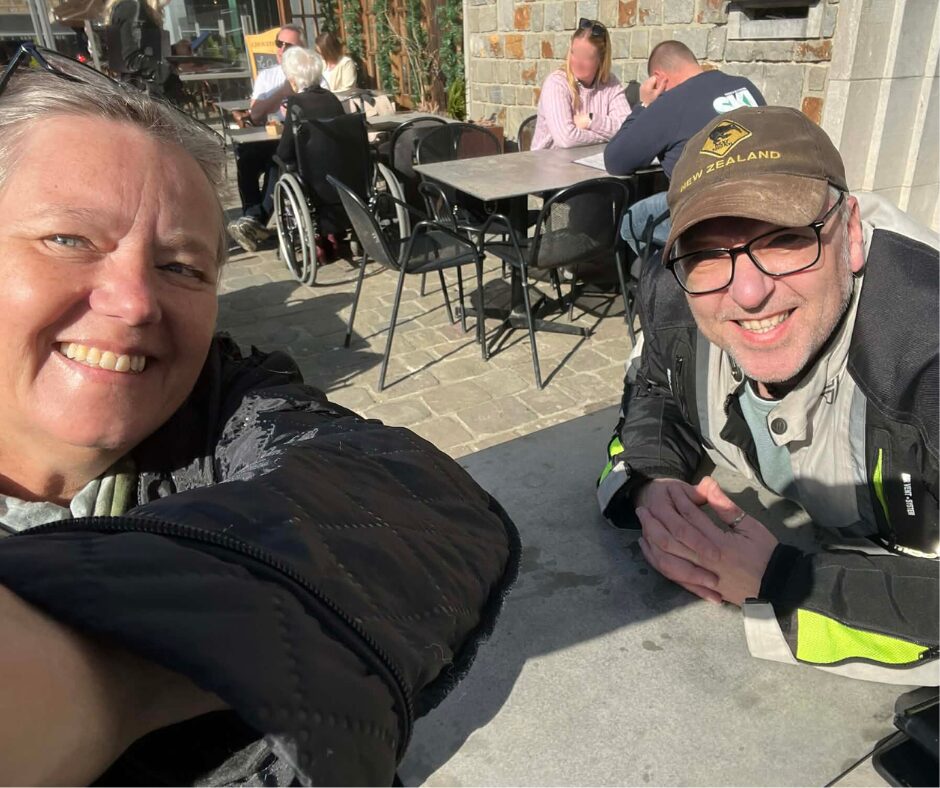
There’s a photo from this spring I keep coming back to. Roger and me, still in our motorbike gear, sitting on a terrace in La Roche-en-Ardenne in the first proper sunshine of the year. A cold Belgian beer for me, a coke for him. Nothing remarkable happened. We just sat there for a while, helmets on the table, watching the village go about its afternoon.
I almost didn’t think it was worth mentioning anywhere. Just a drink on a terrace. Nothing improved, nothing achieved, nothing learned. And that hesitation — the instinct to wave away a good hour as not really counting for anything — is exactly the thing I want to talk about.
A Bit of Backstory
I wasn’t always a fan of motorbikes. When Roger first wanted to learn, years ago, I wasn’t thrilled. He bought one anyway, fell properly in love with riding, and eventually talked me into a helmet and proper gear so I could sit behind him. It was fun. Not entirely comfortable, but fun.
Then the bike broke down, and not long after that, we went through a genuinely difficult stretch — a few hard years of figuring some things out about our relationship and about each other, the kind of stretch that doesn’t have a tidy summary. I bought the campervan during that time and took myself off on long solo trips with the dogs, partly to think, partly just to have some distance to think in. We came out the other side of it with a much better understanding of each other, and slowly, things settled into something steadier.
This March, Roger bought another motorbike — a big Honda Goldwing this time. We went out to test it together, riding to La Roche, which is exactly the kind of place this part of the world was built for on a bike. That’s the terrace, that’s the beer and the coke, that’s the photo. A small, ordinary, genuinely lovely afternoon, after years that hadn’t had many of those.
Why I Almost Didn’t Count It
Here’s the thing I noticed afterwards. If someone asked me what we did that weekend, “had a drink on a terrace” feels like it needs something else attached to it to be worth saying out loud. It feels different from being able to say he then rode three weeks solo through Europe in May, which he did, and loved, and which sounds like an Achievement with a capital A. The terrace afternoon doesn’t have that shape. It didn’t build anything, prove anything, or lead anywhere in particular.
But I don’t think that makes it worth less. If anything, after the years that came before it, that terrace afternoon mattered more than most of the impressive-sounding things either of us has done since. It didn’t need to be useful. It just needed to be good, and it was.
The Quiet Rule We’ve Absorbed
We talk a lot about rest, about protecting our energy, about not burning out. We talk far less about enjoyment, and when we do, it tends to come with conditions attached. Enjoying something is fine, as long as it’s healthy, or productive, or somehow improving you in a way you could explain to someone else afterward. Pleasure as a tool is welcome. Pleasure for its own sake makes people reach for a disclaimer — “guilty pleasure,” as if joy needs an apology attached before it’s allowed to stand on its own.
I think a lot of us run our lives through that same filter without quite noticing. Did I use my time well. Did I grow. Did I improve. Somewhere in there, a cold beer on a terrace with nothing to show for it afterward starts to feel slightly indulgent, even though nothing about it caused any harm to anyone.
What I’m Trying to Let Go Of
Rest removes exhaustion. This was something else — something closer to aliveness coming back, after a stretch where I’m not sure either of us had much of that to spare. You can rest and still feel flat. That afternoon didn’t feel flat. It felt like colour coming back into something that had been fairly grey for a while, the same kind of quiet lift I’ve noticed before in small, easily overlooked moments of joy — nothing dramatic, just enough to remind you that you’re still capable of feeling good.
I don’t think joy needs to justify itself by improving me afterward. Some of it can simply have been good, full stop, the way that terrace was good — not because of anything it built toward, but because we were both there, in the sun, with nowhere else we needed to be.
If you’re looking for small ways to practise that kind of uncomplicated presence, A Gentle Reset is a free e-book of gentle rituals for moments that don’t need to justify themselves.
We’re planning to ride together properly next year, further than a test drive to the next town over — and honestly, the back seat of a Goldwing is far more comfortable than I expected, so comfort isn’t even the worry. What I’m actually looking forward to is the adventure itself. We’ve both had our solo trips, his on the bike, mine in the campervan, each figuring something out on our own. This one we get to do together, and I don’t think I need any more reason than that.
A little something for free — small, gentle rituals for the days that feel like too much.