I didn’t choose slow living.
Slow living chose me — or rather, burnout chose it for me, and I followed along because there was nothing else left to do.
I’ve written before about what burnout looks like when it arrives, and what happens in the aftermath. But I haven’t written much about what it actually taught me. What it left behind, once the worst of it passed.
Because it did leave something behind. Something I didn’t expect.
It Started With Stopping
When burnout finally caught up with me, I stopped.
Not gracefully. Not intentionally. I stopped the way a car stops when it runs out of fuel — not a choice, just the end of the road.
At first that felt like failure. Like I had been beaten by something I should have been able to outrun. I watched the world keep moving — emails arriving, people managing, life continuing — and I couldn’t participate. Not even a little.
And then, after a while, something strange happened.
The quiet started to feel less like punishment and more like something I had been needing for a very long time.
The World Didn’t End
This is the thing nobody tells you when you’re in the middle of burning out.
The world keeps going. And somehow, mostly, it’s fine without your constant input.
Things still need doing. I’m not going to pretend otherwise. But what burnout showed me — slowly, uncomfortably — was that the urgency I felt around those things wasn’t always coming from the tasks themselves.
It was coming from me.
The pressure to do everything, right now, all at once. The sense that if I didn’t stay on top of it all, something would collapse. That feeling had become so familiar I had stopped questioning it. It just felt like life.
But when I was forced to stop, most things waited. Not forever. Not without consequence. But they waited. And the ones that truly couldn’t — someone else handled them. That was its own lesson. That asking for help wasn’t a sign that I had failed to cope. It was just a more honest way of living. One person can only carry so much, and burnout has a way of making that very clear, whether you’re ready to accept it or not.
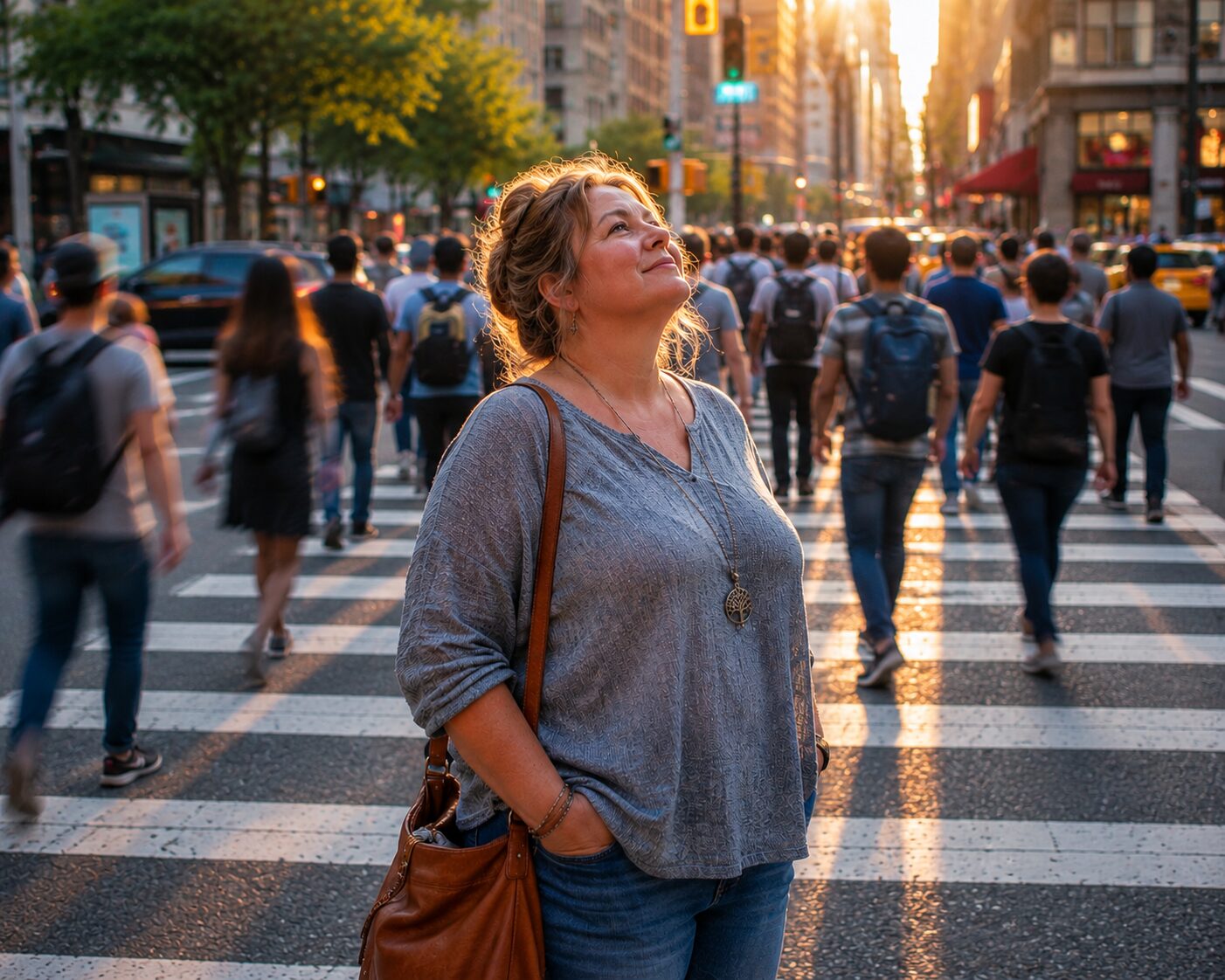
That was one of the first things burnout taught me. That I had been living at a pace that was a choice, not a necessity. That the urgency I felt was real, but a lot of it was constructed. By habit. By fear. By a world that had convinced me that slowing down was the same as falling behind.
It isn’t.
Slow Wasn’t Lazy — It Was New
When I started living more slowly — because I had to, not because I wanted to — I expected to feel better quickly.
I didn’t.
At first, slow felt deeply uncomfortable. I didn’t know what to do with unscheduled time. I didn’t know how to sit without a task. I kept reaching for my phone, for a purpose, for something to justify the hours.
Rest, it turned out, was something I had to relearn.
And that was uncomfortable to admit. That I had spent so long doing that I had completely lost the ability to simply be. That somewhere along the way, my worth had become entirely tied up in my output.
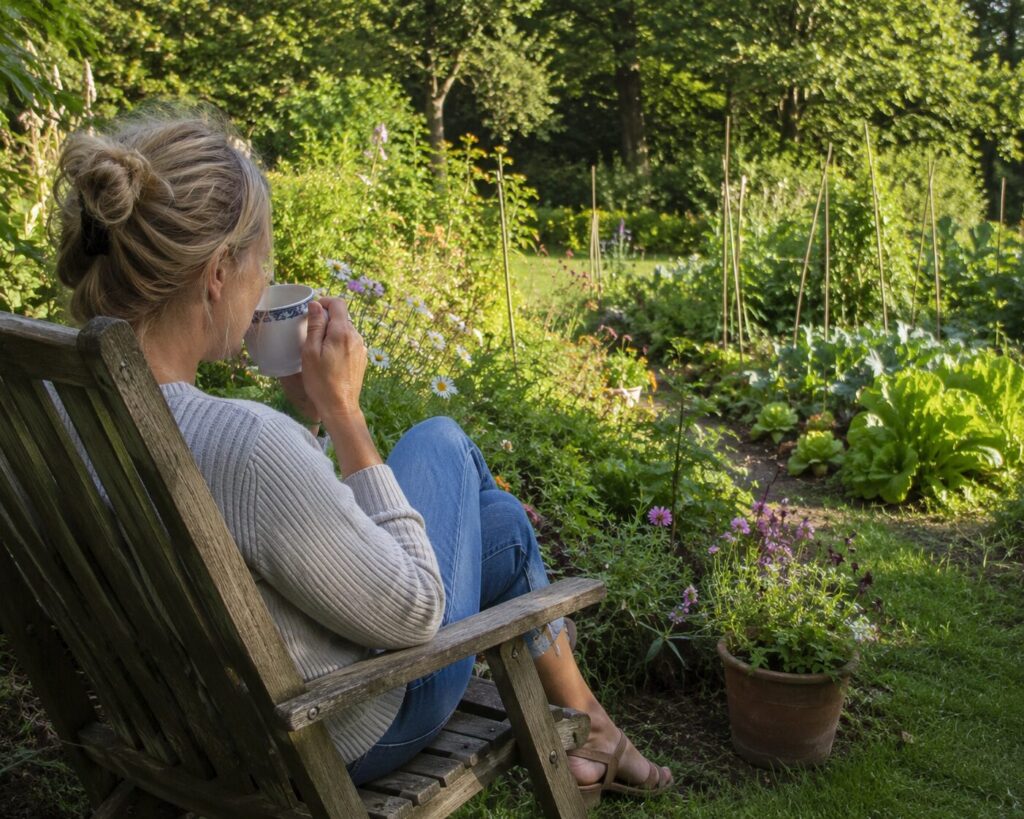
Burnout cracked that open. Slowly, slowly, I started to understand that rest wasn’t something you earned at the end of a productive day. It was something you were allowed — always. Without condition.
What Slow Living Actually Looks Like for Me Now
It doesn’t look like candles and linen and perfectly calm mornings.
Some mornings are still hard. Some days still feel like too much. Slow living isn’t a cure for the difficult parts of being human.
But it does look like this:
I notice when I’m speeding up unnecessarily. When the pace I’m moving at isn’t coming from the task itself, but from an old anxiety that tells me faster is safer.
I rest before I’m empty. Not always — I still catch myself running low before I stop. But more often than before.
I go on extended trips with my campervan. Time away from the familiar, closer to the rhythm of the day. Earlier mornings, quieter evenings, more time outside. Not because it’s romantic — though sometimes it is — but because it suits the person burnout revealed I actually was. Someone who needs space. Quiet. A pace that matches the world outside the window rather than the notifications on the screen.
I stopped needing to justify rest. That took the longest. And I’m still working on it, if I’m honest.
The Unexpected Gift
I wouldn’t wish burnout on anyone.
But I also can’t pretend it gave me nothing.
It gave me a clearer sense of what I actually need versus what I had been told I should want. It gave me a different relationship with time — less like something to fill and more like something to move through gently. It gave me The Gentle Path, in a way. This whole space grew from the question burnout left me with: what does a life feel like when it’s lived at a human pace?
I’m still finding out.
But I’m glad I’m looking.
If you’re in the middle of it right now, or just starting to find your way out, you might find something useful on the Burnout Recovery guide.