
When people ask about Gentle Productivity, they often expect techniques.
Better planning.
Smarter routines.
More intentional habits.
But Gentle Productivity isn’t about managing yourself more carefully.
It’s about reducing how much has to be managed at all.
Because for many people, life isn’t overwhelming because they’re doing things wrong —
it’s overwhelming because too much responsibility is being carried silently, internally, and often by one person.
A Gentle Reminder Before We Begin
These are not tools to:
- become more efficient
- optimise your life
- keep up better
They are tools that:
- move responsibility out of your head
- make expectations visible
- reduce mental load
- work even when you’re tired
Gentle Productivity only works if it survives real life.
One Shared System for Life Outside of Work
Gentle Productivity works best when everyday life lives in one shared place.
Not spread across calendars, task lists, messages, and mental notes —
but gathered in a single overview that everyone can see.
This is why an all-in-one board works so well.
It holds:
- who’s involved
- what needs doing
- when things are happening
- notes that don’t belong anywhere else
And it does so without relying on one person to quietly carry the remembering, the planning, and the follow-up for everyone else.
The key is not which tool you choose —
but that you choose one shared system, not several.
Option 1: The Analog Version (One Board for Everything)
For many households, the gentlest place to start is a physical board.
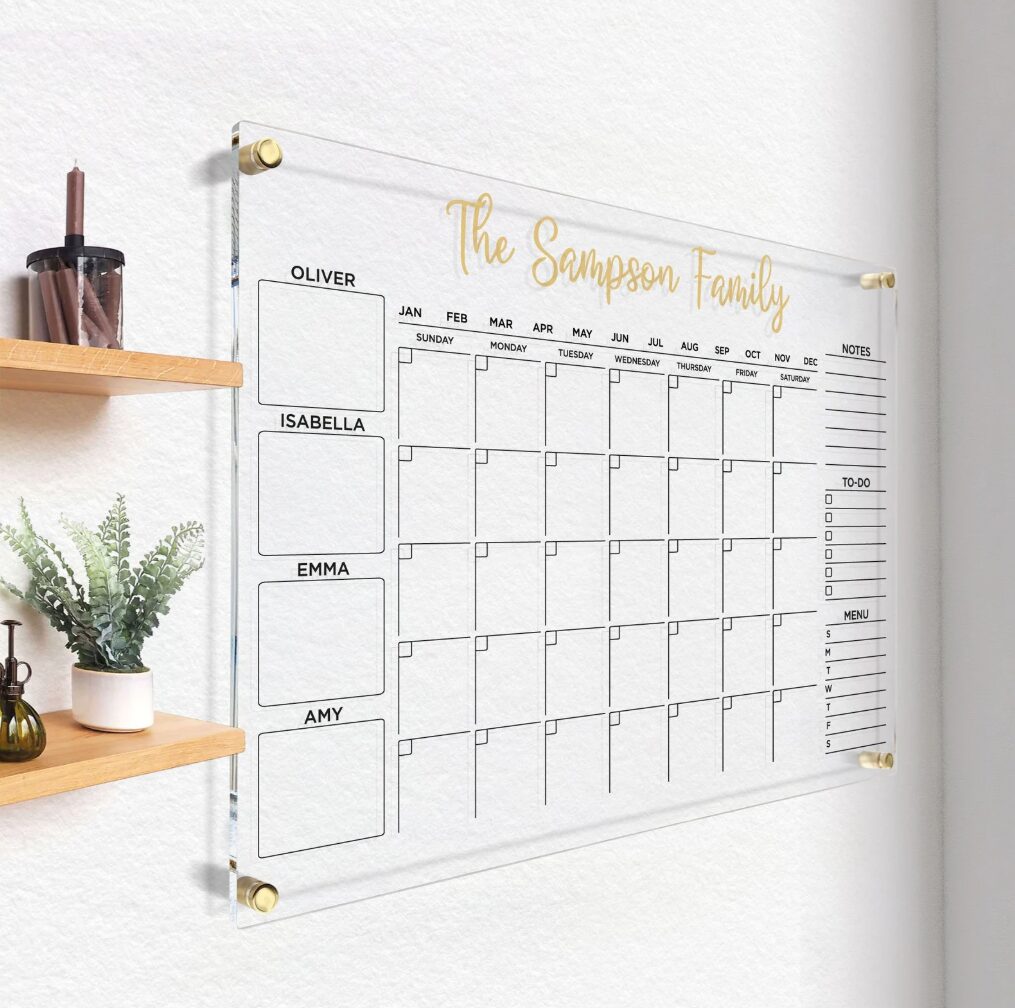
A shared planner board in a central place — like the kitchen — can hold everything in one view:
- days of the week or month
- family members
- to-dos
- notes
- even meals
Because it’s visible and unavoidable, it does something digital tools often don’t:
it quietly holds life in place.
You don’t have to open it.
You don’t have to remember it exists.
Something like this personalised acrylic planning board, which combines calendar space, tasks, notes, and meal planning on one surface, is a good example of how much one board can hold:
It doesn’t invite optimisation or perfection.
It invites shared awareness.
Gentle Productivity isn’t about measuring effort.
It’s about making responsibility visible, so it doesn’t quietly fall on one person.
For many people, this one board is enough — and that’s the point.
Option 2: The Digital Version (One Shared Page)
Some households prefer a digital version of the same idea.
If that’s the case, the closest equivalent to an all-in-one board is one shared digital page in a tool like Notion.
Not used as a productivity system.
Not built with dashboards, databases, or templates.
Just one shared page.
That page might include simple sections such as:
- This week – school events, shifts, appointments, late evenings
- To do – household tasks that exist
- Notes – “busy week”, “low energy”, “remember to…”
- Meals (optional)
- Later – things that matter, but not now
No rules.
No pressure to keep it tidy.
The page exists so responsibility doesn’t have to live in someone’s head.
A shared digital board can be very supportive — but it’s worth saying that it usually takes some time to set up well. Even a simple one-page layout requires thinking about what your household actually needs, and what it doesn’t.
That effort is front-loaded. Once the page exists in a way that makes sense to you, it often requires very little upkeep. But it’s not something most people create instantly — and that’s okay.
The biggest benefit of a digital shared board is its flexibility. It can be accessed from anywhere and adapted over time, without becoming another thing that needs managing.
The Paper To-Do List (Personal, Not Shared)
Alongside a shared system, there is still room for something personal.
The paper to-do list.
Not as a master plan —
but as a place to empty your head.
Writing things down by hand stops the constant mental rehearsal of tasks.
They’re held somewhere visible and finite.
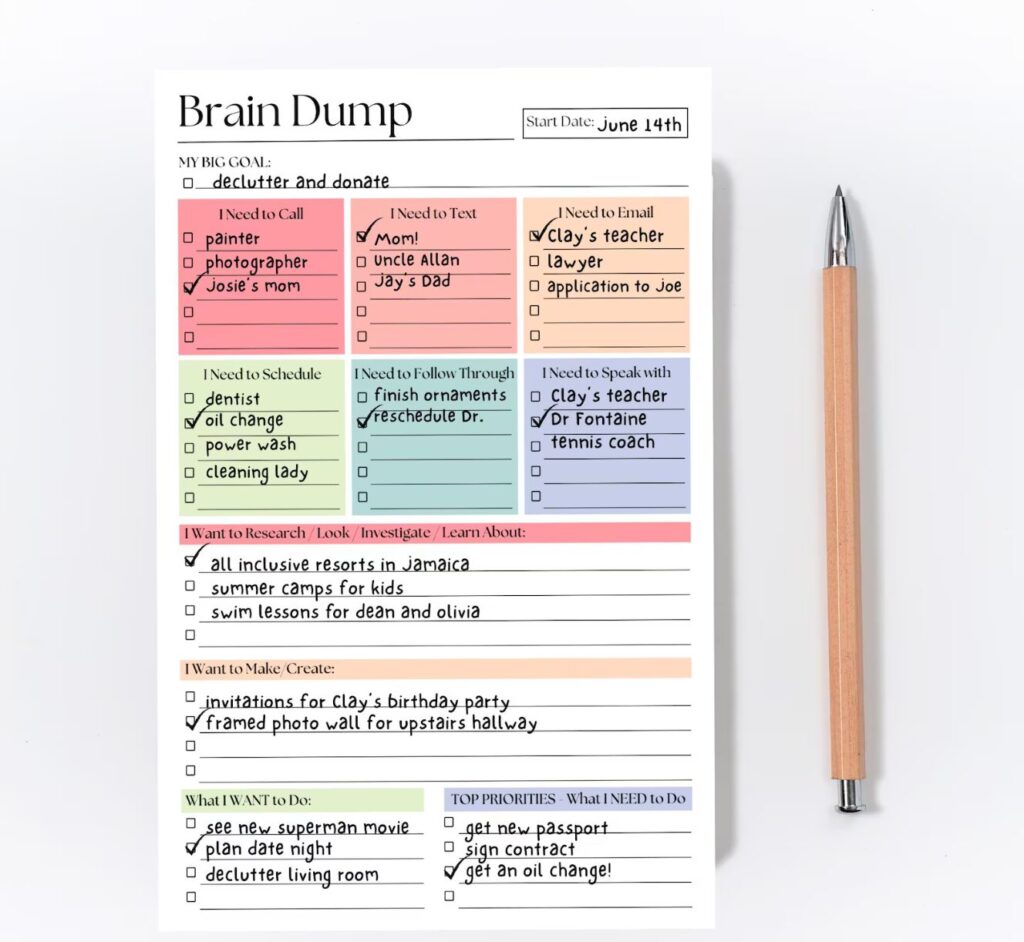
Some people prefer a very simple to-do notepad
Others find relief in a brain-dump style notepad, where everything can land without structure or priority
Both serve the same purpose:
to get tasks out of your head and onto the page.
A paper list:
- has natural limits
- can’t grow endlessly
- reflects what’s realistically possible today
When the page is done — even if not everything was completed —
many people notice their body lets go too.
That’s not productivity.
That’s relief.
Time Containers Instead of Time Control
Gentle Productivity doesn’t try to control time.
It contains it.
A physical timer isn’t about urgency or pressure.
It’s about boundaries.
Used gently, it can mean:
- “I’ll give this 20 minutes, and then I stop”
- “This task won’t take over the whole evening”
- “I don’t need to finish — just begin”
Some people like a calmer, mindfulness-oriented timer
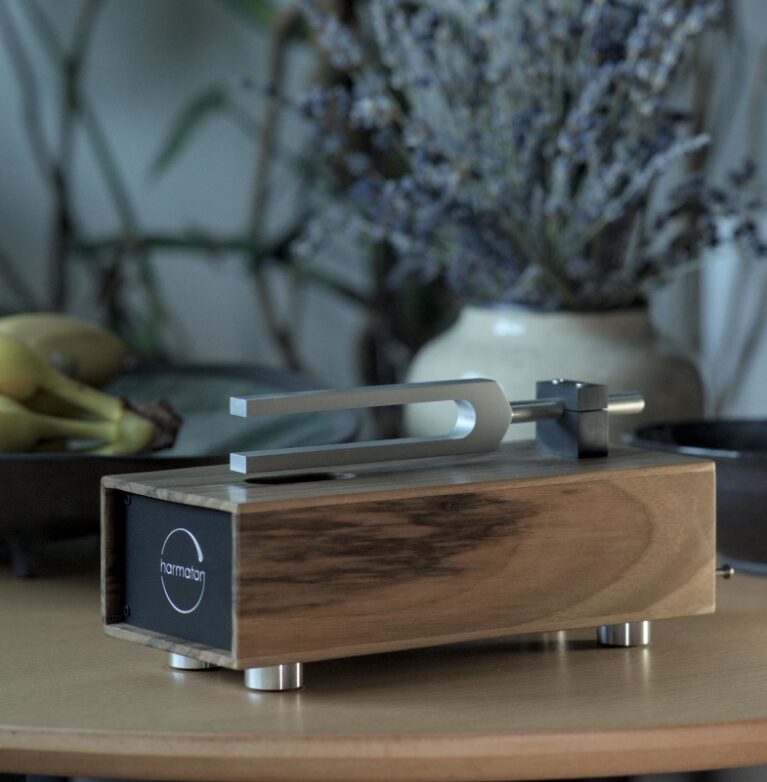
Others prefer a clear, simple productivity timer
The timer doesn’t tell you to do more.
It tells you when you’re allowed to stop.
Letting Machines Carry the Mundane
Some of the most effective Gentle Productivity tools don’t look like productivity tools at all.
They look like machines.
A robot vacuum that cleans the floor on its own.
A dishwasher that runs without deliberation.
A washing machine on a schedule.
Automatic payments.
Recurring deliveries.
These tools matter because they remove entire chains of thought:
remembering, deciding, postponing, negotiating.
When something happens without your involvement, it doesn’t take up space in your mind.
Gentle Productivity values anything that quietly keeps life moving without asking for attention.
What These Tools Have in Common
They all do the same thing.
They externalise responsibility.
They reduce:
- remembering
- tracking
- mental rehearsal
And they work even when energy is low.
This isn’t about doing more with less effort.
It’s about asking less of yourself altogether.
Gentle Productivity, Clearly Defined
Gentle Productivity is a shift away from carrying everything internally.
It’s choosing structures that hold daily life for you —
so your energy can return to living, not remembering.
It’s less about doing things better, and more about no longer having to hold everything together on your own.
If this reflection resonates, you might also want to read the earlier pieces in this Gentle Productivity series.
One explores what happens when work slowly starts taking more than it gives, and another looks at how productivity pressure quietly spills into the rest of life — from movement to rest to everyday choices.
Together, they form a gentle arc: noticing the weight, widening the lens, and finding ways to carry less.