
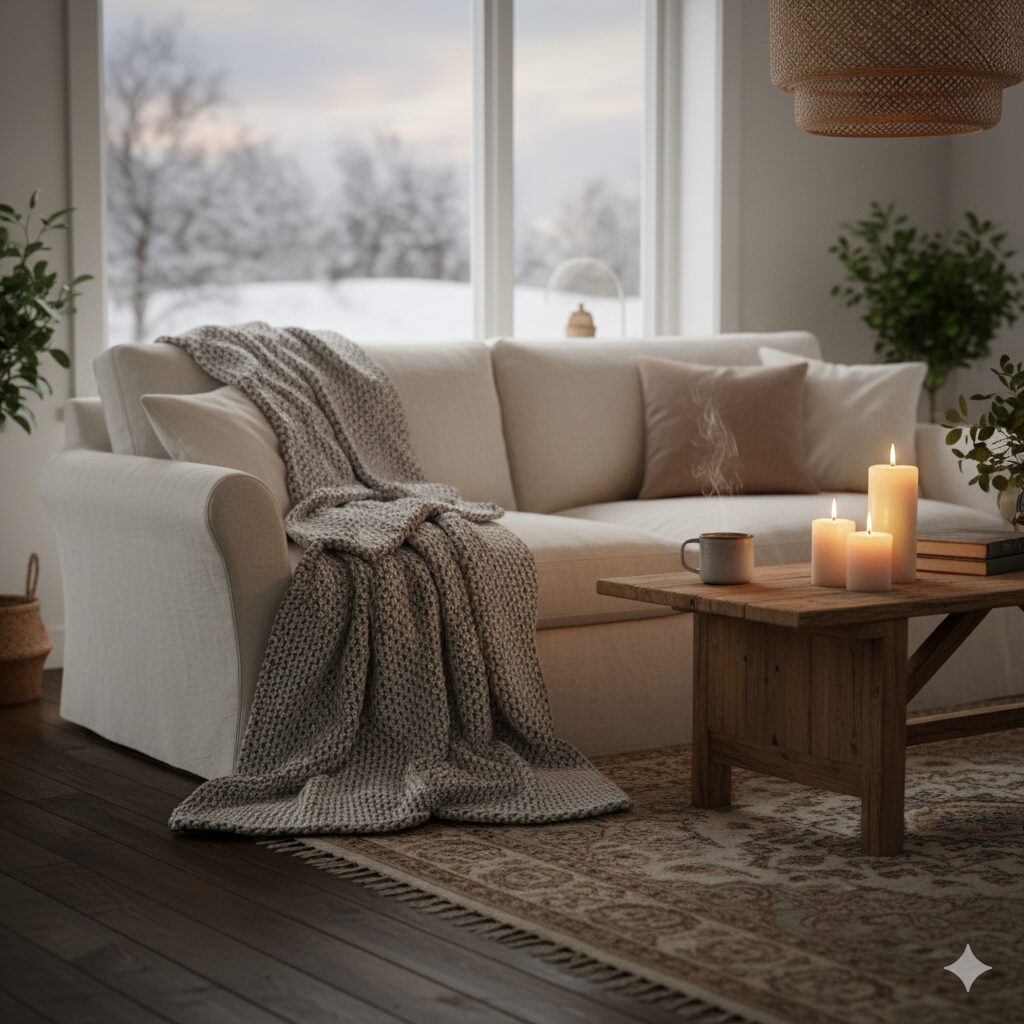
Winter doesn’t have to feel like something to survive. If you’re looking for real, doable ways to make your home feel warmer and calmer through the darker months, here’s the short version: it’s less about buying the perfect thing and more about layering small, sensory details — texture, scent, light, a little nature — until the house itself starts to feel like an exhale. None of these ten ideas need to happen all at once. Pick two or three that genuinely appeal, and let the rest wait for another year.
1. Light a Hand-Poured Candle
There’s something almost ceremonial about lighting a candle on a quiet evening. The soft flicker, the slow burn, the way scent gently unfolds into the room — it changes the whole atmosphere without changing anything at all.
I especially love the look of hand-poured soy candles with sculptural, twisted shapes — something like the swirl pillar candles that have been showing up more often lately, with their soft, almost bubble-like ridges. They bring a touch of quiet beauty to a shelf or bedside table without needing anything else around them. Unlike mass-produced candles, hand-poured soy ones tend to burn cleaner and longer, and there’s something deeply satisfying about knowing a person made the thing warming your room.
Lighting a candle can also become part of noticing the small details that make a day feel lived rather than just completed — the same kind of small, repeatable moment I wrote about in Micro Rituals: Simple Practices for Calm Living.
2. Create a Morning Corner
Start the day with softness. Choose a spot near a window — even a small chair or a cushion on the floor will do — and make it a ritual to sit there for five minutes with your tea, your journal, or simply a few quiet thoughts before the day begins.
Sitting near natural light in the morning genuinely helps. It supports your circadian rhythm, lifts your mood, and gives you a gentle boost during the darker months when daylight is scarce. If your mornings feel rushed or heavy, this simple shift in how you begin them can make a surprising difference.
Keep the space free from clutter and screens. It doesn’t need to be a dedicated room or an expensive setup — a single chair angled toward the light is often enough to make the ritual feel real rather than aspirational.
3. Sip from Something Handmade
There’s a different kind of comfort in drinking from a mug that feels shaped by human hands. Handmade ceramic mugs, with their tiny imperfections and organic glaze, invite you to slow down and actually taste what you’re drinking rather than gulping it down between tasks.
A reactive-glaze pottery mug, the kind where the blue seems to pool and shift across the surface, brings a little quiet interest to grey mornings and pairs perfectly with a good herbal tea. It’s a small thing, but the right small things matter, especially on the mornings when very little else about the day feels within your control.
4. Add Layers of Texture
Soft textiles make rooms feel instantly warmer, not just physically but emotionally. There’s a reason we reach for a blanket when we’re stressed or sad. Texture is comfort made tangible.
Add a wool or cotton throw to the sofa, a sheepskin rug underfoot, or linen cushions in soft, natural tones. Layer them rather than matching them — varied textures catch the light differently and give every corner more depth, warmth, and visual calm. A room with only one texture, however nice, tends to feel flat in winter light in a way it doesn’t in summer, when the sun itself is doing more of that work for you.
5. Bring Nature Indoors
Even in winter, nature belongs inside. A branch in a simple vase, a few pinecones on a shelf, dried eucalyptus in a jug — these small gestures connect us back to the rhythm of the seasons at a time when it’s easy to feel disconnected from the natural world.
I keep a vase of dried lavender from our garden through the winter — a leftover from warm summers when the scent would drift through my office window. Even now, that faint fragrance reminds me that light and colour always return.
If you find that living plants bring you particular calm, winter is actually a wonderful time to add one or two. Houseplants thrive in the drier indoor air of heated homes, and the presence of something living and growing is quietly uplifting during the darker months. I’ve written more about why this particular kind of calm works so well in Bringing Calm In: The Quiet Magic of Houseplants, if you’d like to take the idea further.
6. Surround Yourself with Calm Art
Walls set the emotional tone of a room more than most of us realise. Art with natural motifs — botanical prints, a bird caught mid-flight beside a single bloom, landscape sketches — brings softness and organic stillness. A framed botanical print in warm, earthy tones can echo the textures of the outside world while adding genuine warmth indoors.
Choose pieces that make you feel something when you look at them, not just pieces that match the cushions. Art chosen purely to coordinate tends to fade into the background within a few weeks. Art chosen because it actually moved you keeps doing its quiet work for years.
7. Soften the Lighting
Overhead lights can feel harsh and clinical in winter — exactly the opposite of what a cosy evening calls for. Instead, layer your lighting: small lamps in corners, candles on surfaces, warm-tone bulbs that cast a golden rather than white light.
A handmade ceramic or glass candle holder lets you play with light and shadow, creating a gentle, peaceful glow as evening falls. The difference between a room lit from above and a room lit from below is remarkable — one feels like an office, the other feels like home.
It’s worth walking through your own home in the evening, room by room, just to notice which lights you actually switch on out of habit rather than need. Often the main overhead light isn’t necessary at all once a lamp or two is doing the real work, and turning it off entirely, rather than just dimming it, tends to make the biggest difference of any single change on this list.
8. Simplify Surfaces
Clutter quietly drains energy, even when you’ve stopped consciously noticing it. The visual noise of too many things creates a low-level hum of unfinished business that makes it hard to truly relax.
Choose one or two meaningful objects for each surface: a book you love, a single candle, a small plant, a beautiful stone. Let the rest breathe. Emptiness on a surface isn’t lack, it’s space. And space, in winter, is one of the most generous things you can give yourself.
This tends to be the hardest one on the list to actually do, if I’m honest. There’s a pull toward filling every surface, especially once the seasonal decorating instinct kicks in. Resisting that, just slightly, is usually what makes the difference between a room that feels curated and one that just feels crowded.
9. Add a Scent of Calm
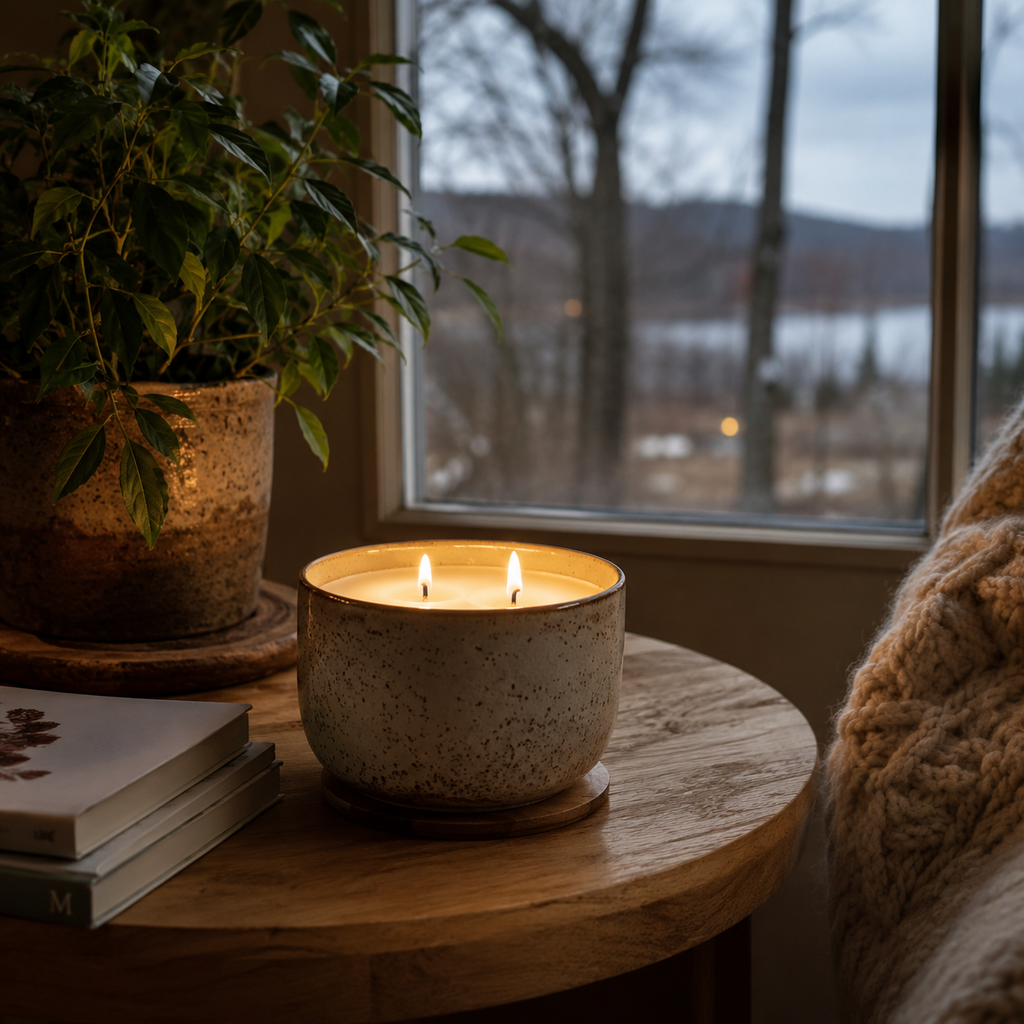
Scent is one of the fastest routes to a shift in mood — it bypasses thought entirely and goes straight to feeling. A subtle, grounding scent can change the emotional atmosphere of a room within minutes.
Try an essential oil diffuser with lavender for calm, cedarwood for warmth and groundedness, or sweet orange for a quiet lift on grey days. These are scents that comfort without overwhelming, like a soft blanket for the room.
It’s worth picking one main scent for the season rather than switching between several. A single consistent fragrance becomes associated with home itself over time, the way a particular smell can transport you back to a specific place the moment you encounter it somewhere else. Winter is a good season to build that kind of association deliberately.
10. Create a Small Evening Ritual
The way we end the day shapes how we rest — and how we begin the next one. A small, consistent evening ritual tells your nervous system that the day is done and it’s safe to soften.
Maybe it’s turning on soft music and dimming the lights at a certain hour. Wrapping yourself in a blanket with a good book. Writing three lines of gratitude before bed. Or simply making a cup of herbal tea slowly, with both hands around the mug, and letting that be enough. If you’d like a fuller version of this idea, Evening Rituals That Feel Like Exhales goes deeper into building an evening wind-down that actually holds up over a whole winter, rather than fading out by the second week of January.
These small rituals become anchors. Over winter especially, when the evenings are long, they give the hours after work a shape that feels gentle rather than empty.
A Gentle Closing
Making your home feel warm and calm doesn’t require perfection, only presence. It’s about noticing what makes you exhale when you walk into a room, and doing a little more of that, a little more deliberately.
A candle flickering. A mug warming your hands. A soft throw waiting for you at the end of the day.
This winter, may your home be a haven — simple, grounded, and gently alive with warmth.
A Few Questions Worth Answering
How can I make my home feel cosier without spending a lot of money?
Small, sensory changes tend to matter more than expensive ones. Layering textures you already own, softening overhead lighting with lamps or candles, and clearing clutter from one or two surfaces can shift how a room feels without any real spend at all.
What’s the easiest way to start making a home feel warmer for winter?
Pick one idea rather than trying to do all of them at once. Layering soft textiles or softening the lighting tend to be the quickest to notice a difference from, and either one can be done in an afternoon.
Do houseplants actually help with winter mood, or is that just a nice idea?
Living plants do seem to offer a genuine, if modest, lift, partly through the presence of something green and growing during a season that can otherwise feel visually flat, and partly through the simple act of caring for something on a daily basis.
How do I create a cosy evening ritual if my evenings are usually chaotic?
Start smaller than feels necessary. A single five-minute habit, like tea made slowly with both hands around the mug, is more sustainable than an elaborate routine, and it can expand naturally once it’s become familiar.
Why does soft lighting make such a difference to how a room feels?
Warm, layered lighting mimics the quality of natural evening light far better than a single overhead bulb does, which is part of why rooms lit from lamp height tend to feel more restful than rooms lit from the ceiling.