
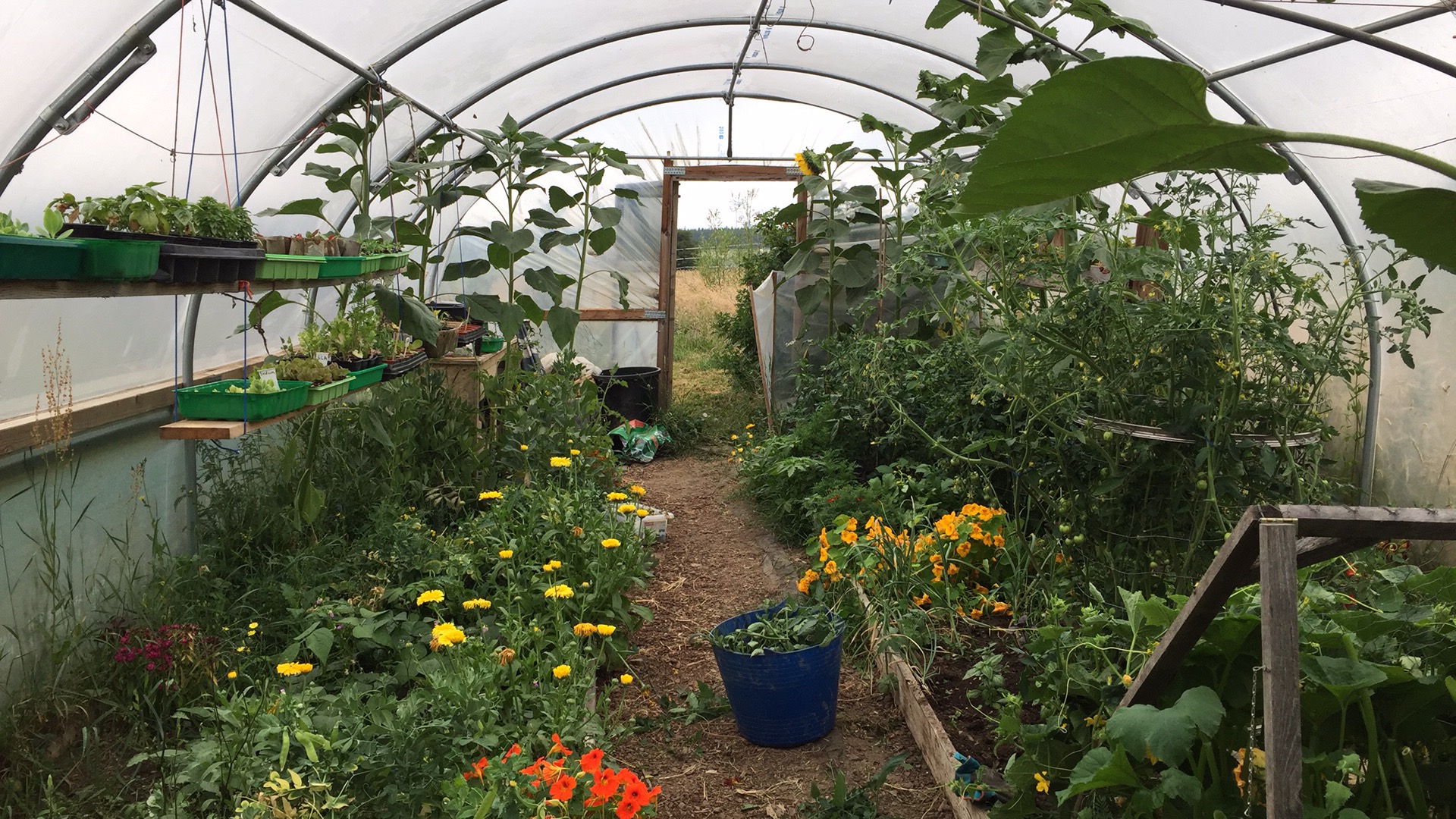
There is no rushing a tomato.
You can give it everything it needs — the right soil, the right warmth, enough water, enough light. You can tend it carefully and watch it daily. But the tomato will ripen in its own time, on its own terms, indifferent to your schedule or your impatience. And when it finally does — when you pick it still warm from the vine and eat it standing there in the polytunnel with soil on your hands — it tastes like nothing you can buy in a supermarket. Because it was grown slowly. Because it wasn’t pushed.
I think about that a lot. About what slowness actually produces, when you let it.
The Polytunnel
We built a ten metre polytunnel a few years ago, and it changed the way I garden entirely.
The Belgian Ardennes has a short growing season. A late frost in May can take out everything you’ve started. September can bring another one before you’ve had time to finish harvesting. For anything that needs warmth — tomatoes, peppers, courgettes, cucumbers — growing outside here is a constant negotiation with the weather, and the weather doesn’t always cooperate.
The polytunnel changed that. Inside, the season is longer, warmer, more forgiving. The crops that would struggle outside thrive in there. And it became something else too — a place I go not just to tend things, but to be.
On summer mornings I walk in and stand still for a moment before doing anything. The warmth hits you immediately. The smell of damp earth and leaves and flowers. The sound of insects — bumblebees working the tomato flowers, the quiet hum of things living and growing. It takes about thirty seconds to feel the day shift. Whatever I was carrying when I walked in becomes slightly lighter.
Even five minutes in the polytunnel is enough to go back inside and work.
A Movement That Grew From the Ground Up
When I started growing my own vegetables about twelve years ago, it was still a slightly unusual thing to do. Not unheard of, but not common either — certainly not among people my age who weren’t farmers or smallholders by background.
That has changed completely.
Over the past decade something shifted, quietly and then quite visibly. People started growing things on balconies, in small urban gardens, in community plots on the edges of cities. Raised beds appeared in back gardens that had previously been lawn. Seed companies reported record sales. Waiting lists for allotments grew years long.
And here is what I find interesting about that shift: most of these people didn’t need the vegetables. They could buy tomatoes and courgettes and herbs perfectly easily, cheaper and faster than growing them. That wasn’t the point.
The point was the growing. The slowing down that gardening demands. The satisfaction of hands in soil, of watching something you planted push through the earth and reach toward the light. The way it pulls you outside and keeps you there, present and unhurried, for longer than almost anything else in a day.
Parents started involving their children — not as a lesson, but because the garden turned out to be one of the few places where a child and an adult could be side by side, absorbed in the same quiet thing, without screens or schedules or the particular friction of modern family life. Communities built plots together. Neighbours compared harvests over fences.
Something about growing things — slowly, imperfectly, with your hands — turned out to meet a need that had very little to do with food.
What Slowness Actually Produces
Modern life has a complicated relationship with slowness. We tend to treat it as inefficiency — time that could have been used better, progress that could have been faster. But gardening makes a different argument, quietly and consistently, every single season.
A seedling grown slowly, in natural light, at the pace the plant actually needs, produces something categorically different from one forced along under artificial conditions. The flavour is deeper. The plant is stronger. The roots go further. Slowness, it turns out, isn’t the absence of progress. It’s what makes certain kinds of progress possible at all.
That tomato I mentioned — the one grown in our polytunnel over the full length of a Belgian summer — tastes the way a tomato is supposed to taste. Sweet, complex, warm from the sun. Nothing about it was rushed. Everything about it is better for it.
I find myself thinking about that when I’m impatient with other things. With a piece of writing that isn’t coming together. With a plan that’s taking longer than expected. With myself, on the days when I’m not moving as fast as I think I should be. The tomato didn’t apologise for taking its time. It just kept growing.
The Lessons You Don’t Expect
Gardening teaches patience in the obvious way — you plant, you wait, you harvest. But it teaches other things too, less expected and more useful.
It teaches resilience. You can do everything right and still lose a crop. A late frost arrives without warning. A slug finds the seedlings you started in February. A bird decides that your carefully netted brassicas are exactly what it wants for breakfast. These things happen, and they cannot be fully prevented, only accepted.
We have a rule in our garden: one seed for us, one seed for the slugs. It started as a practical observation — the slugs are going to get some of it, so plant enough to share — and became something more like a philosophy. You cannot control everything. You can prepare, and tend, and hope, and then you accept what comes.
That acceptance is harder than it sounds. As a home gardener I’ve learned to shrug and take the hit in a way I couldn’t always manage elsewhere in my life. The garden taught me that failure isn’t the end of the story — it’s just part of the season. You clear the bed, you start again, you try something different next time.
Being in the Garden Without Doing Anything
There’s a version of gardening that is productive — planting, weeding, harvesting, building, maintaining. And then there is another version that is simply being there.
I do both, but it’s the second one I value most.
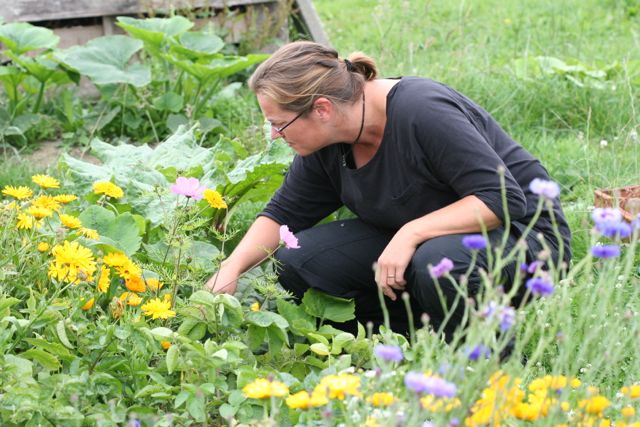
Standing in the polytunnel with nothing particular to do. Noticing the way the light comes through the plastic in the morning. Watching a bumblebee work its way methodically through the tomato flowers, utterly absorbed in what it’s doing. Crouching down to look at something small — a seedling just pushing through the soil, a spider building in the corner, the first flower on the courgette plant.
These moments don’t produce anything. They don’t need to. They are what slow living actually looks like in practice — not a concept, not an aesthetic, but a few minutes of genuine presence in a place that is doing exactly what it’s supposed to be doing, at exactly the speed it needs to go.
The garden has no interest in your to-do list. It just keeps growing, slowly and steadily, whether you’re paying attention or not. But when you do pay attention — when you stop and really look — it gives you something that’s hard to find anywhere else.
What I’ve Actually Learned
Gardening has taught me more about slow living than any book on the subject.
It has taught me that you cannot rush the things that matter. That patience isn’t passive — it’s a form of attention, a willingness to be present for a process rather than just its outcome. That failure is instructive rather than final. That the most nourishing things — the sweetest tomatoes, the deepest rest, the most honest relationships — tend to be the ones that weren’t hurried.
It has also taught me something simpler and harder to articulate. That five minutes standing still in a warm polytunnel, listening to insects and smelling earth, is enough. Not as a prelude to something more important. Just as itself.
That is the whole lesson, really. And the garden keeps teaching it, season after season, whether I’m ready to hear it or not.
Leave a Reply