

January can feel long.
The days are short.
The light disappears early.
And after the noise of December, the quiet can feel heavier than expected.
This isn’t the kind of month that asks for reinvention.
It asks for steadiness.
I don’t think January needs to be fixed.
But it can be softened.
Sometimes, that softening comes from light — not as a solution, but as something that keeps you company through darker days.
Light as Care, Not Optimisation
There is a lot of advice about winter light.
Most of it sounds like something you need to get right.
This isn’t about doing light properly.
This is about using light the way you might use a blanket, a warm drink, or a familiar song — not to change how you feel, but to make space for how you already feel.
Gentle light doesn’t push energy.
It doesn’t demand focus.
It simply stays with you.
And in January, that kind of presence matters.
Morning Light: Beginning Without Abruptness
Dark mornings can be disorienting.
Waking up when it’s still night outside can make the day feel like it starts before you do. Instead of forcing alertness, some people find it helpful to introduce light gradually.
That might look like:
- turning on a soft lamp before checking anything else
- sitting near a window with your first coffee or tea
- allowing light to arrive gently, rather than all at once
I’m personally drawn to light sources that feel more like objects than tools — lamps made of wood or natural materials, shaped in ways that belong in a living space rather than standing apart from it. A softly glowing wooden lamp can bring a sense of steadiness to the morning, even on days when the sky stays grey.
One example I love is this handmade wooden tree lamp.
It doesn’t try to replicate daylight or correct your rhythm. It simply adds a warm, grounded presence to the room — something to begin the day alongside.
The intention isn’t brightness.
It’s gentleness.

Daytime Light: Staying Close to What’s Available
In winter, natural light becomes something to notice.
Not chase — just notice.
Small shifts help:
- placing your desk closer to a window
- opening curtains fully, even on grey days
- stepping outside briefly around midday, if that feels accessible
Even muted daylight has a regulating effect.
It reminds your body that the world is still there, even when it feels quiet.
Light doesn’t need to be dramatic to matter.
Evening Light: Letting the Day Close Gently
January evenings arrive early.
Harsh overhead lighting can make that transition feel abrupt — as if the day hasn’t been allowed to settle.
Warm, low light changes that.
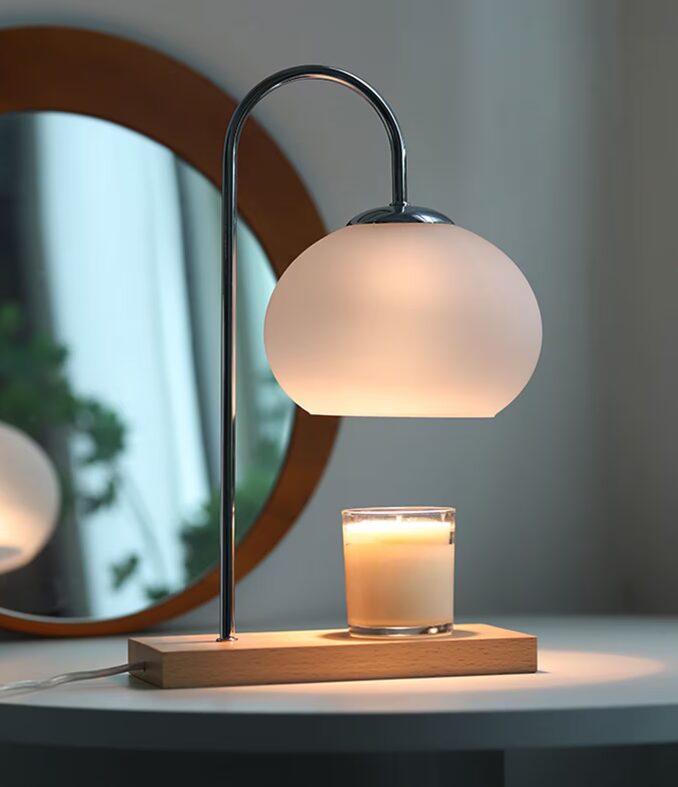
Table lamps, paper shades, salt lamps, candlelight — these create pockets of calm rather than brightness. They signal to your body that nothing more is required.
In the evenings, I’m less interested in intensity and more interested in atmosphere. Light that glows while the rest of the room stays dim. Sometimes that glow is paired with something familiar — a scent you associate with safety or rest — not to create a mood, but to help the body recognise that the day is ending.
This is where something like this electric scent warmer with a soft built-in light can feel comforting — light and scent arriving together, slowly, without urgency.
This kind of light doesn’t keep you going.
It keeps you company while you slow down.
If you’re drawn to creating a softer atmosphere at home in winter, you might also enjoy these cozy winter touches at home — small, comforting ideas that don’t require big changes.
A Small Personal Note
This winter, I noticed how much this kind of light matters to me.
In our campervan, I added a strand of small, warm Christmas lights all around the ceiling. Not for decoration — just for atmosphere. The kind of light that’s present without demanding attention.
It’s bright enough to feel cheerful, but soft enough that it never becomes harsh or overstimulating. In the evenings, it changes the whole space. The van feels calmer, warmer — more like a place to rest than a place to perform.
That kind of light doesn’t push.
It doesn’t shout.
It simply stays.
And in January, that can be exactly what’s needed.
Light That Feels a Little Playful
Not all comforting light has to be serious.
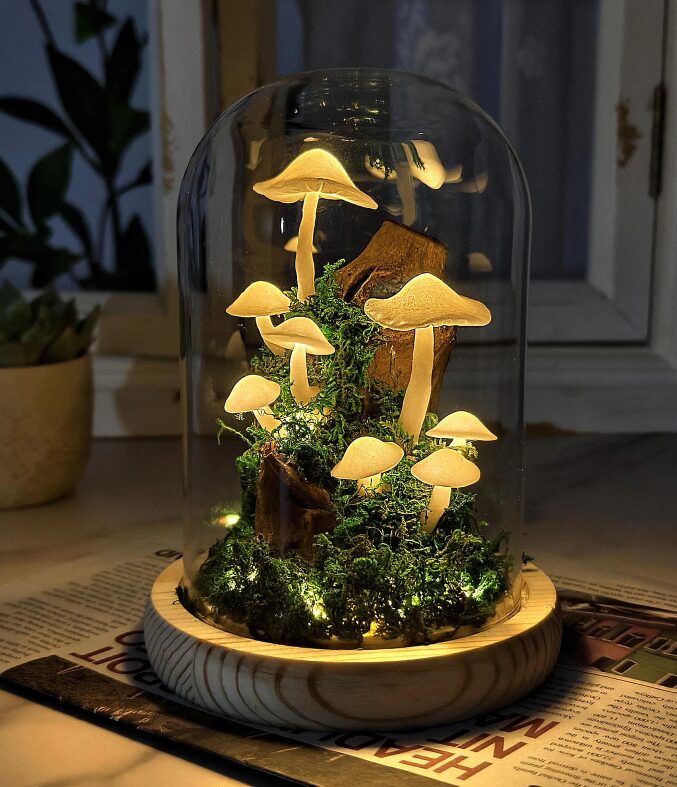
Sometimes, what helps most is a lamp that feels slightly whimsical — something handmade, imperfect, quietly joyful. Light that doesn’t try to optimise anything, but simply makes a space feel more human.
I have a soft spot for lamps with rounded shapes and nostalgic touches, like this handmade white mushroom lamp.
It’s the kind of object that quietly says:
You’re allowed to enjoy softness without a reason.
Small Light Rituals That Cost Nothing
Not all light needs to be bought.
Some of the most comforting light rituals are simple:
- lighting one candle intentionally at dusk
- switching off overhead lights earlier than usual
- letting one lamp become “the evening light”
- sitting quietly near a window, even when it’s dark outside
These small acts mark time.
They help the nervous system recognise transitions.
They say: the day is changing, and you don’t need to rush.
You Don’t Need to Brighten the Whole Winter
January doesn’t need to feel cheerful.
Or productive.
Or full of plans.
Sometimes it’s enough to soften the edges of the day and let the rest be quiet.
Gentle light isn’t about forcing motivation.
It’s about creating a sense of safety — a background glow that makes the darker moments feel less lonely.
And that, too, is a form of care.
A Gentle Note About Links
Some of the links in this post are affiliate links. I only share things that fit the quiet, gentle way I try to live — and nothing here is something you need in order to care for yourself.
January asks very little of us.
A bit of warmth.
A bit of light.
And permission to go slowly.