

We We often think closeness lives in conversation, laughter, shared adventures. But there’s another kind of closeness — the quiet kind — where nothing much happens, and yet everything still feels exactly right.
Tea, Then the Garden
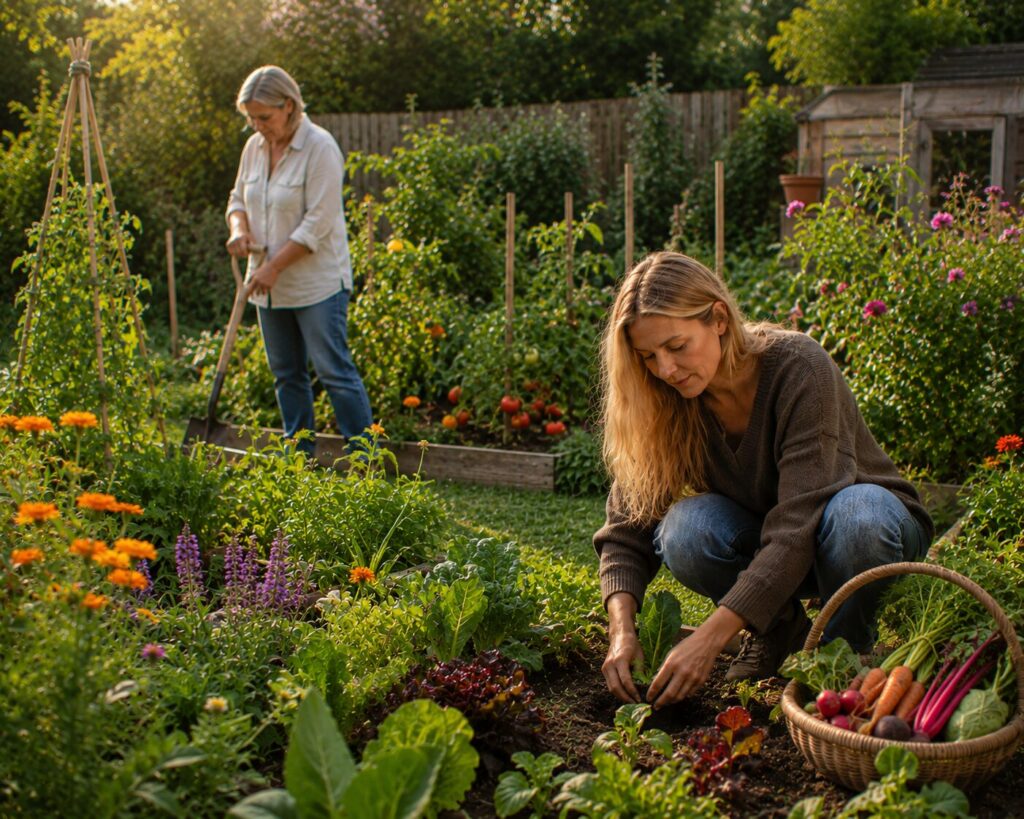
Whenever I visit a particular friend, the visit always has the same shape. Tea first, and a real conversation — open, honest, the kind where we actually catch each other up on how things are going, not just the surface version. And then, almost without either of us deciding it out loud, she puts me to work in her garden.
We weed side by side. Sow seeds in the same bed, each of us in our own row, each in our own head. We might go twenty minutes without saying a word to each other, and it’s never once felt awkward. If anything, it’s some of the easiest time I spend with anyone. Some of the best friendships work exactly like this — less effort, less performance, more simply being near someone without needing the visit to prove anything. The talking already happened over tea. The garden is just for being near each other while our hands are doing something else.
She told me once, on one of those visits, exactly what she liked about having me over. That I don’t need to be entertained the whole time I’m there. That I’m just as happy curled up on the sofa with a book as I am out in the garden with her. That if I wander into the kitchen while she’s cooking, I’ll just pick up a knife and start slicing vegetables for dinner without either of us needing to ask or offer first. No performance required on either side, and apparently that’s rarer, and more valued, than I’d ever really stopped to notice.
The Quiet Kind of Together
There’s a particular tenderness in moments like that — two people occupying the same space, not performing for each other, not filling every gap with words just because a gap appeared. Two people reading in the same room, pages turning at their own separate rhythms. A couple walking dogs, saying little, just listening to the wind doing its own thing through the trees. Friends on a couch, watching the light fade, in no hurry to fill the quiet with commentary.
The silence in moments like these isn’t empty. It’s full of something, just not words. It’s a kind of closeness that asks for nothing beyond your actual presence.
This Isn’t Just Us
It turns out a lot of people are quietly rediscovering exactly this. In Tokyo, there’s a small reading café called R-za Dokushokan where talking simply isn’t part of the deal — visitors write their drink order on a notepad instead of speaking it, and then spend hours reading or just sitting, surrounded by other people doing the same thing in companionable silence. Nobody there is alone, exactly. They’re just quiet, together.
The Silent Book Club movement does something similar, in a slightly different shape. People gather in a café or library, chat for the first half hour about whatever they’re reading, and then a small bell rings and the room goes quiet. Everyone opens their own book. For the rest of the hour, the only sounds are pages turning and the occasional mug being set down a little too firmly on a table. Nobody there needs to entertain anyone else. There’s nothing to prove, and somehow that’s exactly the point.
Some people take it further still, into multi-day silent retreats — meditating, walking, eating, resting, all without a single spoken word for days at a time. By most accounts that’s genuinely difficult, even confronting, before it becomes anything close to peaceful. But somewhere in that difficulty, the noise inside seems to settle, and people often come out the other side having realised they were never actually alone in the silence to begin with.
Cafés, reading clubs, retreats, or just a garden with a friend — all of it points at the same quiet truth. Constant conversation has never been the only way to feel connected to someone.
The Gift of Ease
When neither of you is performing for the other, you start actually seeing each other instead. The pressure to fill every gap falls away, and what’s left underneath it is just ease — the particular comfort of feeling safe enough to be quiet around someone and still feel completely understood.
That’s the closest I can get to describing what the garden gives me that the tea, as good as it is, doesn’t quite manage on its own. Doing nothing much together isn’t really about the absence of activity. It’s about how much calm two people can hold between them without ever needing to name it.
If you’ve ever felt that same kind of ease in someone’s quiet company, you already know this is true. Maybe that’s what gentle connection actually means — the friendship that doesn’t need noise to prove it’s real, the silence that holds both of you exactly as well as conversation would have.
A little something for free — small, gentle rituals for the days that feel like too much.