

Some smells change your mood before you’ve had a chance to think about why — and there’s a simple reason for that. Scent doesn’t go through the same “let me consider this” part of the brain that a sight or a sound does. It goes straight to the part that holds memory and feeling, which is why one smell can drop you back into a moment you hadn’t thought about in years, faster than any photo ever could.
I think about this every time I catch a particular smell in this house.
My father smelled of shaved wood, a trace of his shed behind the house that never quite left his sleeves. He was a carpenter by trade, and in that shed he could make almost anything — a doll’s house once, painstaking and exact, every tiny shelf cut to fit. A cupboard another time, solid enough to still be standing somewhere now. Whatever else was difficult between us, and plenty was, he had real skill in his hands, and the smell of fresh-cut wood still brings back a version of him that was simply good at something, quietly proud of it, before any of the harder parts of our relationship ever entered the room.
My mother’s kitchen smelled like curry soup — not Indian-style, but her own version, warm and spicy with a bright edge of lemon running through it. She was a fabulous host, the kind who’d invite people over constantly, and you never left her table without your top button undone. Everything she made was from scratch, the same way her own mother had cooked, a thread that runs through my own kitchen now too, whether I always manage to live up to it or not.
Those smells are still more vivid to me than most of what actually happened in those rooms. That’s the strange thing about scent memory — it doesn’t fade evenly the way other memories do. You can forget the conversation entirely and still remember exactly how the room smelled while it happened.

The Scents I Live With Now
My office sits right above the wisteria at the front of the house, and when it’s in bloom and I open the window, the smell comes pouring in, heavy and almost too flowery, thick enough that I sometimes have to pause whatever I’m writing just to actually notice it properly. It’s one of the few smells that genuinely stops me mid-sentence.
The air right before it snows does something similar, though completely different in character — cold and a bit watery, carrying a kind of promise in it, the sense that something quiet and white is about to settle over everything. I can usually tell snow’s coming before I’ve looked outside, just from that particular smell drifting in through a cracked window.
Pine on a hot summer afternoon takes me straight back to walking the dogs along the empty track near the house, breathing it in slowly, half feeling like I’m on holiday and half still not quite believing this is just an ordinary Tuesday of my actual life. And there’s a specific, unglamorous one too — the damp-earth-and-tomato-leaf smell of the polytunnel in July, which after twelve years of growing food I still find genuinely calming, in a way I can’t fully explain to someone who’s never stood in one.
None of these smells come in a bottle. They’re woven into memory in a way nothing manufactured quite manages — the scent of time passing, of actually being home in your own life rather than just visiting it.
Why Scent Affects Us So Differently
Some smells feel like permission to arrive and settle. Fresh bread or toast, wood smoke, rain hitting warm stone — there’s something in these that says stay, that asks nothing more of you than to exhale. Others do the opposite. Orange peel, fresh-cut grass, cold sea air — these feel bright and clarifying, the kind of smell that opens a window in your head rather than closing one.
And some scents don’t ask for any particular response at all. They just quietly wrap around you. Vanilla, clean laundry pulled warm from the line, the paper smell of an old book — none of it performs anything. It’s comfort with nothing attached, the particular relief of exhaling after holding your breath a bit too long without noticing.
Part of why this varies so much from person to person is that scent memory is built, not universal. The soup that comforts me might mean nothing to you, and the smell that unsettles you might be one I’d happily sit inside all day. That’s worth remembering before assuming a “calming scent” from a candle catalogue will do the same job for everyone — the calming part usually comes from what the smell is attached to, not the smell alone.
A Simple Way Back to Your Senses
When life feels scattered, scent is one of the easiest senses to come back to on purpose — quicker than a full micro ritual practice, though it works on the same principle: small, deliberate moments of noticing, rather than anything that requires rearranging your day. Light a match. Peel an orange slowly instead of quickly. Open a window and actually notice what comes through it, the way I do with the wisteria every spring whether I plan to or not.
None of this needs to be elaborate. A scent doesn’t have to come from a candle or a carefully sourced essential oil to count — plenty of the ones that matter most to me come straight from a garden, a kitchen, or the simple fact of weather changing outside a window. Though if you do want something to bring a particular scent indoors deliberately, simple, honestly made things tend to hold up best — a beeswax candle scented with real essential oil rather than synthetic fragrance, bars of handmade soap, dried herbs tied with twine and hung somewhere the sun reaches them. The kind of thing where you can tell actual care went into making it, rather than just packaging it.
Scent has a way of reminding you that you’re still here, still paying attention, still capable of being stopped mid-sentence by something as ordinary as a flower outside your own window.
If you’re drawn to small, sensory moments like these, A Gentle Reset is a free e-book of gentle rituals for coming back to yourself through exactly this kind of ordinary attention.
A Few Things Worth Knowing
People sometimes ask me whether this is really about smell, or just nostalgia wearing a scented disguise. Honestly, I think it’s both, and I don’t think that makes it less real. The nostalgia is the point — it’s your brain doing exactly what it’s built to do with scent, which is attach it to something that mattered.
I also get asked why old smells seem to hit harder than new ones. Partly it’s just time — a scent tied to childhood has had decades to settle in, where a new one hasn’t earned that yet. But it’s also that we tend to notice scent most in moments we’re not trying to remember anything at all, which is often exactly why it sticks.
And no, you don’t need a diagnosis of a “sensitive nose” or any particular sensitivity to benefit from paying attention to this. Everyone’s wired for it. Most of us have just gotten out of the habit of noticing.
“This post contains an affiliate link. If you make a purchase through it, I may earn a small commission at no extra cost to you. I only ever share things I’d genuinely look for myself.” purchase through it, I may earn a small commission at no extra cost to you. I
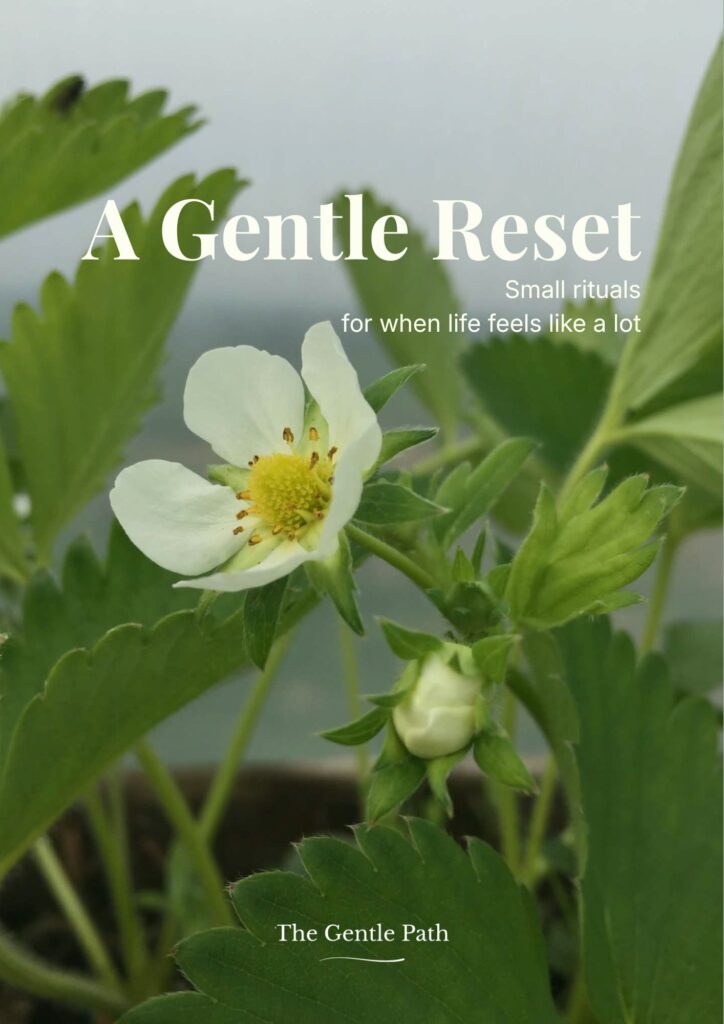
A little something for free — small, gentle rituals for the days that feel like too much.