
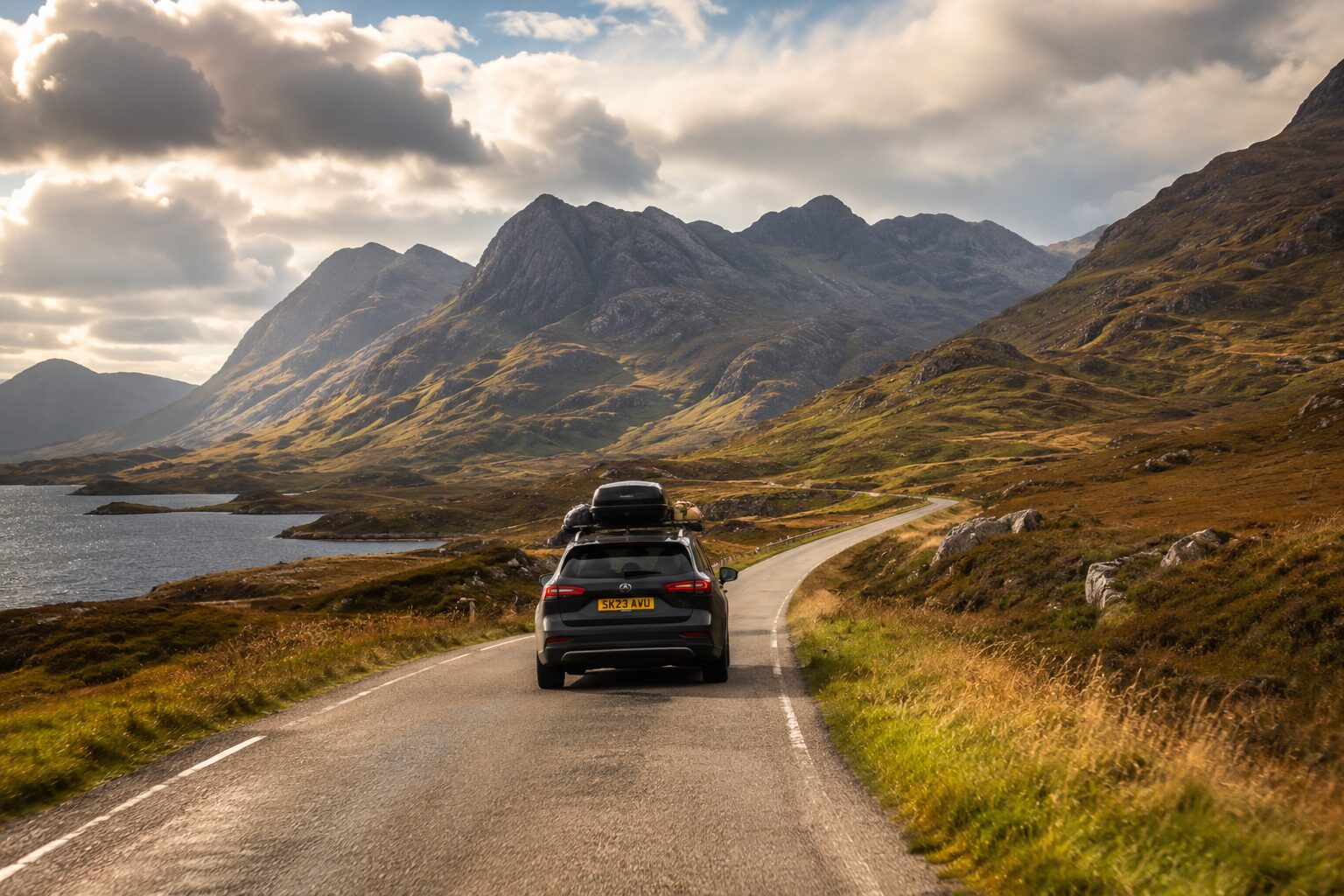
It’s early July, and I see them everywhere right now — packed cars speeding down the highway, bikes strapped to the back, caravans in tow, roof boxes bulging at the seams, kids in the back seat glued to a screen or squabbling over something that started three hours ago. Everyone’s headed south, and the urgency is almost physical. People drive for ten hours straight, sometimes faster than feels entirely sensible, all to make it in one single day.
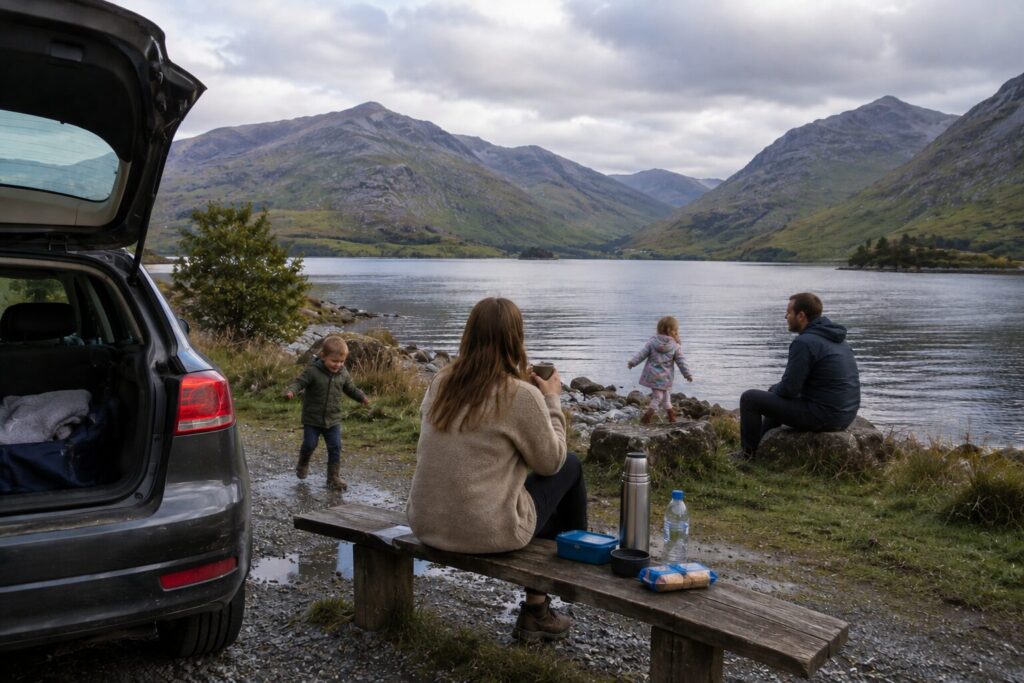
At the roadside rest stops, you can see the toll it takes. Stressed parents slumped on wooden benches with a takeaway coffee, trying to settle restless, overstimulated kids who’ve had more than enough of the back seat. It looks less like the start of a holiday and more like a group endurance test everyone agreed to without quite realising what they’d signed up for.
I understand the instinct completely. Holiday days are precious and few, and wanting to squeeze the most actual time out of them makes perfect sense on paper. I hear this often, too — people working right up until the last possible hour, finishing everything that needed settling before they could leave with a clear conscience, then grabbing a quick nap and starting the drive that same night, treating the holiday itself as the finish line after a sprint that started weeks earlier.
But arriving that exhausted often means the first few days of the actual holiday get spent recovering, or worse, getting properly sick the moment the body finally has permission to stop. My own father used to get sick almost every single time — not just tired, but properly ill, flu-like, in bed for at least the first three days of every holiday we ever took. It took me years to understand that wasn’t bad luck. It was just what happens when you hold everything together by sheer will for weeks and then suddenly stop holding it the second you’re allowed to.
Two to Three Hours a Day
When I travel by campervan, just me and the dogs, I cap myself at two to three hours of driving a day. That sounds like very little, and it is, but those two or three hours can easily fill an entire morning, because I’m not trying to cover distance efficiently. I leave after breakfast, avoid highways wherever I reasonably can, and stop whenever something looks worth stopping for — a patch of nature where the dogs can have a proper sniff around, a lake that catches the light a certain way. I’ve genuinely reversed the van before, having passed a spot too good to leave behind and not had time to react in the moment.
Because I’ve set that limit for myself, I’m usually at the next camper site by early afternoon, which sounds like wasted potential until you actually live inside it for a day. There’s still a whole afternoon left — time to get the bike out and explore properly, time to work if needed, time to do something creative, sometimes all three in the same stretch, none of it rushed because none of it’s competing with hours of driving still ahead.
The Beauty in the In-Between
Roger and I travel differently together than I do alone in the van. We’re not really the type to settle into one campsite, holiday home, or hotel and stay put for two weeks. Whether we’re in the car, backpacking, or these days on the motorbike, we like to keep moving from place to place, and the bit in between two stops is usually the best part of the whole trip. You watch the landscape change in real time. A few hours and you’re in the French countryside. A few more, and there are mountains. Keep going, and eventually there’s the ocean. Take a ferry, and suddenly you’re on an island entirely. That constantly shifting scenery is what makes a two-week trip feel like you’ve been away for months, not days.
It’s not that we have no plan at all — we usually book a hotel for that night, though normally the evening before rather than weeks in advance, so there’s always somewhere to be by the end of the day. But we set the same kind of loose limit I use everywhere: not more than a few hours of driving, stretched across the whole day rather than knocked out in one go. That might mean a long lunch somewhere, a hike up a trail that looked interesting, a swim in a lake we weren’t expecting to find, before finally arriving at the hotel in the late afternoon, changing, and heading out for an apéro. The destination’s fixed enough to relax into. The day getting there is still wide open.
There’s a real beauty, too, in the smaller in-between moments along the way, whichever way we happen to be travelling. Villages with their windows shuttered and just one bakery open. Quiet pockets of forest just off the road that nobody else seems to be stopping for. The particular stillness of a rest stop early in the morning before anyone else is awake. Even the small rhythm of pulling over, stretching, drinking something slowly while watching clouds shift above a petrol station roof — all of it becomes part of the story, if you let it, rather than dead time to be eliminated.
A Different Kind of Arrival
When you travel at this pace, you arrive differently. Not frazzled, not on edge, but softened by the time you actually get there. You carry the journey with you instead of leaving it behind the moment you park — the smell of pine from a roadside forest, the laugh over spilled coffee at a service station, the feeling of genuinely being on your way somewhere rather than constantly running behind schedule.
None of this requires much to put into practice. Just a small decision not to rush. An extra night somewhere along the route instead of pushing straight through. A willingness to actually notice what’s outside the window instead of treating it as scenery to get past.
Maybe the journey was never really in the way of the destination at all. Maybe, some of the time, it’s the better half of the trip.
So if you’re packing up this month, heading south or anywhere else entirely, I hope you get more than just a beautiful holiday at the end of it. I hope the road there turns out to be worth something too.
If this speaks to you, you might also enjoy The Gentle Art of Slow Travel — a companion reflection on how travelling slowly isn’t really about pace at all, but about presence, and how you choose to move through the world.