
I remember a morning in Sweden, partway through a solo trip with the dogs last spring, when the map looked more like a question mark than a plan.
The evening before, I’d pulled into a quiet patch of pine forest. No cell service, no signal — just wind moving through the trees and the occasional crackle of pinecones under paw, the dogs doing their usual rounds of investigating everything within reach. I’d been on the road for a few weeks by then, just the three of us, half-chasing some kind of clarity I couldn’t really name, telling myself that enough movement would eventually sort it out.
The Stillness of Not Knowing
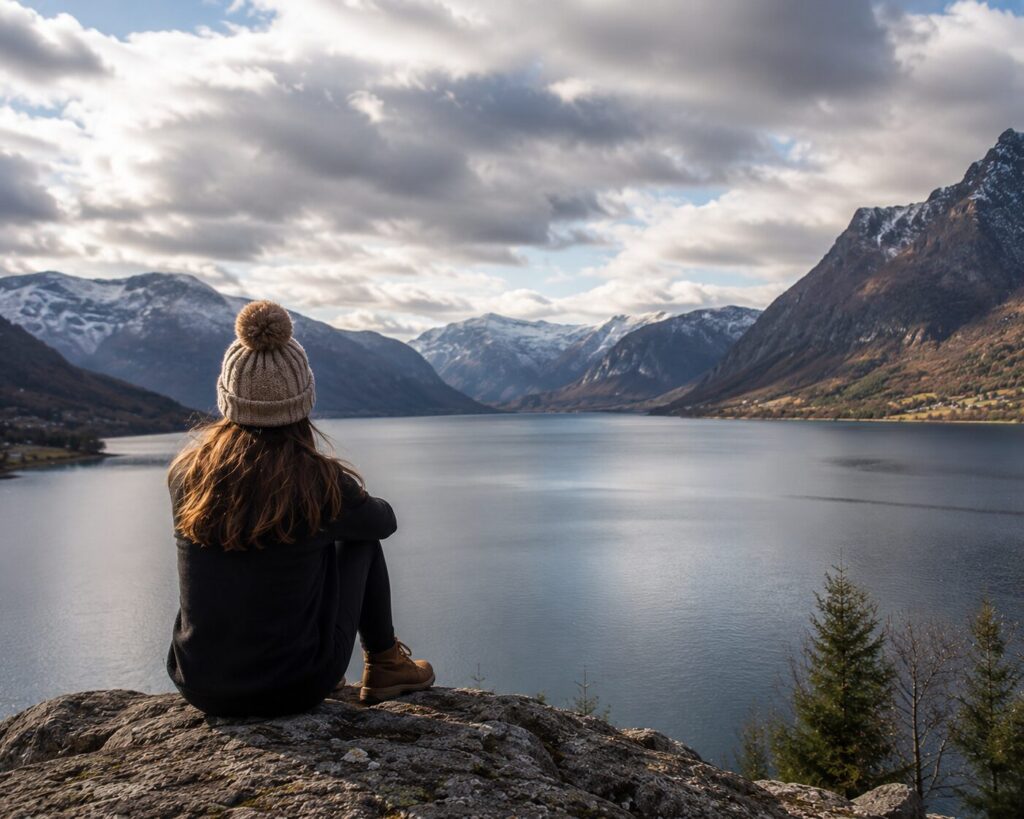
That morning, wrapped in a sweater, holding tea close to my chest for the warmth more than anything, I felt stuck. Not dramatically — nothing close to the kind of stuck I’d known years earlier, back when stuck meant something closer to breaking. Just a quiet, foggy kind of indecision. I didn’t know where we were heading next. I didn’t know what work would look like once we got home. I genuinely didn’t know what day of the week it was, and it didn’t seem to matter.
And still, everything around me felt fine. The trees weren’t in a hurry. The sky wasn’t asking me for anything. The dogs weren’t waiting on a five-year plan — they were just sitting beside me, ears up, noses working the breeze, completely unbothered by my not knowing what came next.
That’s when it landed, sitting there with cooling tea and no signal: maybe I didn’t need to figure everything out that morning. Maybe not knowing was allowed to be part of the rhythm too, rather than a problem the rhythm hadn’t solved yet.
The Pressure to Already Know
I think about this a lot when I talk to other people, too — how many of them treat not-knowing as something to apologise for. Ask someone what’s next for their career, their relationship, the next five years, and if they don’t have a tidy answer ready, something flickers across their face. Almost embarrassment, like they should have this sorted by now and somehow haven’t.
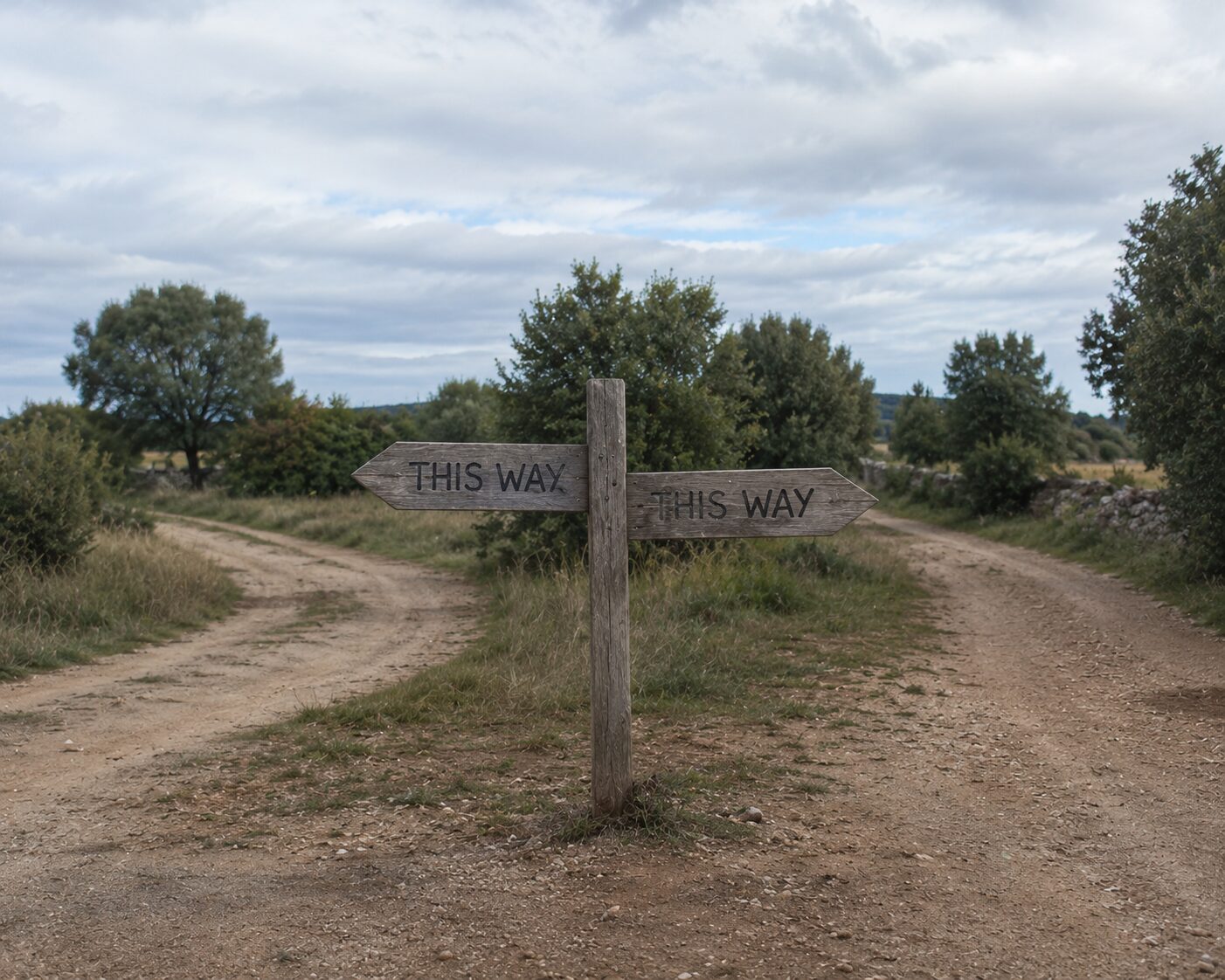
It pushes people toward decisions made too quickly. Taking the path on the left and dealing with whatever comes after, simply because standing still in the fog feels worse than moving in some direction, any direction. At least a wrong turn is a turn. At least it’s something you can point to when someone asks how things are going.
What’s Changed Since
I’m not exempt from any of this. I’ve made my own share of decisions just to stop the not-knowing rather than because I actually knew, long before and long after that morning in Sweden. I still feel the pull to have an answer ready before I actually have one.
But that morning is one of the few times I remember the pull loosening, properly, even if only for a few hours. I still make lists. I still set intentions, still move forward, still like having some shape to my days. What’s different is that I stopped treating the not-knowing itself as a failure state I needed to escape as quickly as possible. These days it feels closer to soil than fog — something quiet underneath that things can actually grow out of, rather than just an absence of answers.
If you’re in that kind of quiet in-between and looking for something small to hold on to, A Gentle Reset is a free e-book of gentle rituals for the days that don’t have a clear shape yet.
It helped, looking back, that this particular kind of uncertainty was a world away from the kind I’d lived through years before. There’s a version that comes from genuine depletion, from having nothing left to make decisions with. This wasn’t that. This was just an ordinary, unhurried not-knowing, in a forest, with two dogs who clearly thought I was making far too much of it.
If you’re in a chapter where the next step feels foggy, that’s really all I’d want to say: you don’t have to have it figured out today. The road, or whatever your version of it is, will still be there once you are.
If this resonates, you might also find When You Feel Like You’re Falling Behind (You’re Not) a useful companion — a reminder that your own pace is enough, even when it doesn’t look like anyone else’s.
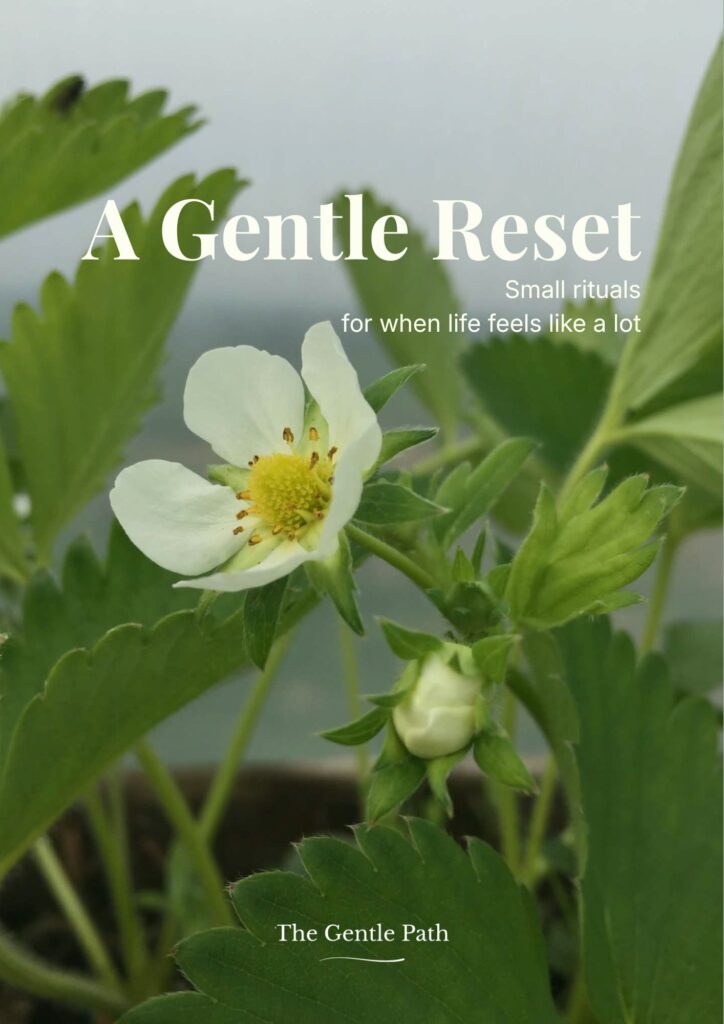
A little something for free — small, gentle rituals for the days that feel like too much.