
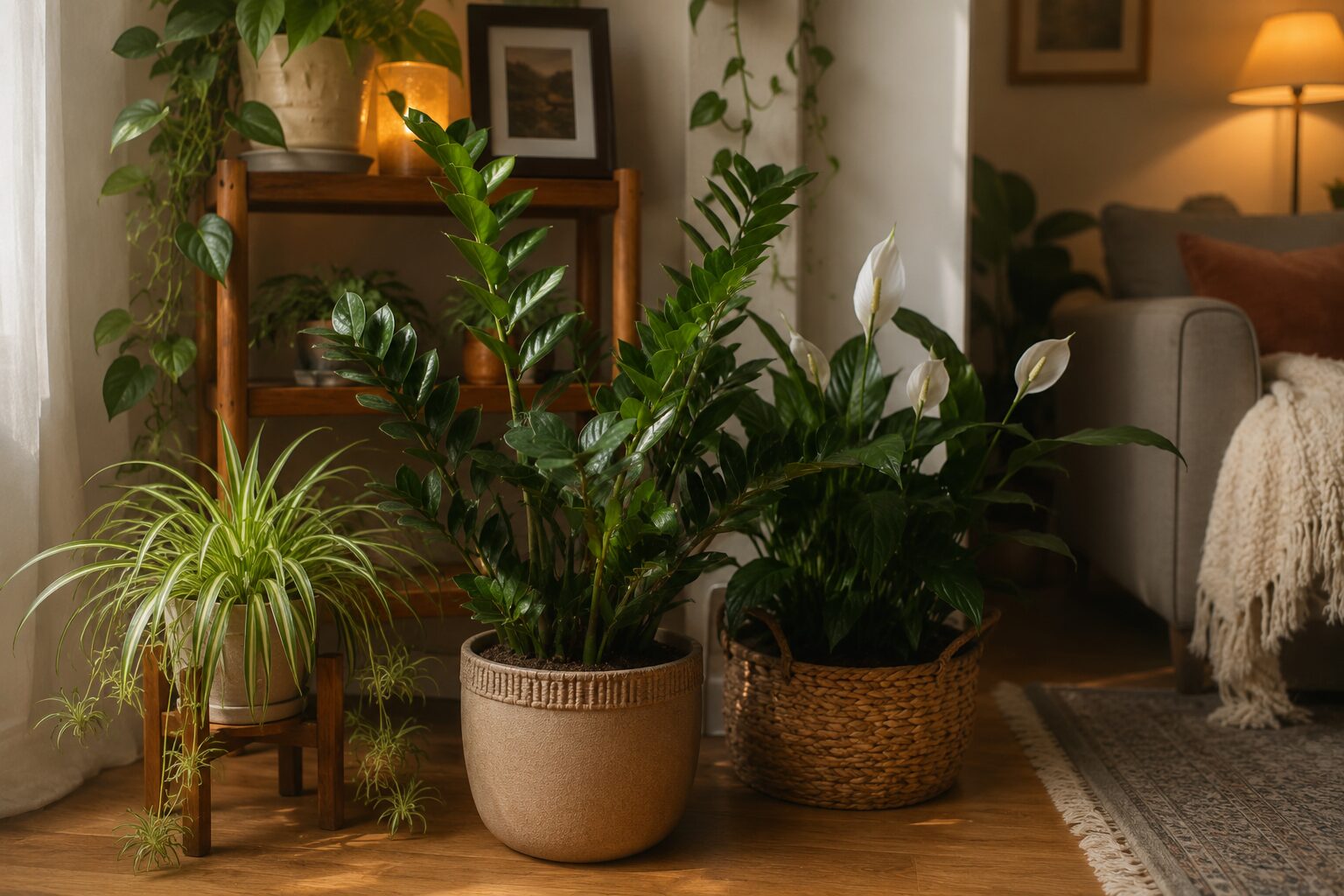
There’s something deeply soothing about living with plants.
Not a full jungle. Not a perfectly curated collection. Just a few green companions that remind you to slow down and breathe. That soften the corners of a room. That bring life into still spaces.
And without saying anything, they seem to say: you’re home now.
Why Plants Actually Help
The research is reassuring but honestly secondary to what most plant owners already know intuitively: plants make a space feel different. More alive. More grounded. More like somewhere worth being present in.
The practical reasons are real — many common houseplants help filter air, add humidity, and reduce the sterile quality of indoor spaces. But the deeper effect is something quieter.
They connect us to natural rhythms. Even in a city apartment, a single plant brings a living, growing, changing thing into your daily environment. Even in a small apartment with limited space, a single plant brings a living, growing, changing thing into your daily environment — creating a thread of connection to the natural world that urban life so easily severs.
They give us gentle routines. Watering. Wiping dust from leaves. Turning the pot toward the light. These tiny acts offer something that most of our daily tasks don’t: a moment of genuine, unhurried attention to a living thing. There’s no notification, no deadline, no inbox to clear. Just you and a plant, checking in.
They remind us to tend. Not just to them, but to ourselves. To pause. To check in. To notice what needs a little more care today.
Mindful Moments With Plants
You don’t need a green thumb to have a green corner. You just need a willingness to notice.
Watering your plants can become a small ritual of presence — a chance to step away from screens and tasks and simply be with something that grows at its own pace, on its own terms.
Even just sitting beside a plant while you drink your morning tea can make the room feel more alive — and you more settled in it.
If you’re drawn to small moments of presence like these, A Gentle Reset is a free e-book of gentle rituals for slowing down and paying attention — one quiet moment at a time.
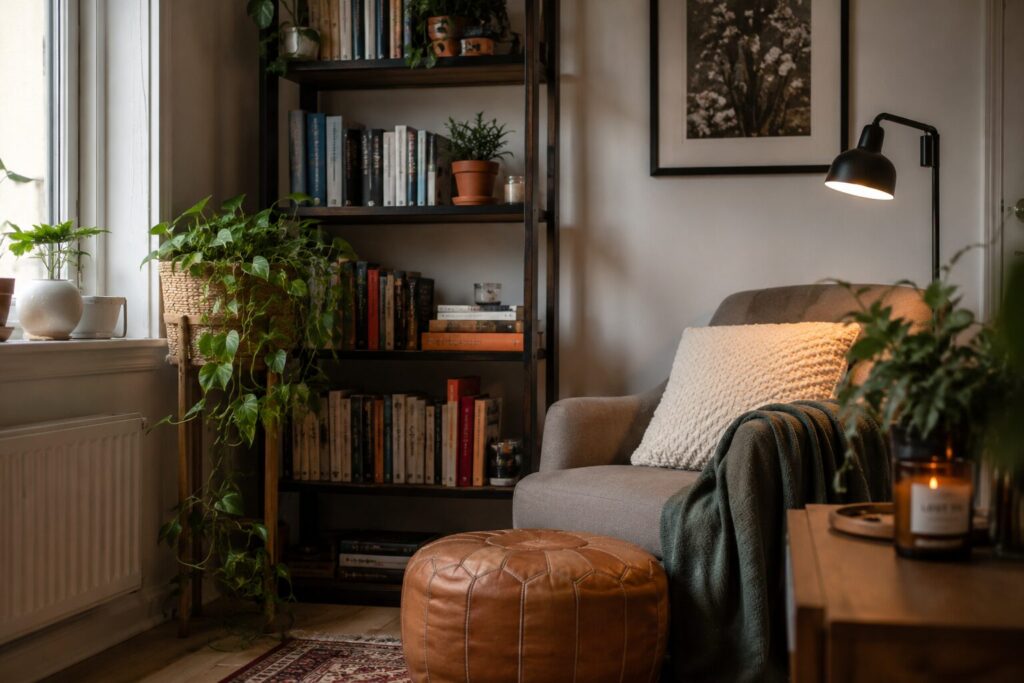
Tips for the Not-So-Plant-Savvy
Plants do not require expertise. They require attention — and even that, in modest amounts.
Start with one or two. Resist the urge to buy six plants at once and then feel overwhelmed. One plant you actually notice and tend to is worth more than ten you feel guilty about neglecting.
Keep them where you spend time. A plant in a room you rarely enter is a plant you’ll forget about. Put them where you’ll see them — on your desk, by the kitchen window, on the bedside table.
Group plants with similar needs. Once you have a few, it’s easier to water them all at once if they want similar amounts of light and moisture.
Use a moisture meter if you’re unsure. Overwatering is the most common way to lose a houseplant. A simple moisture meter takes the guesswork out completely.
Let go of perfection. A brown leaf isn’t a failure — it’s part of the rhythm. Plants grow, shed, adjust, and recover. So do we.
Six Easy-Care Plants to Start With
If you’re new to houseplants, these are forgiving, beautiful, and genuinely hard to get wrong:
1. Snake Plant (Sansevieria) Tolerant of low light and irregular watering — ideal if you travel or tend to forget. It purifies air overnight and looks architectural in any space.
2. ZZ Plant Almost impossible to kill. It thrives on neglect, tolerates low light, and has beautiful glossy leaves that bring a quiet elegance to a shelf or corner.
3. Pothos (Devil’s Ivy) Fast-growing, forgiving, and happy in most light conditions. It trails beautifully from a high shelf and fills a room with green quickly and easily.
4. Spider Plant Cheerful, easy to propagate, and genuinely hard to harm. It produces small offshoots you can pot and give away — a plant that keeps giving.
5. Peace Lily One of the few flowering plants that thrives in low light. It tells you clearly when it needs water by drooping slightly — and perks back up almost immediately after you water it.
6. Aloe Vera Practical as well as beautiful. Keep it on a sunny windowsill and it doubles as a soothing gel for small burns, dry skin, or sunburn.
What Plants Give Back
You don’t need to be a plant person to start living with plants. You just need to be willing to share your space with something green, growing, and alive.
In return, your plants will offer more than oxygen. They’ll offer presence — a quiet, unhurried reminder that life moves at many different paces, and not all of them need to be fast.
A little softness. A small routine that asks nothing of you except attention. A moment, each week, of genuine and uncomplicated care.
That, it turns out, is quite a lot.
For more gentle ways to make your home feel like a sanctuary, Creating a Calm Corner at Home is a quiet guide to building a space that’s entirely yours. And for another unhurried domestic practice that brings the same quality of presence to the kitchen, The Quiet Art of Slow Cooking explores how everyday tasks can become something genuinely nourishing.
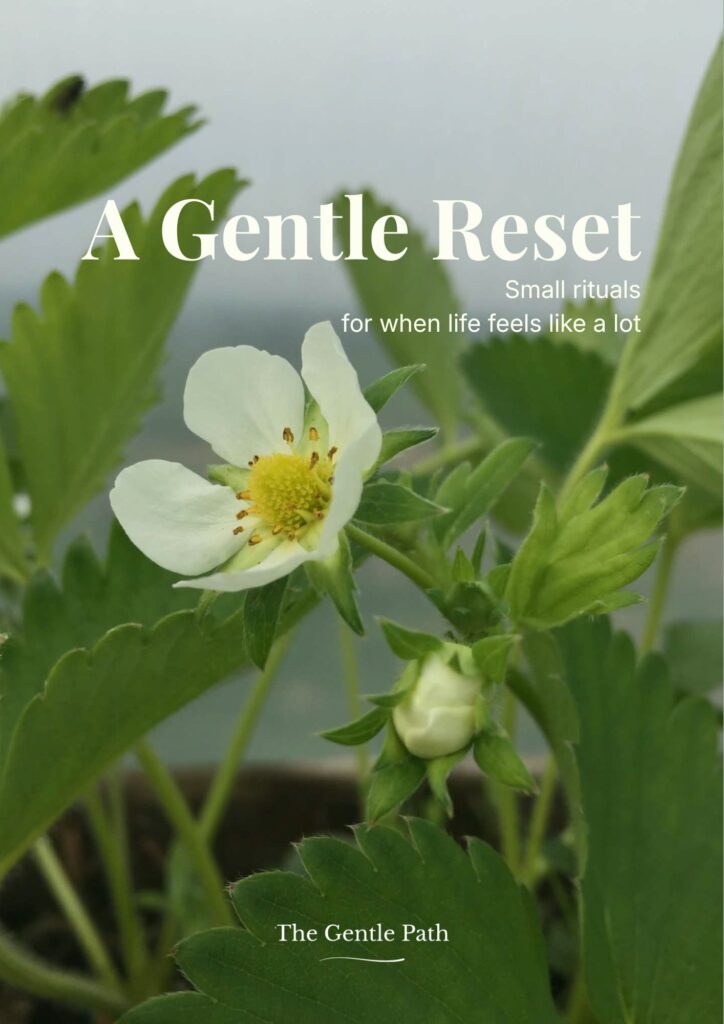
A little something for free — small, gentle rituals for the days that feel like too much.