
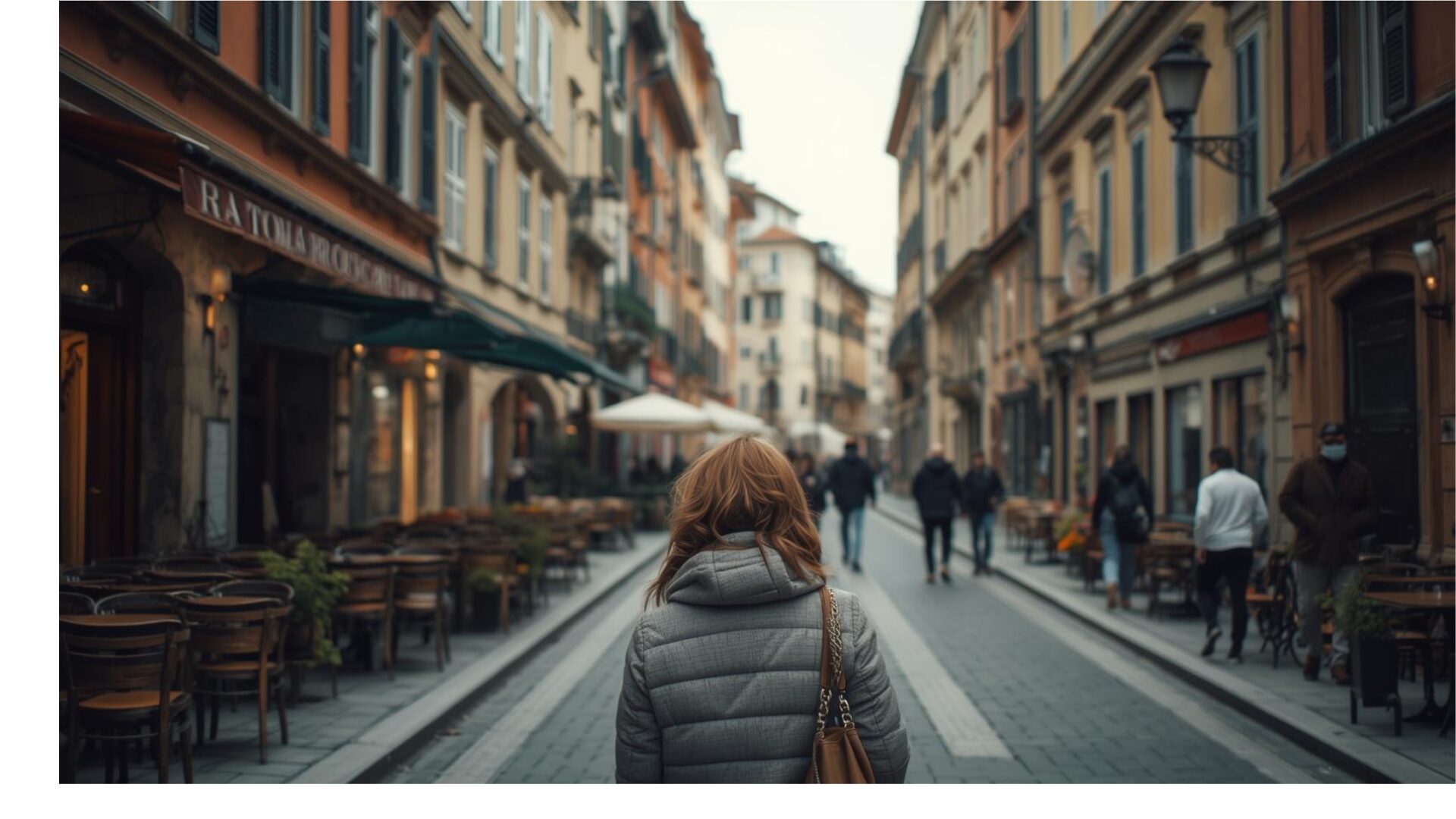
City trips often begin with good intentions. The thought of a few days away. A change of scenery. The pleasure of walking streets that aren’t your own.
And yet, somewhere between booking the train, packing the car, and arriving at the hotel, the trip can quietly turn into a plan — a list of places, neighbourhoods, cafés, viewpoints. The kind of schedule that looks manageable, but leaves little room for actually wandering.
Without quite noticing, we start moving through a city with purpose instead of curiosity.
When a City Becomes Something to Complete
There’s a subtle shift that happens on a lot of city breaks. Instead of being somewhere, we start trying to cover it. We map routes. We optimise distances. We move from one recommendation to the next because we’re already out and it feels wasteful not to keep going.
By the end of the day, we’ve seen a lot. But we may not have actually settled anywhere long enough to feel it.
This isn’t about doing travel “wrong.” It’s about pace. Some cities amplify movement. Others make it easier to slow down.
What Makes a City Good for Slower Travel
It isn’t that a city itself is slow. It’s that some cities leave room for you to move at your own pace. What makes the real difference is whether everyday life is still visible underneath the tourism — neighbourhoods where people genuinely live rather than just circulate through, cafés that feel rooted in the community rather than built mainly for visitors, a menu that wasn’t translated five times because it was written first for the people who actually live there.
In these places, walking has no agenda. You don’t feel like you’re missing something by simply sitting down. The city doesn’t demand to be consumed. It can just be inhabited, even briefly.
Ghent, History Without the Weight of It
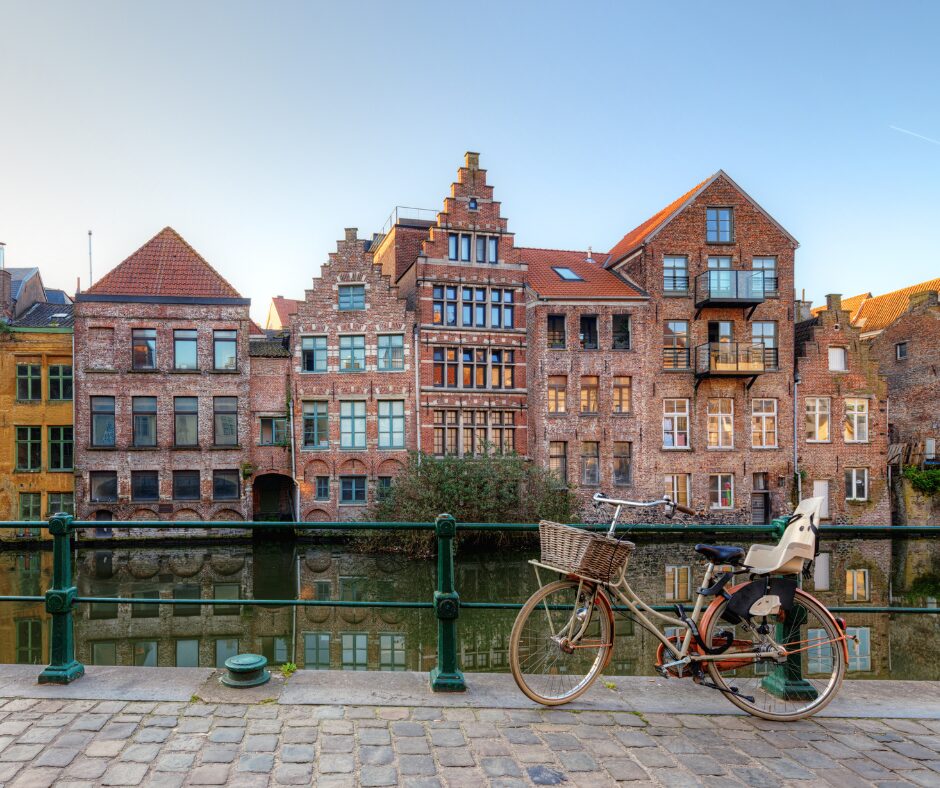
In Ghent, history is everywhere, but it doesn’t sit heavily on the place the way it does in some cities. There are towers and grand façades, certainly, but walk a few streets further and the atmosphere shifts entirely. Students cycle home along the canals at the end of the day, going about lives that have nothing to do with tourism at all.
In Patershol, the narrow streets curve around small restaurants that fill up with locals in the evening, not because anything’s trending, but because that’s simply what’s always happened there. Instead of queuing for the largest museum, I’ve found it’s better to slip into a smaller gallery, or just sit in one quiet church for a while. A coffee, a slice of something local, the phone left in a bag. Watching the light shift slowly across the water is usually enough on its own. Ghent doesn’t ask to be consumed all at once. It’s a city that rewards going back to the same spot twice.
Even Big Cities Can Be Gentle — At the Right Time
I learned this properly in Paris. I love Paris — long boulevards, quiet courtyards, small cafés tucked between bigger streets, all of it genuinely lovely. Just not in August.
Six or seven years ago, I went in the middle of summer. The crowds were relentless. In the Louvre, I was literally pushed aside while looking at a painting by someone manoeuvring a selfie stick into position. In the narrow streets, the sheer movement of people carried you forward whether you wanted to move or not. There was no space to actually pause anywhere.
I’ve also been to Paris in February, though, and it’s a different city entirely. You need an umbrella. The light is softer, the streets quieter. You can step aside without being swept along, sit somewhere and just watch, move like someone who actually belongs there rather than someone trying to keep up with everyone else’s itinerary.
The city hadn’t changed. The season had. Sometimes gentler city travel isn’t about finding a different destination at all. It’s about choosing a different moment to be there.
Choosing Areas, Not Attractions
Where you stay tends to matter more than what’s on the list of things to see. Even in busier cities, choosing a residential neighbourhood over a tourist-facing one shifts the entire experience — a bakery that actually serves the people who live there, a square where children play after school, streets that run on the rhythm of daily life rather than a recommendation algorithm.
You might not be five minutes from every major sight. But you might be five minutes from something quieter, and considerably more real.
A Personal Favourite
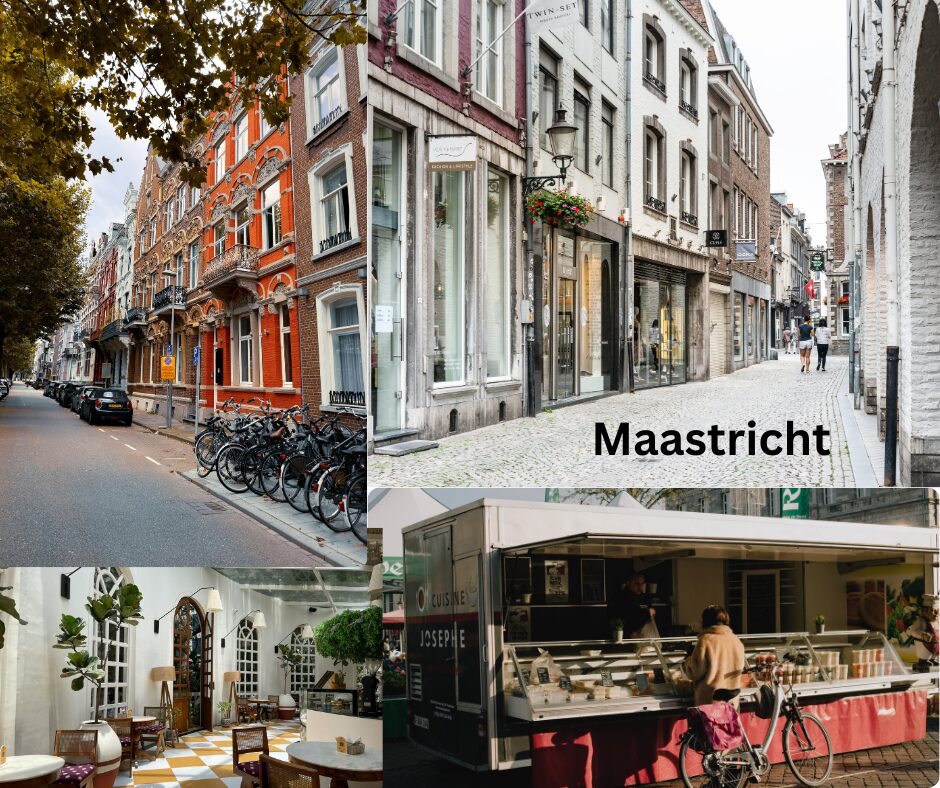
For me, one of the most quietly satisfying city trips going is Maastricht. The centre is compact and entirely walkable. On Fridays, the market fills the main square — mostly with locals buying vegetables, bread, and flowers, not tour groups working through a checklist. Just beyond the busiest streets, small cobbled lanes hold cafés set slightly apart from the main flow.
You can cross the river and just walk, no agenda attached. Sit by the water. Go back to the same café twice in one trip if it suited you the first time. Eat somewhere the conversation around you is happening in the local language and the whole rhythm feels genuinely unhurried. Nothing spectacular needs to happen for the trip to feel complete.
Letting the City Unfold
Gentler city travel doesn’t reject culture or history or beauty. It just refuses to chase all of it relentlessly. You can still visit a museum, follow a recommendation, climb somewhere for the view. But you also leave room for what wasn’t planned — the street you turned into by accident, the quiet square you didn’t know was there, the small moment that would never make it into a guidebook but stays with you regardless.
When you stop trying to complete a city, it doesn’t actually shrink. It gets closer instead — closer to something you actually experienced rather than something you merely covered.
A Different Way to Return Home
There’s a particular tiredness that follows a packed city break, and a completely different feeling that follows a slower one. You might not have seen everything, or captured the perfect photo. But you might come home with a steadier rhythm still sitting in your body, the memory of having moved without urgency, the sense that you were allowed to simply be somewhere without needing to earn it first.
Perhaps gentler city travel was never really about finding the perfect destination. Perhaps it’s about choosing places, and moments, that leave enough room to wander, enough depth to actually stay, and enough quiet to feel exactly where you are.
A little something for free — small, gentle rituals for the days that feel like too much.