
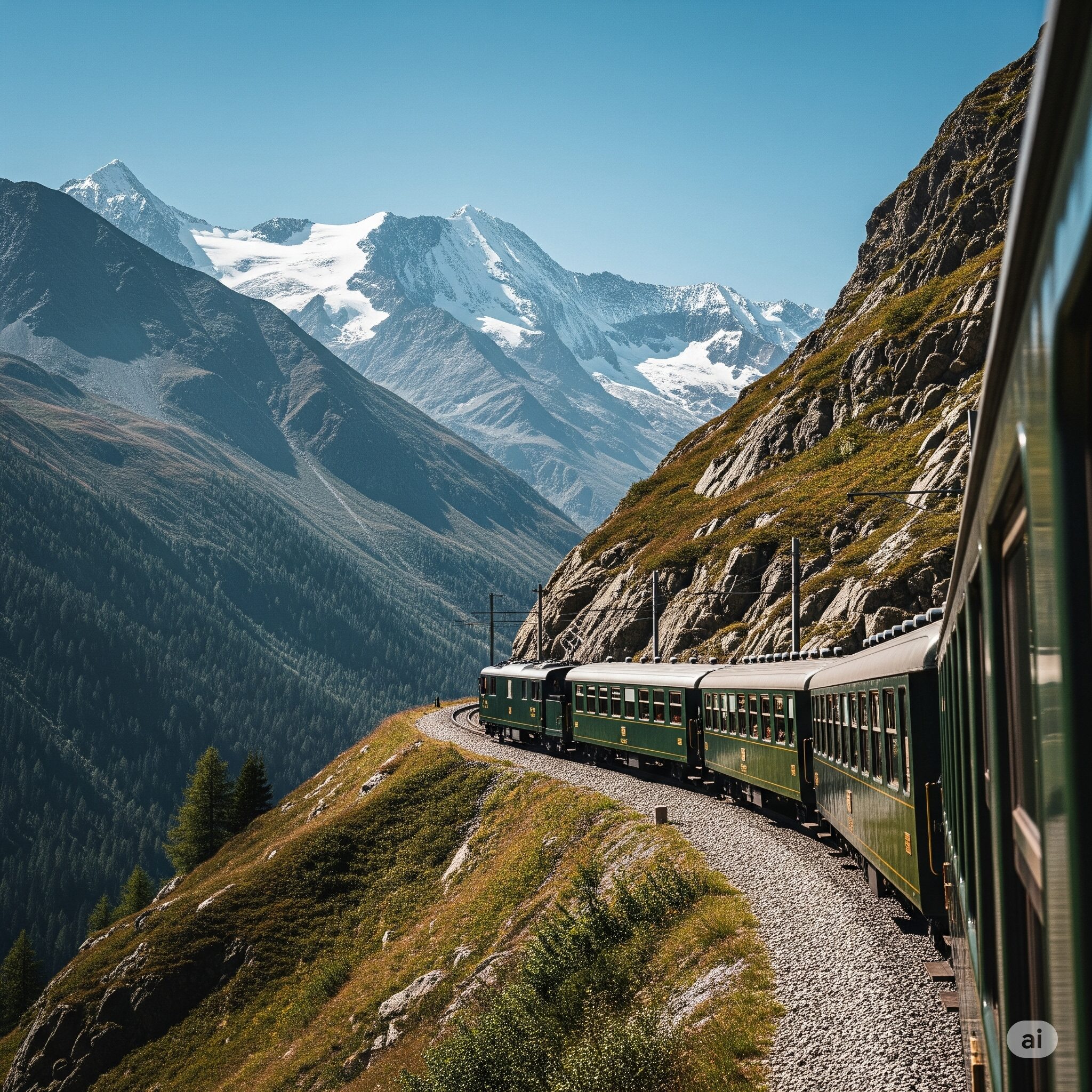
Slow travel means spending more time in fewer places and moving through them by train, on foot, or however lets you actually experience the landscape — the opposite of racing between landmarks on a tight itinerary. The shift isn’t really about logistics. It’s about what that pace does to your attention once you stop treating a trip like a checklist.
Somewhere along the way, travel became something to conquer. An itinerary to fill. A checklist to complete. A race from landmark to landmark — arrive, photograph, move on.
Slow travel is the alternative to that. It’s a way of moving through the world that prioritises depth over breadth, presence over efficiency — staying longer in fewer places, choosing trains and buses and your own feet over flights between five cities in a week, and leaving enough unplanned time to actually notice where you are.
What Slow Travel Actually Means
Slow travel means spending more time in fewer places rather than moving quickly between many. It means choosing forms of transport — trains, ferries, bicycles, walking — that let you experience the landscape rather than skip over it. And it means leaving deliberate gaps in your plans for things you didn’t expect to find.
The shift isn’t really about transportation. It’s about transformation — about what travelling this way does to your attention, your nervous system, and your relationship to the place you’re visiting.
You might see fewer things. You’ll likely feel more about each one. That’s really the whole trade being offered, and it’s worth being honest about it upfront rather than pretending slow travel gives you everything fast travel does, just slower. It doesn’t. It gives you less, more thoroughly.
How to Actually Slow Down the Way You Travel
Slow travel isn’t a specific route or a specific destination. It’s a set of choices about how you move. Here’s where to start:
Stay longer in fewer places. Three nights in one town teaches you more than one night in three towns. Let the rhythms of a place unfold. Let a café remember your order. Let a walking route become familiar enough that you stop checking the map. This is really the whole idea behind planning a slow travel year rather than a single trip — building the habit of staying put across an entire year of travel, not just one holiday.
Travel overland when you can. A train lets you watch a landscape change gradually rather than disappear under cloud for two hours. A long-distance bus puts you among people actually living in the region you’re passing through. If you want the fuller case for skipping flights altogether — trains, ferries, even motorbikes and cycling — slow travel without flying goes into all of it in depth. Walking — genuinely walking, for hours, somewhere — changes your sense of scale entirely, in a way walking as a way of being goes into far more deeply than a bullet point ever could.
Leave room to wander without a plan. Skip the top ten list for an afternoon. Follow a street because it looks interesting rather than because a guidebook told you to. Sit on a bench longer than feels necessary. Most of what people remember from a trip wasn’t on the itinerary. If you want a concrete way to practise this in a city specifically, the 5-sense city tour is built entirely around this kind of unplanned noticing.
Disconnect more than feels comfortable. Put the phone away for a few hours. Let a conversation, a smell, or simple curiosity guide the next decision instead of a map app’s recommendation.
Travel with less. Fewer bags. Fewer fixed expectations about how the day should go. Less planned means more room for what actually happens. I’ve noticed this compounds in a way that isn’t obvious until you’ve tried it — a full suitcase creates its own small daily friction, deciding what to wear from too many options, repacking around things you haven’t touched. Travelling with less isn’t really about minimalism as a virtue. It’s about removing tiny daily decisions so there’s more attention left over for the place you’re actually in.
Let meals and rest be unhurried. A meal eaten quickly between activities is fuel. A meal eaten slowly, with no clock running, becomes part of the trip itself. The same is true of sleep — arriving somewhere exhausted from over-scheduling undermines the entire point of being there. I’d add naps to this list too, unfashionable as they are to admit to. An unplanned afternoon nap, taken because the body asked for it rather than scheduled around it, is often one of the more restorative parts of a genuinely slow trip, even though it produces absolutely nothing to photograph.
What This Looks Like in a City
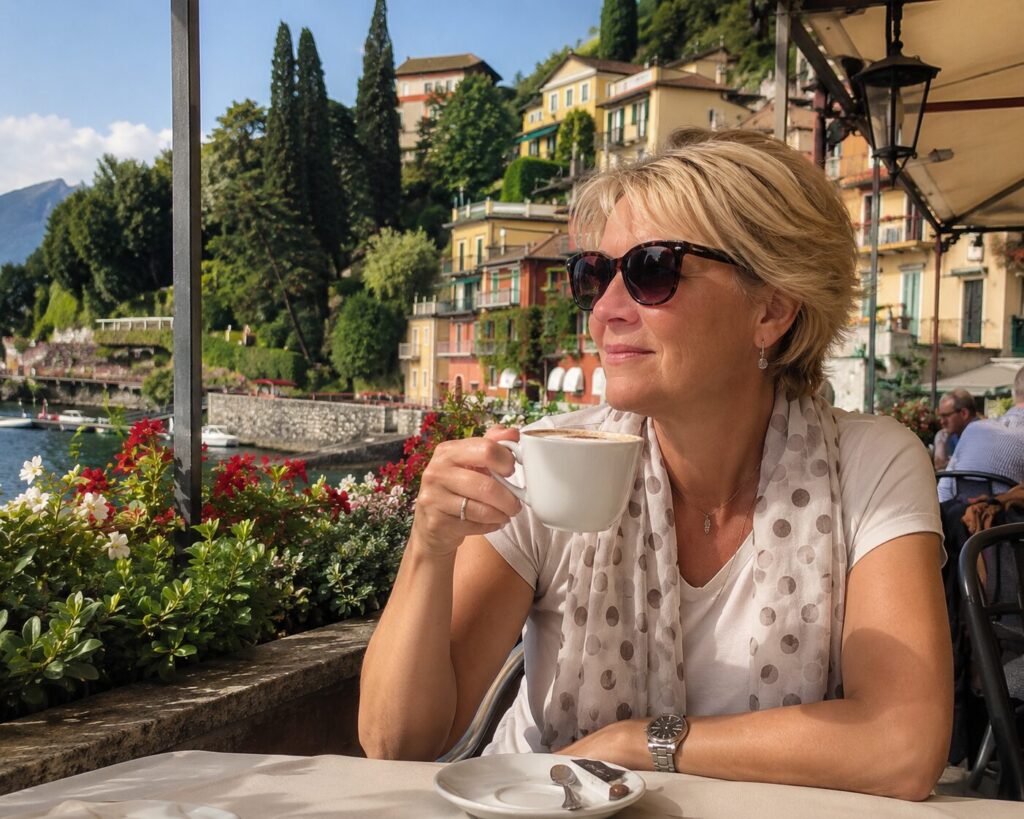
Slow travel gets associated with rural roads and empty coastlines, but it applies just as much to cities, arguably more, since cities are where the pull to rush is strongest. City travel at a gentler pace is really the same set of principles above, just aimed at somewhere dense and busy rather than somewhere quiet — the same instinct to stay longer, wander without an agenda, and let a neighbourhood become familiar rather than ticking off its landmarks in a single exhausting day.
A slow weekend in a city might mean choosing one neighbourhood and genuinely not leaving it for two full days — eating at the same handful of places, walking the same few streets at different times of day until you notice how the light changes them, rather than crossing the city by metro six times to tick off six separate sights. It sounds like less. It usually produces more of an actual memory than the six-sights version does.
Why the Destination Isn’t Actually the Point
This is worth dwelling on a little longer, because it’s the part that trips people up most. Why the journey matters more than the destination sounds like a nice sentiment right up until you’re standing in a train station deciding whether to book the four-hour direct route or the eight-hour route that stops in three small towns along the way. Slow travel asks you to actually choose the second one, on purpose, and to mean it — not as a consolation prize for missing a flight, but as the better option.
What Slow Travel Isn’t
It’s worth being clear about what this doesn’t mean, because the idea gets romanticised into something impractical fairly often. Slow travel isn’t refusing to see famous places, or turning every trip into weeks-long immersion nobody has the holiday time for. It isn’t a purity test either — taking a flight doesn’t disqualify a trip from counting as slow, and neither does visiting somewhere popular. The Eiffel Tower is still worth seeing. The difference is whether you’re racing past it toward the next five things on a list, or whether you’ve left enough room around it to actually stand there for a while.
It also isn’t the same thing as luxury travel, though the two get confused sometimes because both involve spending more per day than a packed itinerary would. Slow travel can be done on a tight budget — a tent, a rail pass, a week in one modest guesthouse rather than a different hotel every night. The slowness is the point, not the price tag.
None of this is about judgement toward faster travel styles either. Plenty of good trips are fast, purposeful, and exactly right for the circumstances they’re built around. Slow travel is simply the option that gets left off the table by default, in a culture that assumes more destinations automatically means a better trip — and it deserves at least equal consideration, not automatic dismissal as the slower, lesser choice.
Why the Nervous System Actually Notices the Difference
There’s a physical reason slow travel feels so different from the fast version, beyond just preference. Constant movement, new environments, and packed schedules keep your body in a mild, ongoing state of alertness — deciding where to go, what to eat, whether you’re going to make the next train, all day, every day of the trip. That’s not really rest, even if it’s enjoyable. It’s stimulation, and stimulation and rest aren’t the same thing, no matter how much fun the stimulation is.
Staying somewhere longer removes a lot of that low-grade vigilance. By day three in the same town, you already know where breakfast is good, which street gets shade in the afternoon, how far the walk to the water actually takes. None of that has to be re-decided every morning, and the mental space that frees up is where the actual relaxation of a holiday tends to live — not in the doing less, exactly, but in the deciding less.
When Slow Travel Isn’t the Right Fit
It’s also fair to say this style doesn’t suit everyone or every trip. Someone genuinely energised by novelty and constant movement, who finds a single place for a week restless rather than restful, isn’t doing anything wrong by preferring the faster pace — the point was never to declare one style morally superior, just to name an alternative for the people who’ve been quietly exhausted by the only version they thought was on offer. A big milestone trip built around seeing as much as possible in a rare, once-in-a-lifetime window is also a reasonable exception. Slow travel is a default worth considering, not a rule that applies to every single trip regardless of circumstance.
Building a Slow Trip From Scratch
If you’re planning your first deliberately slow trip rather than retrofitting the idea onto how you already travel, a few practical starting points help. Pick one base rather than several, and resist the urge to add a second town “since you’re already in the area.” Book transport that takes longer on purpose, if a slower overland option exists alongside a faster one. Leave at least one day in the middle of the trip with genuinely nothing planned, not even a loose idea, and see what you do with it — that unplanned day tends to reveal whether you’ve actually slowed down or just relocated your usual pace somewhere prettier.
A Few Books That Capture This Mindset
If you want to read your way into this before you travel, a few titles come up again and again on the subject. Vagabonding by Rolf Potts comes highly recommended as one of the original, defining books on long-term, unhurried travel — from what I’ve heard, it’s less a how-to guide and more a case for treating travel time as genuinely different from a two-week holiday, worth protecting rather than optimising.
The Art of Travel by Alain de Botton approaches it from a different angle entirely — a more philosophical look at why we travel and what we actually get out of it. I read it years ago now, and the part that’s genuinely stayed with me is his point about the strange, slightly addictive pull travel can have — the way the anticipation of a new place often outshines the place itself once you’re actually standing in it. It’s a good companion to the “journey over destination” idea running through this whole post, partly because it’s honest about the fact that even the journey itself can become just another thing we chase without ever quite arriving.
And if walking specifically is more your entry point than travel in general, Wanderlust by Rebecca Solnit is a well-loved history and meditation on walking itself — a natural companion to the walking as a way of being piece linked above.
Not Just for Vanlifers
I travel slowly in a campervan myself — not because it’s fashionable, but because it gives me time. Time to follow the weather rather than a schedule. Time to stop because a view demanded it rather than because a stop was planned.
The van itself isn’t really the point, either, though it’s the version that’s worked for us. What it removes is the daily overhead of arriving somewhere new — no check-in desk, no working out where anything is, no unfamiliar shower. Roger and I have learned to read a place partly through where we park for the night, which sounds like a small thing until you notice how much of ordinary travel exhaustion comes from constantly re-establishing the basics of daily life in an unfamiliar setting.
But slow travel doesn’t need wheels, and it definitely doesn’t need a vehicle of your own. It can look like:
A walking holiday through a string of quiet coastal villages, with no destination beyond the next one. A single long train journey across one country instead of short flights between five. A week in a small town with no agenda beyond being there. A few extra hours in a layover city, spent wandering an early morning market instead of waiting at the gate. A solo trip where the explicit goal is to feel rather than to do.
The distance covered isn’t the measure. How fully you arrive is.
Why This Matters More Than It Used to
Slow travel has become one of the defining travel trends of the decade — search interest in it reached an all-time high in 2026, and interest in specific slow itineraries, like extended stays in single regions of Italy, has roughly doubled in a single month. This isn’t a niche preference anymore. It reflects a broader shift in how people want to experience the places they visit: less checklist, more immersion.
Part of that shift is simple exhaustion with the alternative. A culture that optimises everything, including holidays, eventually produces holidays that need recovering from. Slow travel is, in some ways, a quiet rebellion against that — a reminder that joy tends to live in the pauses, not in how much got covered.
I think part of what’s driving this shift, beyond simple exhaustion, is that fast travel photographs well but doesn’t tell well. A checklist trip gives you a folder of photos and very little to actually say about any of them beyond “we went there too.” A slow trip gives you far fewer photos and an actual story — the café owner who remembered your order by the third morning, the wrong turn that led somewhere better than the plan would have. People seem to be craving the second kind again, now that the first kind has become so easy to produce and so unsatisfying to have.
It echoes something we’ve written about elsewhere on The Gentle Path — the idea that saying no isn’t really about refusal, it’s about reclaiming space for what actually matters. Slow travel is the same instinct applied to a map.
Bringing the Feeling Home
One thing worth knowing before you even book a slow trip: the calm it gives you doesn’t have to end the moment you’re back. Simple ways to hold on to summer calm covers this directly — the trick isn’t recreating your whole holiday routine at home, which rarely survives a real schedule, but carrying forward one or two small pieces of the pace you found while travelling.
If you’d like a fuller set of rituals to help with exactly that, A Gentle Reset is a free e-book of small rituals for bringing a slower rhythm into ordinary days, wherever you happen to be.
The Real Measure of a Trip
Whether you’re planning a long retreat, a short road trip, or simply a gentler version of your next holiday, the invitation is the same: go slowly enough to actually notice where you are.
If you want a real example of what that looks like in practice, a slow weekend in the Belgian Ardennes is a good place to start.
Because the journey isn’t only the path you take. It’s the way you take it — and that choice is available on every single trip, long or short, expensive or not, regardless of how much time you’ve actually been given.
FAQ
Is slow travel more expensive than regular travel?
Not necessarily. Staying in fewer places often reduces transport costs, and longer stays frequently qualify for weekly or monthly accommodation rates that per-night bookings don’t.
Do I need a lot of time off work to travel slowly?
No. Slow travel is a mindset applied to whatever time you have — a single long weekend spent entirely in one town, rather than rushed between three, is still slow travel.
Is slow travel only suitable for solo travellers?
Not at all. It works for couples, families, and groups — the principle of staying longer and moving less applies regardless of who you’re travelling with, though it does require everyone agreeing to resist the urge to over-schedule.
How do I choose a destination suited to slow travel?
Look for places with enough to notice slowly — a walkable centre, some nearby nature, a food or market culture worth returning to more than once — rather than places built around a single big attraction meant to be seen and left.
What if I only have a week — can I still travel slowly?
Yes. A week spent entirely in one region, moving overland and leaving unplanned time each day, is slow travel. The style matters more than the length of the trip.
Is slow travel compatible with working remotely while away?
Very much so — in fact, longer stays in fewer places tend to suit remote work far better than a packed multi-city itinerary would, since there’s actually time to establish a rhythm around both.
What’s the ideal minimum length for a slow trip?
There’s no strict minimum, but most people find that at least three or four nights in one place is what it takes to stop feeling like a tourist and start feeling settled, even briefly.
Does slow travel work for family trips with children?
Yes, often better than fast travel does. Children tend to do poorly with packed, rushed itineraries and do well with a familiar base, a slower pace, and repeated visits to the same few spots rather than constant novelty.
How do I resist the urge to over-plan a slow trip?
Deliberately leave blank days in the itinerary before you book anything else, and treat those blanks as non-negotiable rather than space to be filled later. If it’s not blocked out in advance, something else usually creeps in to fill it.
This post contains affiliate links. If you make a purchase through one, I may earn a small commission at no extra cost to you. I only ever share things I’d genuinely look for myself.