
You can hold onto summer calm without pretending you’re still on holiday — the key is carrying forward small pieces of that slower rhythm rather than trying to recreate the whole routine, which rarely survives contact with a real schedule and usually collapses within the first busy week regardless of how good the intentions were.
As the summer holidays wind down, there’s often a bittersweet shift in the air.
You’ve spent days recharging — maybe traveling, maybe simply resting — and you’ve felt the weight of deadlines and routines lift. You’ve had moments where you felt lighter, freer, more you.
But then September comes. The work emails pile up, the meetings are back, and the alarm clock feels far less friendly. Suddenly, the ease of summer can feel like a distant memory. There’s actually a recognised name for this dip — sometimes called post-vacation blues — and it’s common enough that it’s worth not taking personally when it shows up.
The good news? You can keep some of that holiday calm with you — not by trying to live as if you’re still on vacation, but by weaving small pieces of that slower, lighter rhythm into your everyday life.
Why Big Changes Don’t Always Work
Years ago, I spent a month at an ashram in India for a yoga retreat. One of the final classes was about keeping up with the meditation and yoga routines once we returned home. The teacher suggested an hour of meditation and another hour of yoga before starting the day.
I remember sitting in that final class doing the maths in my head — two hours before a workday even started, on top of getting dressed, feeding animals, actually getting to work on time — and feeling a familiar kind of guilt settle in before I’d even left the building. That guilt, I’ve since realised, is exactly the trap. Advice built for a completely different life doesn’t fail because you’re not disciplined enough. It fails because it was never actually designed for the life you’re returning to.
For me, this was impossible. Life at the ashram was nothing like life at home. How could I possibly squeeze two extra hours of practice into a workday? That advice, though well-meaning, felt like setting myself up to fail.
What I learned is that the key to carrying peace forward is not in copying an entire routine from one environment to another — it’s in keeping the essence of what made you feel good and adapting it to your real life.
There’s actually research that backs this up in an unexpected way. A study following Dutch vacationers found that the only group whose happiness stayed elevated weeks after returning were the ones who’d had what they described as a genuinely relaxed holiday — not necessarily the most exciting or activity-packed one. It’s the relaxed quality of the time off that seems to carry forward, not the specific things you did, which is exactly why trying to import an entire holiday schedule wholesale tends to miss the point.
Simple Ways to Hold On to Your Holiday Calm
Here are a few gentle, realistic ways to keep that summer feeling alive, even when your calendar fills up:
1. Keep one unhurried morning ritual
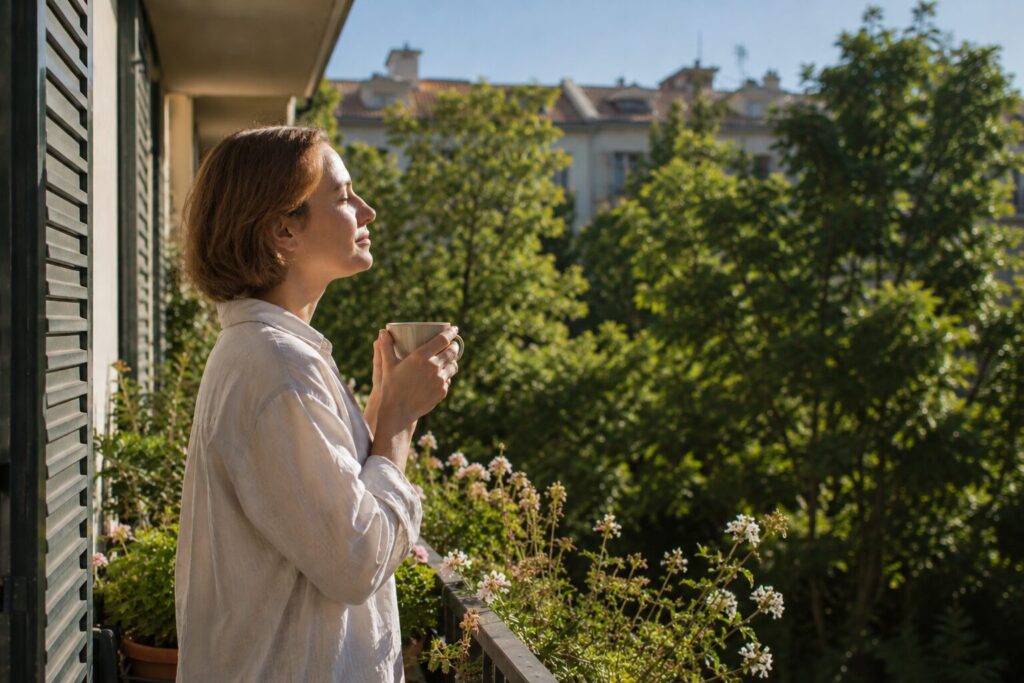
If vacation mornings felt slower, keep one small thing from that pace. Maybe it’s having your coffee outside, taking a few minutes to stretch, or listening to music before diving into your phone. Pick one thing, not five — the whole point of this list is that a single kept ritual actually survives a busy week, where an ambitious full routine usually doesn’t.
For me, it’s actually the coffee-outside version, even in the depths of a Belgian autumn when “outside” means five determined minutes on the terrace rather than anything leisurely. It’s not really about the coffee. It’s about there being one moment in the morning that hasn’t been claimed by anything yet — no inbox, no dog walk logistics, nothing that needs deciding. Holidays are full of those unclaimed moments by default. Ordinary life needs you to build at least one back in on purpose.
2. Bring nature into your daily life
The outdoors often plays a big role in why holidays feel so refreshing. Even if you can’t spend hours outside, open your windows, add a plant to your desk, or take a short walk during lunch. This is really a smaller version of rewilding your daily life — the same principle of letting nature back into ordinary moments, just applied specifically to the post-holiday slump.
Even a windowsill counts, if that’s genuinely all the outdoors you have access to on a given day. Houseplants for Beginners by Rebecca De La Paz makes it simple to keep something alive on a desk or windowsill — which does more of this “nature” work than people expect from something so small. The scale doesn’t seem to matter as much as the frequency — a few minutes of actual daylight and fresh air most days does more for this particular flatness than one big hike squeezed in on a Sunday and nothing the rest of the week.
3. Use sensory reminders
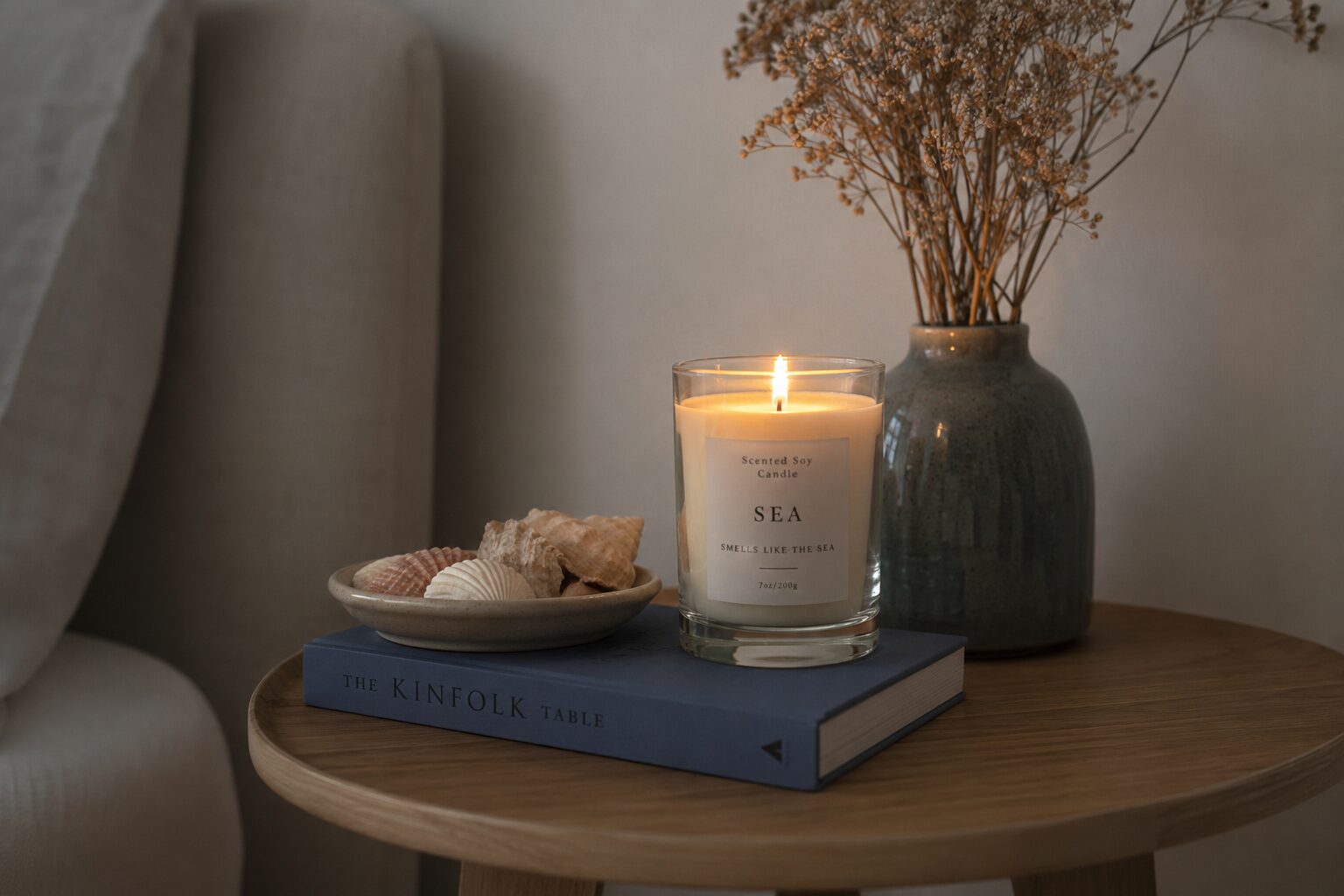
A candle that smells like the sea. The playlist you listened to on a road trip. A dish you enjoyed on holiday. These can be small, powerful triggers for that lighter feeling. Skandinavisk’s HAV candle — salt spray, sea kelp, beach rose — is exactly this kind of trigger in a jar, and it’s a nice one if “the sea” is part of what your own holiday calm is tied to.
I keep a small, deliberately unofficial list of these for myself — the specific playlist from a campervan trip through Sweden, a particular brand of sunscreen that instantly puts me back on a beach somewhere, the smell of pine that does the same thing regardless of season. None of it needs to be curated or expensive. The point is having two or three of these on hand before September arrives, rather than trying to invent one in the moment when you’re already deep in the slump and least equipped to be resourceful about it.
4. Set “micro-pauses” in your day
A few minutes of deep breathing, looking out the window, or stepping away from your desk can help reset your mind. You don’t need an hour — even 3–5 minutes can make a difference. This is really the same idea behind Micro Rituals: Simple Practices for Calm Living — small, repeatable moments rather than one big intervention. If you’d like a collection of exactly these kinds of micro-pauses, A Gentle Reset is a free e-book of small rituals for holding on to that lighter feeling — whatever the season.
5. Plan small moments to look forward to
You don’t have to wait for the next holiday to feel good. Schedule a slow weekend breakfast, a trip to the farmers’ market, or an evening walk — little anchors that bring joy into the week.
This one works partly through anticipation itself, which turns out to carry almost as much weight as the actual event. Knowing Friday has a slow breakfast planned changes how Tuesday feels, even though Tuesday hasn’t actually changed at all. I try to always have at least one of these on the calendar, however small, so there’s never a stretch of week with genuinely nothing to look forward to.
What If None of This Feels Like Enough?
Sometimes the post-holiday flatness runs a bit deeper than a candle or a walk can touch, especially if the return to work involves genuine overload rather than just routine. If that’s what’s actually going on, it’s worth being honest with yourself about which problem you’re solving — a pace problem, which these small rituals genuinely help with, or a deeper burnout problem, which needs a different kind of attention entirely. There’s no shame in the second one being the real answer. It just calls for something more than a nice-smelling candle.
If you’re genuinely unsure which one you’re dealing with, a rough test is whether rest actually helps. A pace problem tends to ease noticeably after a good weekend or a few quiet evenings. A burnout problem tends not to budge much no matter how much you rest, because the exhaustion isn’t really about hours of sleep — it’s about a deeper depletion that a candle, however lovely, was never going to solve.
It’s About Carrying the Feeling, Not the Schedule
Trying to replicate a full holiday routine at home can be frustrating — life is different, responsibilities return, and time is limited. But you can carry the feeling forward.
Choose the parts of your holiday that fit naturally into your daily life. Adapt them, make them smaller, make them yours. The goal isn’t to hold on to summer itself — it’s to keep the parts of it that nourish you, no matter the season. If this resonates, you might enjoy Evenings That Feel Like Exhales — a reminder that calm can be found in the smallest corners of your day.
FAQ
How long does post-vacation blues usually last?
For most people, the dip is temporary, often easing within one to two weeks as the new routine settles in. If low mood or exhaustion continues well beyond that, it’s worth considering whether something more than post-holiday adjustment is going on.
Is it normal to feel worse the first week back rather than better?
Yes, this is common. The initial return is often the hardest point, before a new rhythm has had any chance to establish itself — most people find the sharpest edge softens within the first week or two rather than staying constant.
Is it better to add a buffer day between vacation and returning to work?
Many people find it helps. A day to unpack, rest, and reset expectations before diving back into meetings and emails softens the transition considerably, rather than landing straight from suitcase to inbox.
Do I need to keep a whole holiday routine to feel the benefit?
No — in fact, trying to keep an entire routine usually backfires, because it doesn’t fit real life and collapses within a week. One or two kept rituals tend to last far longer than an ambitious full recreation.
Does planning the next trip help with the post-holiday slump?
It can. Anticipation itself is linked to elevated mood, sometimes even more than the trip itself, so having something — even small — on the calendar to look forward to genuinely helps soften the return.
Do certain rituals work better than others for holding onto calm?
Sensory ones — smell especially — tend to work fastest, since scent connects directly to memory and mood in a way that’s hard to replicate with a to-do list or a mental note. That said, the ritual that actually sticks is usually less about which type it is and more about whether it’s genuinely realistic for your actual week.
What’s the difference between normal post-holiday flatness and burnout?
Ordinary post-holiday flatness tends to ease within a couple of weeks as routine resettles. If exhaustion, dread, or low mood persist well past that and don’t respond to rest or small rituals, that’s worth taking seriously as something separate rather than assuming a candle or a walk will fix it.
This post contains affiliate links. If you make a purchase through one, I may earn a small commission at no extra cost to you. I only ever share things I’d genuinely look for myself.
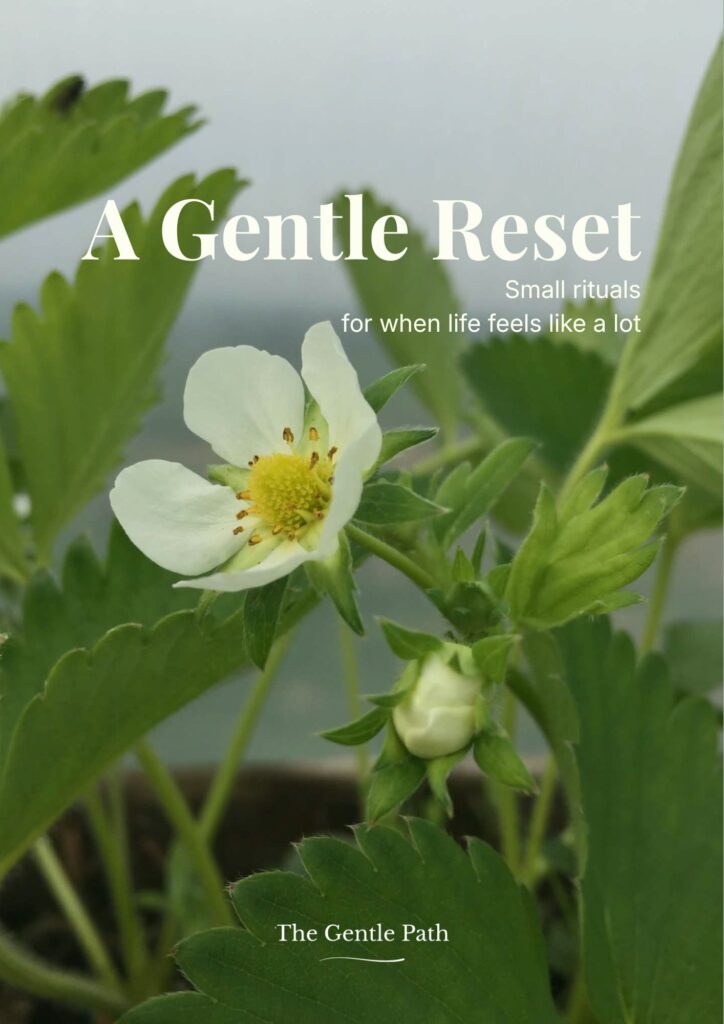
A little something for free — small, gentle rituals for the days that feel like too much.