
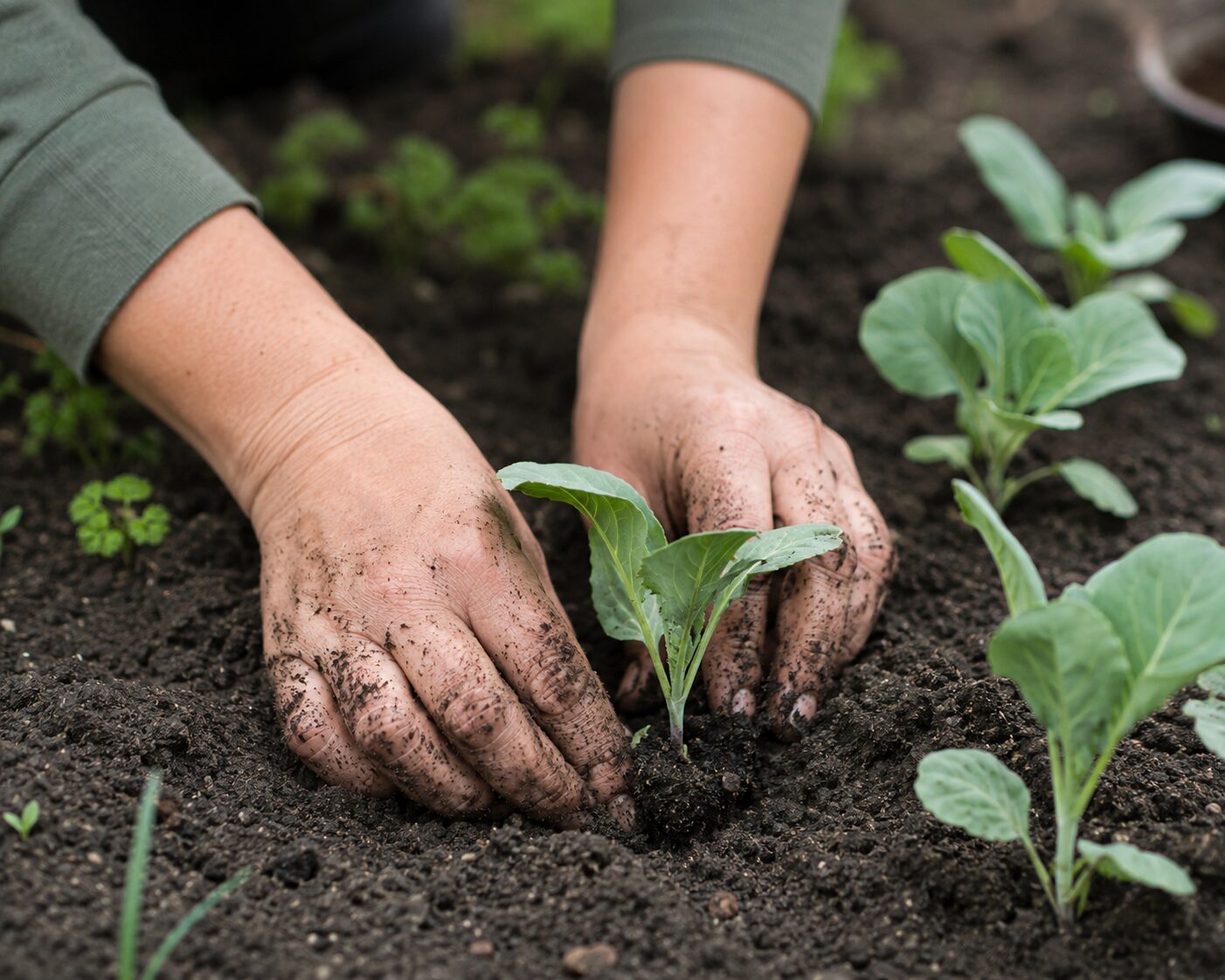
Rewilding your daily life doesn’t mean moving somewhere remote or overhauling how you live. It means treating nature as something you live alongside rather than something you visit on weekends — a shift in attention more than a change in address.
When people hear “rewilding,” they usually picture something large — wolves returning to a forest, a wetland filling back up with life, an entire landscape being handed back to itself. But rewilding doesn’t have to happen on that scale. It can be something much smaller and much more personal — a quiet decision to let nature back into the ordinary rhythm of an actual day.
Why It Matters
So much of how we live now is carefully controlled. Climate control, artificial light, screens, feeds curated to show us exactly what we already like. It’s efficient, certainly. It’s also thinner than it needs to be, because efficiency and aliveness aren’t always pulling in the same direction.
Rewilding a daily life means treating nature as something you live alongside rather than something you occasionally visit on a weekend off. It doesn’t ask for a forest. It asks for attention, in places you already are. This is part of what the extinction of experience is really about — not that nature has disappeared, but that our everyday contact with it quietly has, one closed window and one scrolled feed at a time.
Small Doorways Back In
None of this requires moving anywhere or giving up technology. Opening a window for birdsong instead of leaving it shut all day is a start. So is putting a plant somewhere you actually sit, rather than somewhere it just looks nice. Eating with the seasons helps too — strawberries because it’s actually strawberry season, root vegetables because it’s the part of the year that grows root vegetables, rather than whatever’s flown in regardless of when it’s meant to ripen.
Walking changes too, once you stop treating it purely as exercise. The same path looks different if you’re actually looking at it — the bark on a specific tree, the pattern a cloud happens to be making, leaves underfoot you’d normally just walk straight over. And there’s something in actually touching soil, even a few herbs in pots on a windowsill, that a screen can’t give you, however much footage of gardens you watch instead.
None of this demands doing it perfectly. It only asks you to notice — which is really the same skill noticing small joys asks for, just pointed outward at the garden instead of inward at the day.
If you want to go further down this road, Losing Eden: Why Our Minds Need the Wild by Lucy Jones is the book I keep hearing recommended on exactly this — what we lose, quietly, when the wild goes missing from daily life, and why it matters more than we tend to admit.
If you’d like small rituals to help you practise that noticing, A Gentle Reset is a free e-book of gentle moments for paying attention to what’s already right there.

What Rewilding Looks Like Where I Actually Live
Our village doesn’t have a shop, so a walk to “get something” is never really just an errand here — it’s ten minutes to the nearest town, or it’s staying home and noticing instead. The dogs decide most of our rewilding without either of us really choosing it. Luke and Leia are both old now, slower than they used to be, and their pace has quietly become the pace of our morning walk whether I planned for that or not — which means I see far more of the hedgerow and far less of my phone than I would if I were setting the speed myself.
The polytunnel does something similar in a different register. Twelve years into growing food on ground that, where I grew up, would only ever have been a paved path, I still find that stepping into it does something a walk alone doesn’t quite manage — the specific warm, green smell of it, the sound of nothing but insects, Wicket occasionally stalking something in the tomato rows that was never actually there.
Naboo, our other cat, does the opposite — she’s the one who actually sits still long enough to watch, perched on the windowsill for whole stretches of afternoon, tracking something in the garden I usually can’t even see. I’ve started treating her attention as a kind of signal. If she’s fixed on something for more than a few minutes, there’s usually something worth looking at — a bird working the hedge, a hedgehog passing through at dusk, once memorably a fox that clearly had no idea it was being watched from indoors.
Winter changes the shape of all of this rather than pausing it. The dogs still need walking regardless of what the sky’s doing, which means I end up outside in weather I’d otherwise have avoided entirely — and there’s a particular kind of rewilding in simply being made to notice how the cold actually feels, rather than experiencing winter mostly as something viewed through glass.
None of it required careful planning on my part. It just required being somewhere often enough, and paying attention closely enough, for the pattern to slowly become visible in the first place.
What’s Possible at a Bigger Scale
I think about this on a larger scale too, sometimes. Medellín, in Colombia, has spent the last several years planting what they call green corridors — trees and smaller plants threaded along roads and old waterways that used to be nothing but concrete. The city’s average temperature has already dropped by two degrees as a result, with officials expecting it to fall further over the coming decades. Animals that hadn’t been seen in the city for years have started coming back.
What I find genuinely moving about it isn’t just the temperature drop, though that’s remarkable enough on its own. It’s that the programme trained local residents, many from poorer parts of the city, to become the gardeners who plant and maintain all of it. They didn’t just add greenery to a city. They grew a community of people whose actual job is now tending it. Other Colombian cities are reportedly looking at doing something similar.
It’s a useful reminder that rewilding isn’t only a private, individual practice. It can be civic too — a whole city deciding, together, that pavement isn’t the only option.
The Rhythms That Remind Me
One of my favourite ways into this is simply paying attention to what’s already happening around our place if I get up early enough to catch it. On early morning walks across our land, before the sun’s properly up, there’s a soft orange glow sitting low over everything. In that half-light, bats are still out, swooping low, catching whatever insects are up before the day’s properly started. By the time the light’s shifted properly into morning, the bats have gone and swallows have taken over the exact same patch of sky, carrying on more or less the same job in daylight instead of dusk.
What gets me every time is how cleanly they trade off. Neither one lingers past its moment or rushes into the other’s. They simply know their own time and hand it over without any fuss. I find something steadying in watching that happen, week after week — a reminder that there are rhythms running underneath my own schedule that don’t care in the slightest what’s on my calendar, and that I’m part of them whether I notice or not.
I’ve started timing my own morning differently around this without really deciding to. Tai chi, when I actually manage it before the day gets going, happens in that same in-between light — not because I planned the timing but because that’s simply when I’m up and the garden’s quiet enough to hear anything at all. There’s something in doing slow, deliberate movement while the bats are still finishing their shift that makes the whole practice feel less like exercise and more like joining something that was already underway before I got there.
Room for Surprise
Nature doesn’t run on a schedule the way the rest of life tends to. The smell of rain about to arrive before you’ve seen a single cloud. A flower pushing up through a crack in pavement that has no business growing anything. None of that can be planned for, which is exactly the point — it’s a reminder that not everything worth noticing has to be on the agenda first.
What Gets in the Way
The main obstacle isn’t lack of nature, even for people in cities — it’s habit. Curtains left shut out of routine rather than need. A phone reached for the moment there’s a gap rather than the gap being left alone. I catch myself doing this constantly, dogs and polytunnel notwithstanding — reaching for a screen in the exact ten seconds where noticing something outside was actually on offer.
The fix isn’t willpower, in my experience. It’s removing a step. A plant visible from where you already sit removes the step of going to find one. A window that opens easily removes the step of deciding to open it. Rewilding tends to fail when it depends on remembering to do something extra, and tends to work when it’s simply built into where you already are.
None of this needs to be dramatic to work. Some weeks it’s just one evening where the curtains stay open a bit longer than usual. That’s still rewilding — just a quieter version of it.
A Gentle Reminder
Rewilding a daily life isn’t one more thing to add to an already full list. It’s closer to peeling back some of the noise that’s built up between you and what’s already right there. Nature doesn’t ask for effort, only attention — and even a few minutes of that attention tends to hand back a sense of grounding that no amount of scrolling ever quite manages.
A Few Things Worth Knowing
Does this require living somewhere rural to actually work? It doesn’t — Medellín is proof of that at city scale, and at home scale, a windowsill herb pot in a flat does more or less the same job as our polytunnel does here. It’s the noticing that matters, not the acreage.
If none of this comes naturally — if you’re someone who’s always found nature a bit boring, honestly — I’d say start with something that already has a rhythm you’ll actually notice missing. A bird that visits a particular tree. A plant that needs watering on a particular day. The noticing tends to follow the habit, not the other way round.
Is this really any different from just “getting outside more”? A little. Getting outside more is about frequency. Rewilding is more about attention once you’re there — the difference between walking past a hedgerow and actually seeing what’s in it.
And pets? They count, and often more than “proper” wildlife does. I’d say they’re often the doorway rather than a substitute — Wicket watching the garden is what alerts me to what’s actually out there, far more often than I’d have noticed on my own.
This is the second piece in a small series on reconnecting with nature. If you haven’t read it yet, The Extinction of Experience looks at what gets lost when that connection fades, and what it can look like to start finding your way back to it.
This post contains an affiliate link. If you make a purchase through it, I may earn a small commission at no extra cost to you. I only ever share things I’d genuinely look for myself.
A little something for free — small, gentle rituals for the days that feel like too much.