
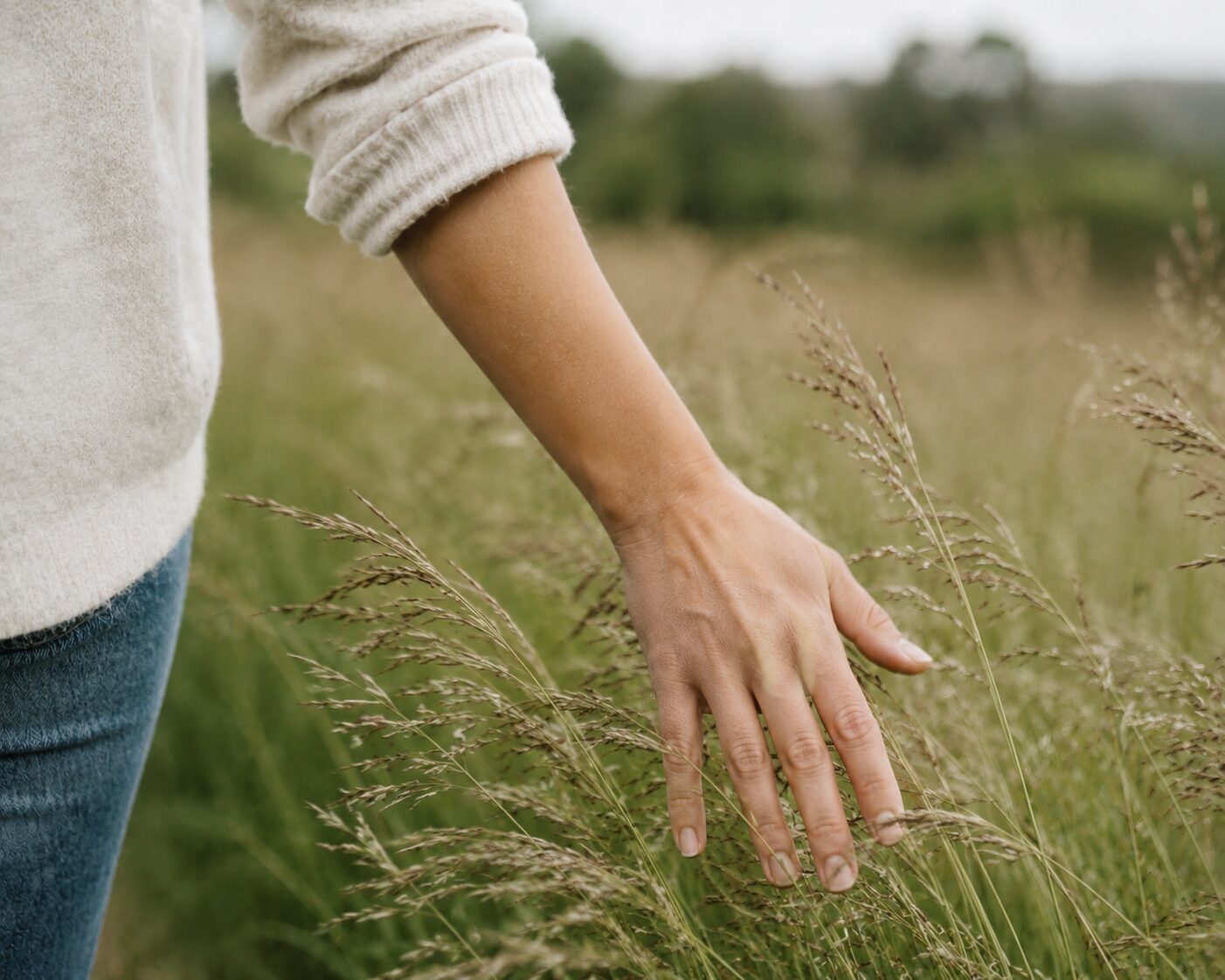
I grew up in a corner house on a street where every other home had a proper garden — real grass, real trees, all of it. We had a path. Paved over, edged with a wooden fence my dad had built himself, not pretty, just functional. The only green in the whole place was a small planter with whatever seasonal flowers came around each year, always the same ones, never lasting long. My parents weren’t interested in nature at all. No walks, no gardens, nothing. The closest we got was the cut flowers my mum bought at the Saturday market, sitting in a vase for a week before getting thrown out.
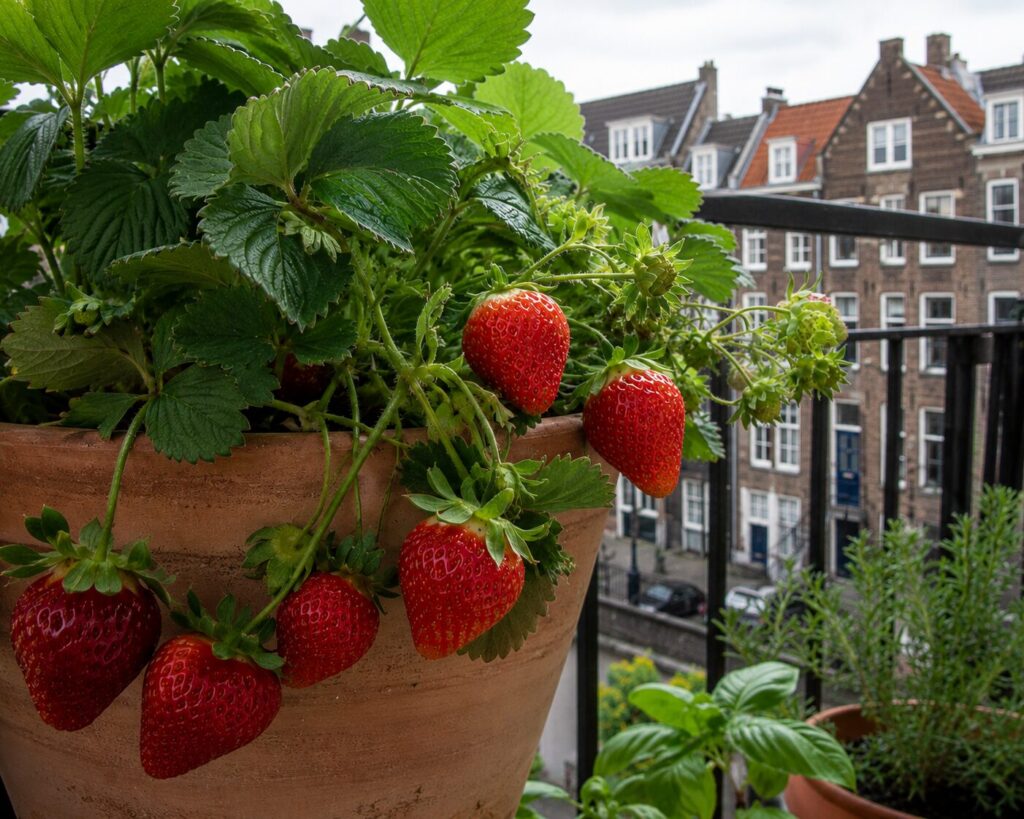
I didn’t think much of any of this growing up. It was just what home looked like. It wasn’t until much later, on a small balcony in Rotterdam fifteen years ago, that something shifted. I’d planted strawberries almost on a whim, more curiosity than conviction, and the first one I picked and ate straight off the plant did something to me I genuinely wasn’t expecting. It tasted like an actual strawberry, the way I dimly remembered strawberries tasting as a child, before I’d eaten enough supermarket ones to forget what the real thing was supposed to be.
I was completely sold from that one mouthful. Sold enough that, eventually, my partner and I left the city behind entirely, then left the country too, just to be properly close to the kind of growing and green I’d had almost none of as a child.
What Gets Lost Without Noticing
I think about that corner house a lot when I think about what easily disappears from a life without anyone deciding it should. Nobody sat my parents down and told them not to bother with nature. It just wasn’t part of how they were raised either, and so it wasn’t part of how I was raised, and the gap just kept passing forward quietly until something — in my case, one strawberry — interrupted it.
That’s the part that worries me a little when I think about it more broadly. The loss isn’t dramatic. Nobody loses a forest to fire in this version of the story. It’s just a paved path instead of a garden, a cut flower instead of a growing one, a childhood spent mostly indoors because that’s simply what the adults around you did too. Multiply that by enough households and enough generations, and you get people who reach adulthood with almost no felt sense of what soil smells like after rain, or what it’s like to actually wait for something to ripen.
The Specific Hunger That Nothing Else Fills
I notice it most now in the contrast. The strawberries I grow today taste nothing like the ones I grew up eating, and that gap is the whole point — not better in some abstract sense, but actually, sensorially different, in a way a screen or a description or a photograph of a strawberry could never convey. The same goes for the smell of the polytunnel on a hot afternoon, or soil under my fingernails after a morning weeding, or the particular quiet of standing in the garden at dusk with the dogs while everything cools down around us.
None of that can be replaced by more content about nature, more articles about its benefits, more photos of other people’s gardens. It’s a hunger that only direct, unmediated contact actually satisfies, and I think a lot of us are walking around with some version of that hunger and no real name for it.
A Gentle Beginning
The good news, if there is any, is that none of this is permanent the way it can feel. I didn’t grow up with any of it, and the gap closed anyway, slowly, starting from one balcony and one strawberry. It didn’t take a complete life overhaul to begin — just one small act of actually growing something and then actually tasting the difference.
If you grew up the way I did, with more pavement than garden, that’s not a fixed sentence. It’s just where you’re starting from. The rest can still be built, one planter, one walk, one ripening thing at a time.
If you’re looking for small ways to begin that kind of rebuilding, A Gentle Reset is a free e-book of gentle rituals for returning to yourself — one ordinary moment at a time.
This is the first piece in a small series on reconnecting with nature. Rewilding Our Daily Lives continues the thought with gentle, practical ways to let it back in, and if modern life has made it hard to slow down enough to notice anything at all, The Feeling of a Day Without Plans is a quiet companion piece worth reading too.
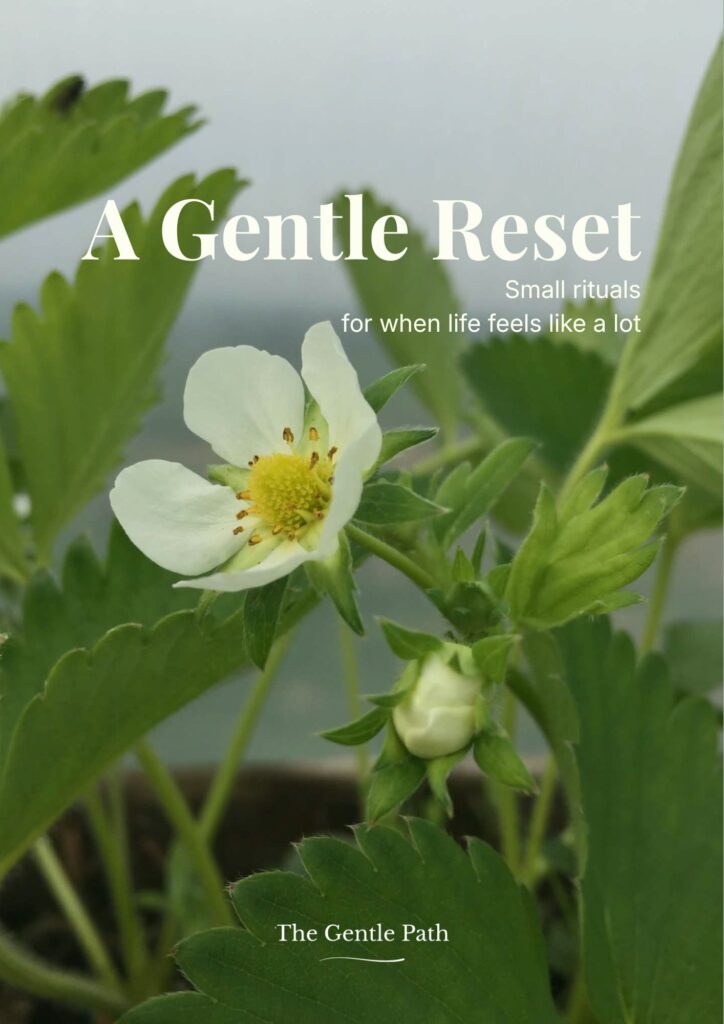
A little something for free — small, gentle rituals for the days that feel like too much.