
There was a time when being busy felt like a badge of honor. Full calendars, inboxes overflowing, days of ten to twelve hours of work, all signs that you were doing something right. That you were needed. That you mattered.
But lately, something has shifted.
If you’re here because you’ve felt a pull toward something slower and want to know whether that instinct is actually worth trusting, here’s the short version: it is, and you’re far from alone in feeling it. People across Europe are quietly stepping back from high-powered jobs, crowded cities, and identities built entirely on performance and praise — not in protest, but in pursuit of something that fits better. This post is about why that shift is happening, what it actually looks like in practice, and how to begin moving toward it even if a dramatic exit isn’t realistic for you right now.
Why We’re So Exhausted With the Way Things Were
We’ve been taught to believe that ambition means always reaching. That slowing down is weakness. That wanting less is failure.
But the research tells a different story. Burnout rates across Europe have been rising steadily, and it’s not just about workload. It’s about a way of living that leaves no room to breathe, to rest, or to ask what we actually want. If you’ve ever felt that particular kind of exhaustion that sleep doesn’t fix, you may already be closer to burnout than you realise, and Recognizing the Early Signs of Burnout is a good place to check.
The slow living movement isn’t a trend. It’s a response.
My Own Story
Over a decade ago, we made the decision to leave a big city and start over in the countryside of another country. It wasn’t a grand escape, just a yearning for a different rhythm. The days are quieter now, the pace slower. But the transition wasn’t always easy.
The truth is, I still need to work. The bills didn’t disappear just because the traffic noise did. Letting go of the rat race doesn’t mean life becomes effortless, but it does become more intentional. Meals take longer to make because we’re not rushing between two other things while cooking them. Evenings have actual edges to them, a start and an end, rather than bleeding into whatever was left undone during the day.
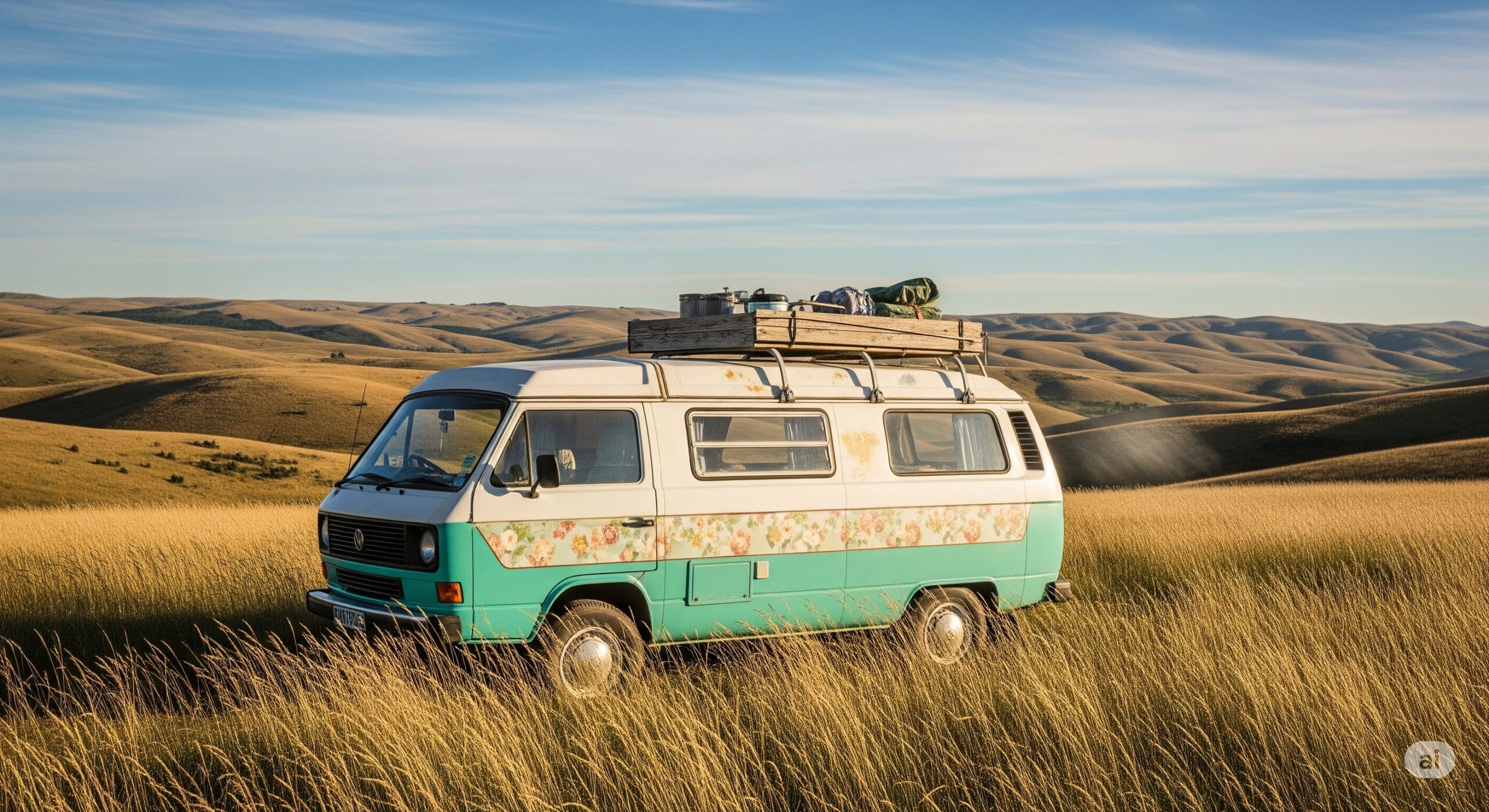
And the more I travel with my campervan, the more I see I’m not alone.
What Choosing Slower Actually Looks Like
I’ve met so many people, solo travelers, couples, even families, who’ve chosen to live on the road. They’ve sold their homes, traded stuff for space, and embraced the open life of the van.
Most of them don’t work full-time. Many have small, remote jobs that support their modest needs. Because when you own less, you need less.
It’s a quieter kind of abundance. One that isn’t measured in square meters or salary bands, but in freedom, time, and alignment.
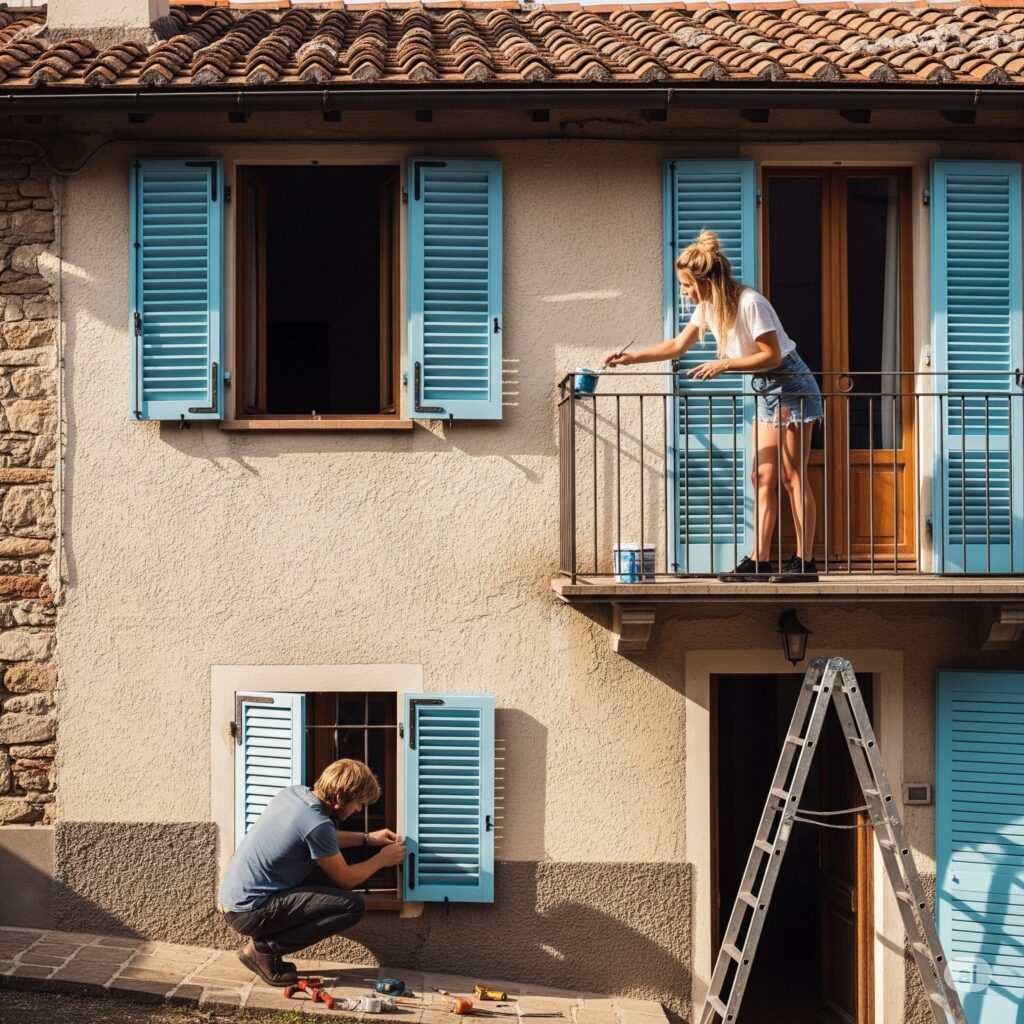
And then there are the stories I see online, of people buying old houses in Southern or Eastern Europe, renovating them slowly, living simply. These aren’t overnight success stories; they’re quiet reboots. Rooted in something deeper than likes or follows.
What if fulfillment looks like walking to the bakery in the morning instead of racing to catch a train? What if success sounds like laughter over lunch on a Tuesday? What if courage is quietly deciding, this life I built no longer fits me, and starting again, piece by piece?
If you’re drawn to this way of thinking, Essentialism by Greg McKeown is one of those books I hear recommended again and again in slow living circles, the idea that doing less, but doing it better, is not a compromise but a liberation. I haven’t read it myself but the premise speaks directly to everything this post is about.
The Shift Is Already Happening Around You
Maybe you’ve seen it too.
A colleague who turned down a promotion to start a small business. A friend who moved to a coastal town and never looked back. Or maybe you’ve just felt it, the tug toward something slower, more human.
This movement isn’t about giving up. It’s about redefining what success looks like. Redefining what a good day feels like. Redefining who we are when we stop performing and start living.
And it’s worth asking: what would your life look like if you stopped measuring it by productivity alone? For many women, the first step is simply recognising how much they’ve been carrying, and deciding it’s time to put some of it down.
Why This Isn’t Just Nostalgia for a Simpler Time
It’s worth naming something directly, because slow living sometimes gets dismissed as a romantic longing for a past that never actually existed. That’s not quite what’s happening here.
This is less about looking backward and more about noticing that a particular version of “forward” stopped working. Decades of measuring a good life by speed, output, and accumulation have produced, for a great many people, a kind of exhaustion that no amount of further speed, output, or accumulation actually resolves. Choosing slower isn’t rejecting progress. It’s questioning whether the specific definition of progress on offer was ever actually serving the people living inside it.
You Don’t Have to Change Everything at Once
Not everyone can pack up and go. There are bills, commitments, kids, aging parents. And sometimes, just the sheer weight of “how?” is enough to keep us where we are.
But slow living doesn’t require a dramatic exit. Here are five ways to begin where you are:
- Start with one thing you can release. One commitment that drains more than it gives. One habit that belongs to who you were, not who you’re becoming.
- Protect one pocket of stillness each day. Even ten minutes of quiet, without a phone, without a task, begins to rewire your relationship with busyness. Micro Rituals is a gentle place to start.
- Spend less, need less. Not deprivation, but intentionality. What do you actually need to feel content? You might be surprised how little it is.
- Let yourself dream on paper. Sketch a version of your life that feels more like you. Not a five-year plan, just an honest picture of what “enough” might look like. A simple, dedicated journal for this kind of reflective writing can make the practice feel more intentional, something that belongs just to you.
- Find the slow moments already in your day. A walk after dinner. A day with your phone off. A project you do just for the love of it. Even if you can’t live your slower life yet, moving toward it with intention gives meaning to where you are now.
If you’d like a wider set of small rituals to build into ordinary days, rather than working out where to start from scratch, A Gentle Reset is a free e-book built for exactly that, gentle practices for making room in a life that doesn’t have much spare room to give.
Slowness Doesn’t Have to Mean Staying Still
One thing worth clearing up, because it trips people up: slow living isn’t the same as never travelling, never moving, never trying new things. It’s about the pace and intention behind whatever you’re doing, not the amount of stillness in your life.
Slow travel is really the same instinct applied to a map instead of a calendar — staying longer in fewer places, choosing overland routes that let you actually watch a landscape change, leaving room for a day to unfold without an itinerary dictating every hour of it. If any part of this post resonated and you’re wondering what it looks like once you’re actually moving through the world rather than sitting still in it, The Gentle Art of Slow Travel goes into that in far more depth.
What Slowing Down Actually Costs
I don’t want to pretend this is only upside, because that wouldn’t be honest, and it wouldn’t be very useful either.
Choosing slower usually means choosing less of something else. Less income, in some cases. Less proximity to a career ladder that only rewards constant visibility. Less certainty, at least at first, about whether the trade was the right one. There were stretches in our own transition where I genuinely doubted it, where the quiet felt less like peace and more like absence, and where I missed the particular busyness I’d spent years complaining about.
What eventually settled it for me wasn’t a single convincing moment. It was the slow accumulation of ordinary days that felt like mine, rather than days that felt like something to survive until the next milestone. That accumulation takes longer to notice than the doubt does, which is part of why so many people turn back before they reach it. If you’re in the uncertain middle of your own version of this, that discomfort isn’t proof you made the wrong choice. It’s usually just proof that the new rhythm hasn’t had enough time yet to become familiar.
The Gentle Path Forward
Slow living isn’t a destination, it’s a direction. You don’t arrive at it; you practice it, imperfectly, in the middle of your real life.
And the more you practice, the more you notice: the world doesn’t fall apart when you slow down. In fact, it often comes into focus.
A Few Questions Worth Answering
What does slow living actually mean in practice?
It means making deliberate choices to slow the pace of daily life, doing fewer things but with more attention, rather than adopting a specific set of rules or a particular lifestyle. It looks different for everyone depending on their circumstances.
Do I need to quit my job or move somewhere rural to live more slowly?
No. While some people do make dramatic changes, slow living can be practised within an existing job and location through smaller shifts, protecting pockets of stillness, releasing draining commitments, and being more intentional about pace day to day.
Is slow living the same as minimalism?
They overlap but aren’t identical. Minimalism focuses primarily on owning fewer possessions, while slow living is broader, concerning the pace and intentionality of how time itself is spent, which may or may not involve owning less.
Why are more people choosing slower lives now than in previous decades?
Rising burnout rates and a growing recognition that constant busyness doesn’t reliably produce wellbeing seem to be significant factors. Many people are questioning definitions of success built primarily around speed and output, particularly after experiencing the personal cost of that pace firsthand.
Can I live a slower life while still being ambitious or working full-time?
Yes. Slow living isn’t inherently opposed to ambition or paid work. It’s more about the relationship you have with your pace and your definition of enough, which can coexist with a demanding job or genuine professional drive.
A little something for free — small, gentle rituals for the days that feel like too much.
This post contains affiliate links. If you purchase something I recommend, I may earn a small commission at no extra cost to you.