
The Dutch Council for Health and Society recently released a striking report: we are living in what they call a hyper-nervous society.
Constant acceleration, pressure to perform, and rising individualism are leaving deep marks on our wellbeing. The numbers are sobering — burnout is on the rise, waiting lists for mental health care grow longer, and nearly half of all adults will face a psychological disorder at some point in their lives.
And yet, most solutions still focus on the individual: resilience training, coaching, therapy. These can help — genuinely, they can. But the Council warns it’s like mopping the floor while the tap is still running. If the world feels overwhelming no matter how hard you try to cope, it may not be a personal failing. It may be a structural one.
If the culture keeps speeding up, no amount of personal grit will be enough.
What a Hyper-Nervous Society Actually Means
We live in an environment of constant stimulation.
Notifications arrive without pause. News cycles never stop. Work emails follow us into our evenings. Social media ensures there’s always something happening, always someone to compare ourselves to, always a reason to feel behind or inadequate or insufficiently engaged.
This isn’t just uncomfortable. It’s physiologically costly. The human nervous system was not designed for this level of sustained input. It evolved in an environment where threats were occasional and periods of rest were frequent. What we’ve built instead is a world of continuous low-grade alarm — and our bodies are paying the price.
The result is what the Council describes: a society that is collectively exhausted, increasingly anxious, and struggling to find the off switch.
Everyday Slowness
What we need, the Council suggests, is everyday slowness.
Not as a luxury or a lifestyle choice for the privileged few. As a necessity. More unstructured time at school. More space for rest at work. More permission in our private lives to simply be. In other words: a culture where quiet moments are valued as much as achievements.
Everyday slowness doesn’t mean doing nothing. It means doing things with attention and care. It’s taking time to walk instead of rushing to arrive. It’s allowing silence in a conversation. It’s noticing the way the light changes across the room, or the sounds that were always there but went unheard — the small, ordinary details of existence that constant acceleration makes us miss entirely.
Slowness invites us back into our senses. It pulls us out of constant thought and into direct experience — the texture of a blanket, the rhythm of breathing, the sound of birds outside the window. These small moments of awareness are how we reconnect with the present, and with ourselves.
We often think of change as something loud or dramatic. But slowing down is a quiet form of resistance. It asks us to trust that our worth doesn’t depend on how much we achieve, but on how fully we inhabit our days.
This is the kind of slowness that The Gentle Path stands for: not a pause from life, but a return to it.
What This Looks Like in My Own Life
I notice the pull of hyper-nervous living in myself — the compulsive checking, the difficulty sitting still, the faint guilt that arrives when I’m not being productive.
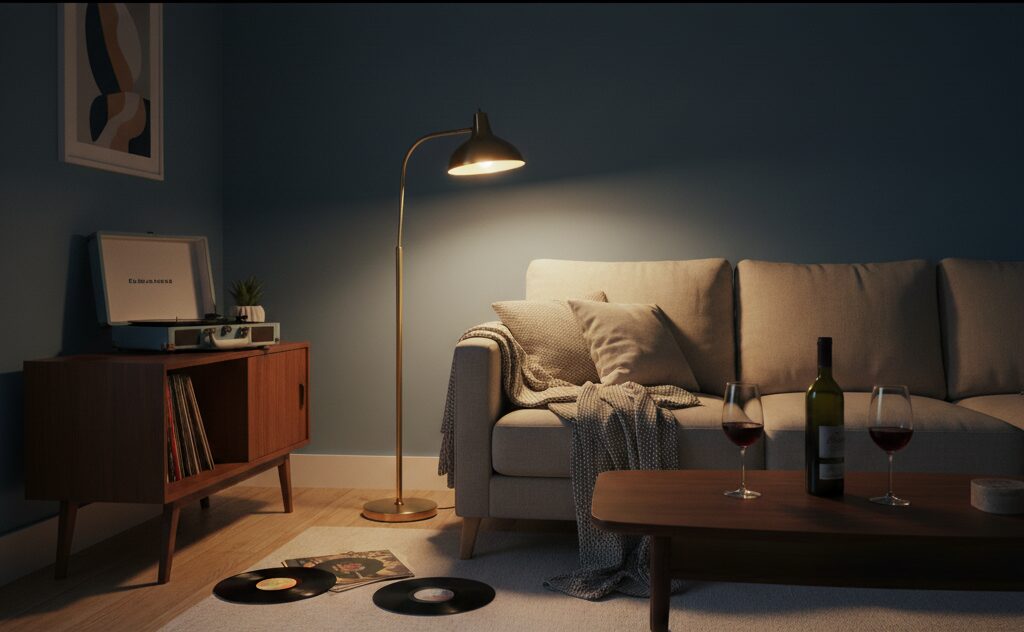
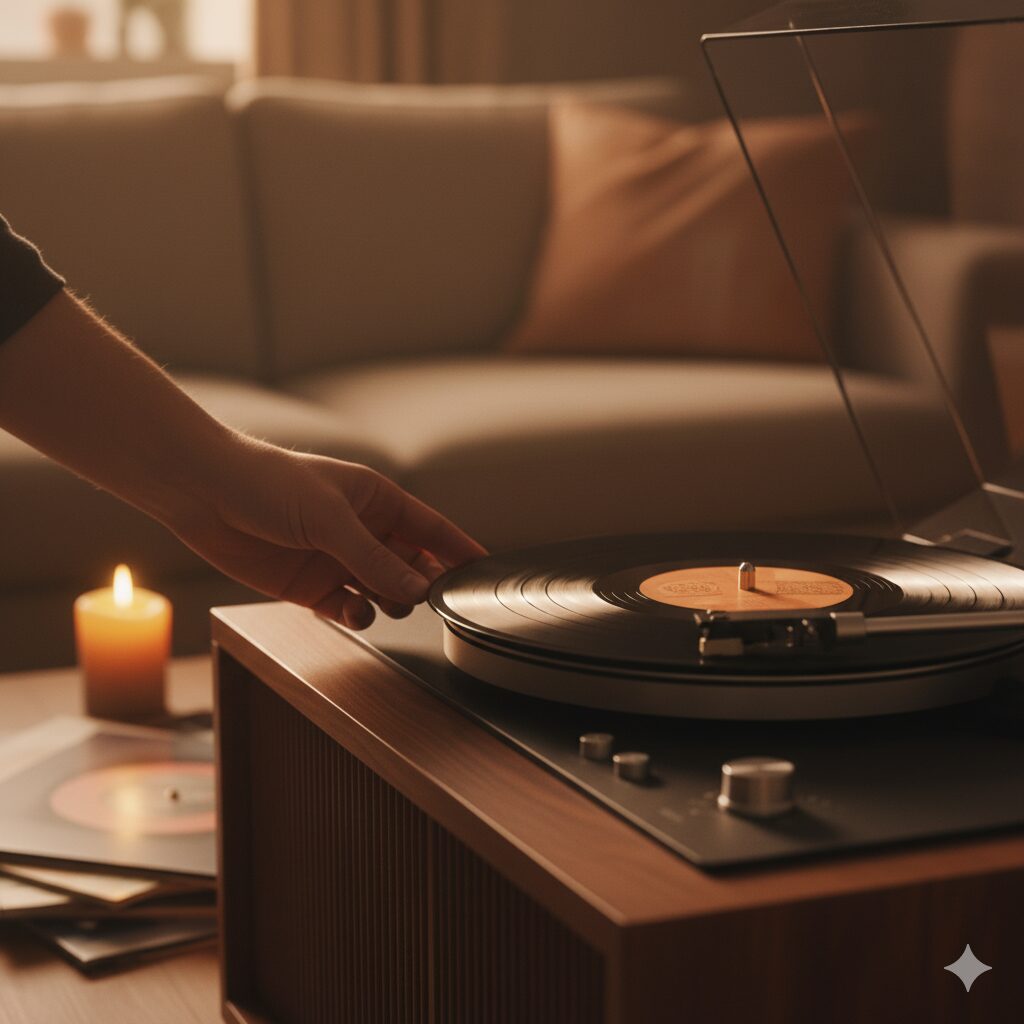
And I notice what helps. One of the ways we spend our evenings is listening to records. No television, no phones — just us on the sofa, surrounded by the soft crackle of vinyl. Sometimes we close our eyes when a song hits just right. Sometimes we talk about the music, what memories it brings, how it makes us feel. Playing records means getting up now and then — browsing the selection, pouring another glass of wine, maybe singing along.
It’s a simple rhythm of movement and stillness, conversation and quiet. And somehow it slows the whole night down.
These aren’t dramatic interventions. They’re small, repeated choices to exist at a different pace. And over time, they add up to something that feels like a different relationship with life entirely.
Gentle Suggestions for Slowing Down
We don’t need grand solutions. Small, intentional practices can remind us what it feels like to breathe again.
Reclaim unstructured time. Let a morning or an evening stay genuinely blank — not filled with passive consumption, not organised around recovery, just open. Resist the urge to fill it. See what emerges when nothing is required of you.
Prioritise real connection. Put the phone away during dinner. Take a walk with a friend without an agenda. Sit quietly with someone you love. Presence matters more than productivity — and genuine human contact is one of the most effective antidotes to the hyper-nervous state.
Embrace restorative rituals. Light a candle before bed. Prepare food slowly. Take a few minutes to write in a journal. These are small acts of resistance against a world that demands constant speed — and they accumulate into something that genuinely changes the texture of your days.
If you’re looking for a collection of exactly these kinds of rituals, A Gentle Reset is a free e-book of small, restorative practices for slowing down in the middle of a world that won’t.
Listen to your rhythms. Notice when you are tired, overstimulated, or rushing. Give yourself permission to stop — even briefly, even imperfectly. The nervous system responds to small pauses as well as large ones.
Protect your mornings and evenings. The beginning and end of each day are the most vulnerable to acceleration. A slow morning and a gentle evening won’t fix everything, but they create a frame around the day that changes how it feels to live inside it.
A Quiet Revolution
The Council’s warning may sound heavy. But it’s also an invitation.
If a hyper-nervous society is eroding our collective wellbeing, then slowing down — individually and together — is an act of quiet revolution. Not a rejection of modern life, but a reclaiming of the human pace within it.
You don’t need to change everything at once. Choose one gentle shift this week: a slow meal, a phone call with no agenda, an evening without screens. These moments may feel small. But collectively, they are how we begin to turn the tide.
Because a society built only on acceleration leaves us breathless. A life lived with slowness, on the other hand, allows us to finally exhale.
If this reflection speaks to you, Rewilding Our Daily Lives explores finding your natural rhythm again in a world that’s forgotten how to pause. And if you’re curious about the community of people choosing a different pace — Welcome to The Gentle Path is where it all begins.
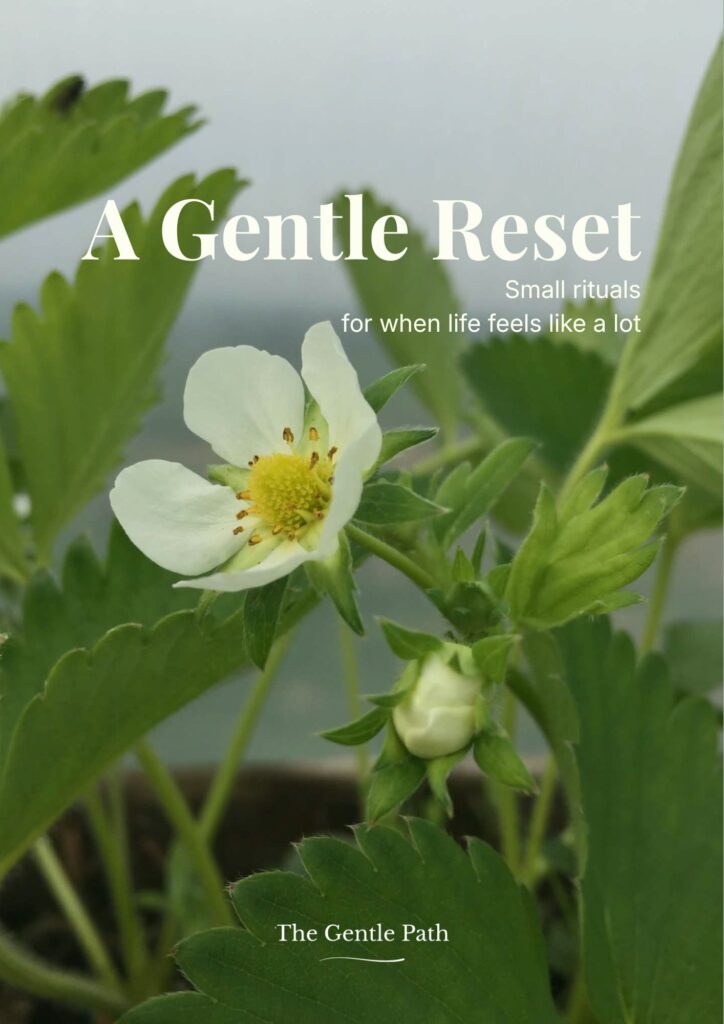
A little something for free — small, gentle rituals for the days that feel like too much.