
Most people I talk to these days are carrying some version of the same weight. The injustice. The climate news that never seems to turn a corner. The wars that keep going. Prices climbing, rules tightening, the general sense that things are moving in a direction nobody voted for and nobody seems able to stop.
It’s easy to get swept into all of it — angry, sad, helpless, outraged, sometimes all four within the same hour. I understand the pull completely. Those feelings are valid. They’re a sign your heart is still working, that you still care.
But I’ve also seen what happens when caring tips over into being consumed by it. Reading, scrolling, talking, worrying, arguing, repeating, until your entire emotional weather is being set by things entirely outside your own life. Until there’s no real room left for the actual life sitting in front of you.
That’s exhausting. It’s painful. And, as far as I can tell, it doesn’t change a single thing about any of it.
This isn’t a case for indifference, and it’s not an invitation to put your head in the sand. It’s something quieter than either of those — an invitation to come back to your own sphere of influence. To the life you can actually touch with your own two hands.
I want to be clear about who this is actually for. This isn’t advice for someone currently living inside one of these crises — if you’re the one facing the war, the flood, the rent you can’t make this month, none of this is meant to tell you to simply look away and tend your garden instead. This is for the particular exhaustion of caring from a distance, of absorbing the weight of things you’re witnessing rather than living through directly. That’s a real kind of tiredness, but it’s a different one, and it deserves a different kind of response than the crisis itself does.
When the World Got Too Loud for Me
Since Covid, especially, I’ve gone through long stretches where I couldn’t stop reading the news. Before I’d even made coffee, I’d already be scrolling, absorbing headline after headline, feeling my chest tighten a little more with each one, carrying all of it straight into the rest of my day before the day had even properly started.
I told myself this was just staying informed, and it is, up to a point. But there’s a real difference between being informed and being consumed by it — between caring about the world and letting the world’s pain become the actual texture of your own day, every day, indefinitely.
The shift, for me, came slowly. I started noticing the scrolling wasn’t making me more effective at anything. It was making me less present. Less kind, if I’m honest. Less able to actually show up for the people and moments that were genuinely mine to tend to. Coming back to my own sphere of influence wasn’t about caring less. It was about caring more wisely, with whatever limited energy I actually had to give.
If you’re looking for small rituals to help you through this, A Gentle Reset is a free e-book written for exactly this kind of overwhelm.
What You Can and Cannot Influence
This is worth sitting with plainly. You cannot change world leaders. You cannot undo what’s already been done. You cannot force strangers into more compassion or wisdom than they currently have. You cannot carry the full weight of every injustice happening anywhere and still remain standing yourself.
But you can change how you respond. You can choose where your own energy actually goes. You can be a calm, grounded presence in your own small corner of things — and that matters more than most of us give it credit for. Not everything needs your full emotional bandwidth, especially the things you genuinely cannot change no matter how much of yourself you pour into them.
The world tends to present itself in stark, either-or terms — good and evil, right and wrong, us and them. Most of reality actually lives somewhere in the nuanced space between those extremes. Learning to hold that complexity without being knocked over by it is one of the quietest kinds of strength I know.
What Staying Grounded Actually Means
Staying grounded doesn’t mean pretending things are fine when they’re not, and it isn’t about floating above it all on good vibes. It’s closer to staying regulated enough to actually function, feel, and respond, rather than simply react to everything that lands in front of you.
I’ve noticed sound does a lot of this work for me, more than I’d have expected. The steady rhythm of rain, birdsong outside the window, even the ordinary hum of a quiet room can tell a frazzled body that it’s safe, after a day spent absorbing one alarm after another. You’re not retreating from the world by doing this. You’re putting yourself in a state where you can actually re-engage with it properly, instead of from a place of being half-flooded already.
Staying in My Own Sphere of Influence
A few things have actually helped me hold onto this, in practice. I limit how much news I take in, but with intention rather than guilt — deciding in advance when I’ll check in, rather than letting it check in on me whenever it likes. Usually that’s once a day, at a time I’ve chosen, and then the tab closes.
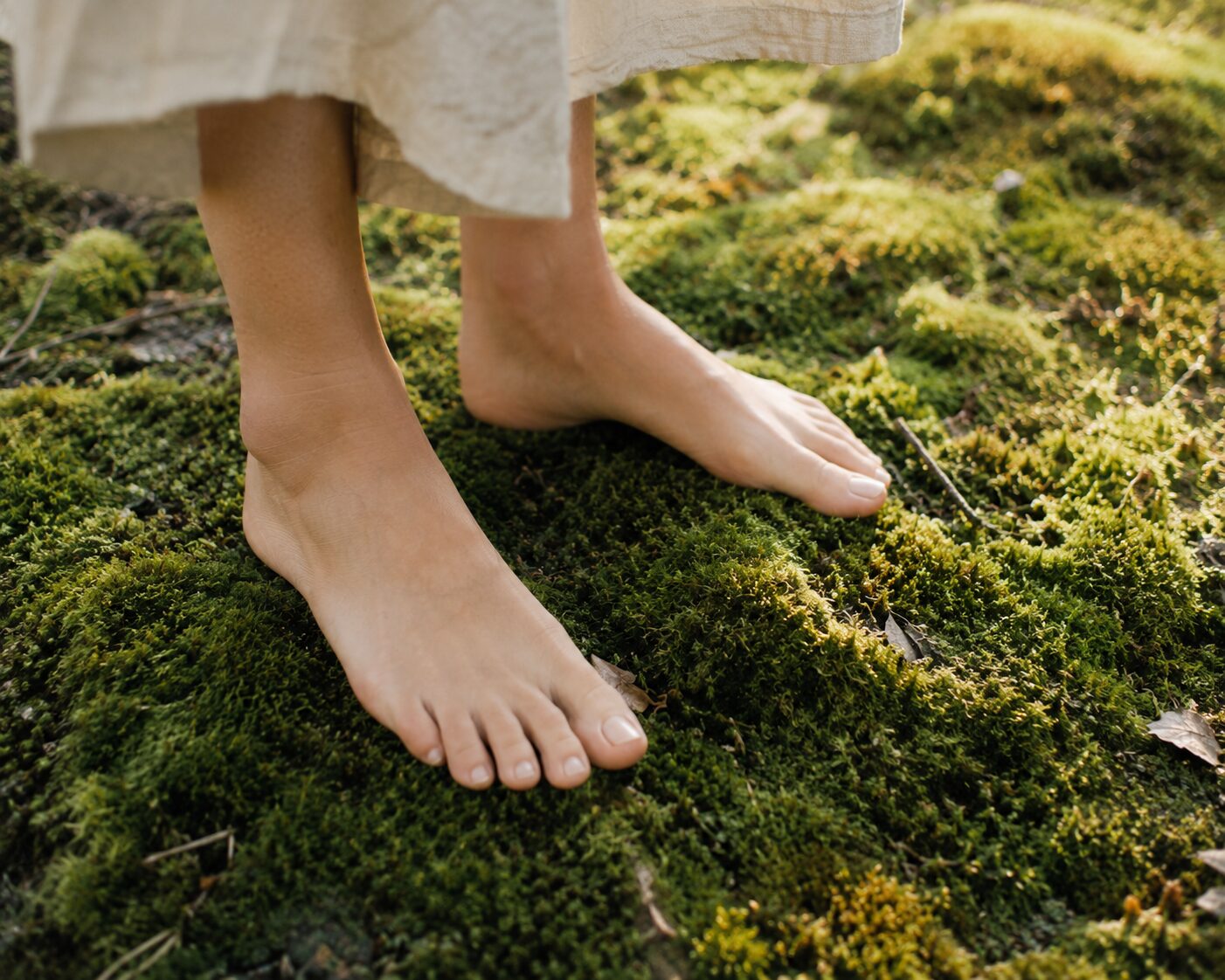
I try to practise presence in small, ordinary moments — my own breath, a cup of tea actually noticed rather than drunk on autopilot, the feel of the dogs’ fur under my hand on a walk, the wind moving through the trees outside. None of that is a trivial distraction from the real issues. It’s an anchor, available the moment I actually reach for it, even when my mind is spinning on something I have no power to change. Walking, in particular, has become one of mine — no destination, no pace to keep, just one foot after the other until whatever was spinning in my head settles a little.
I try to respond rather than react, which mostly means pausing before I speak, share, or spiral, and asking myself honestly whether engaging with something right now actually helps anything, or whether I’m just trying to discharge the discomfort of feeling powerless. There’s no shame in either answer. But knowing which one it is changes what I do next.
I try to contribute somewhere close to where I actually am — a neighbour, a small act of kindness to whoever’s in front of me, something genuinely within reach rather than abstract and far away. And I keep a few small rituals that quietly declare some peace is mine regardless of what’s happening elsewhere — a candle lit, a walk taken, the plants watered, one honest line written down. None of these are escapes. They’re more like declarations: this moment is mine to tend, whatever else is true today.
What You Focus On Grows
There’s still so much worth noticing, even now. The smell of air after summer rain. The dogs flopped in a patch of sun on the kitchen floor. An hour spent over tea with a friend who actually listens — and some of this is easier held alongside someone else than carried alone, which is its own quiet comfort, simply being present with someone without needing to solve anything. None of it erases what’s genuinely hard in the world, and it’s not meant to. But it sustains your capacity to keep showing up anyway, with whatever care and presence you actually have to offer the people and places that are yours to tend.
The world is complicated. Your response doesn’t have to be. Come back to yourself, to what you can actually touch and hold and give. Let the noise exist — it’s not going anywhere — but don’t let it take your gentleness along with it.
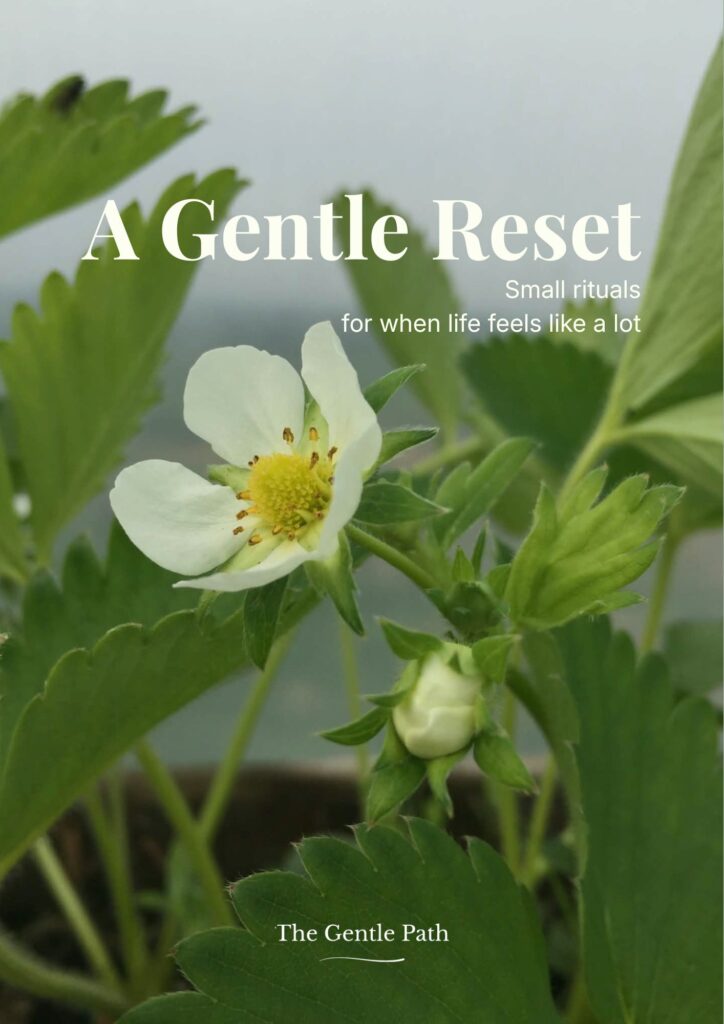
A little something for free — small, gentle rituals for the days that feel like too much.